


What is Lok Adalat? A Simple Guide for Everyone
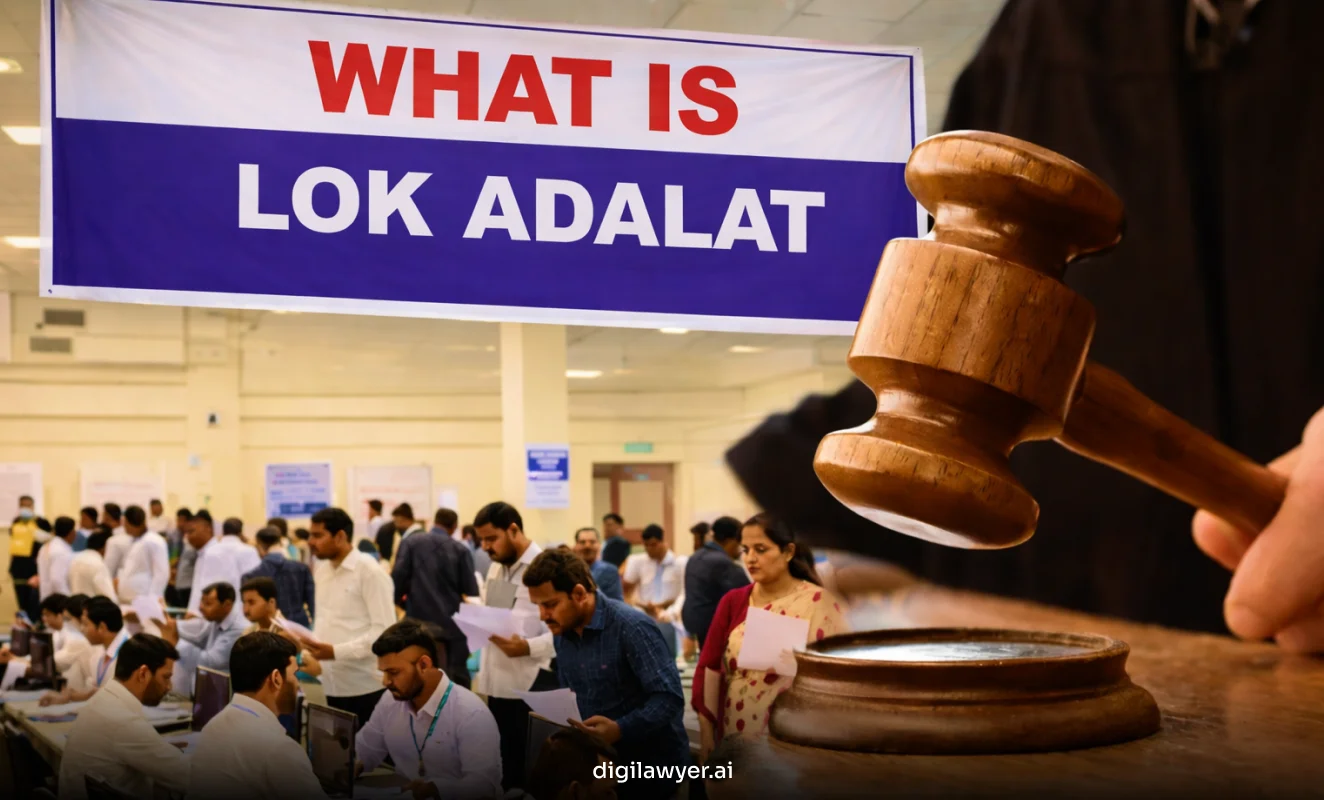
60 Second Summary
- Understand what Lok Adalat is and how it helps you settle disputes quickly without lengthy court cases
- Learn why it exists and how it reduces time, cost, and stress compared to regular litigation
- See how the process works step-by-step, from application to final settlement
- Explore different types of Lok Adalat, including National, District, and Permanent Lok Adalat (PLA)
- Find out which cases are eligible, like traffic challans, cheque bounce, consumer issues, and utility disputes
- Get a clear step-by-step guide on how to apply, what documents to carry, and where to go
- Understand what happens after settlement, including legal validity and enforcement of the award
- Avoid common mistakes, especially signing agreements without fully understanding the terms
Millions of cases are waiting to be resolved in India's lower courts. Roughly 78% criminal cases and 22% civil suits as per National Judicial Data Grid Report. If you are dealing with a traffic challan, a minor money disputer, a consumer complaint or a family matter that you want to settle, going to a full court trial might cost you time and money.
Lok Adalat exists precisely for these situations. It is a legally recognised, fast method to settle a dispute in a single sitting. One of the key benefits of choosing Lok Adalat over a full court trial is you can resolve a dispute without the procedural weight of a regular court case.
But what's the process to apply for Lok Adalat? This complete Lok Adalat guide will help walk you through how Lok Adalat actually works in practice, what a sitting looks like, how to participate in it, prepare, and check upcoming dates in your area.
What is Lok Adalat?
A Lok Adalat is a people’s court created under the Legal Services Authorities Act, 1987. The lok Adalat panel helps both parties settle disputes through discussion and mutual agreement.
When both sides accept a settlement, the order (decision) passed has the same effect as a civil court decree. It saves time and money and avoids the stress of regular litigation.
What is the purpose/need for Lok Adalat?
Court cases in India often move slowly and cost more than what people expect. So, Lok Adalat for Indian citizens was initiated. The main purpose was to establish an alternative dispute resolution platform that is fast, low-cost, and helps citizens close or settle legal disputes that don't really need a full trial.
Key Reasons Why Indian Citizens Need Lok Adalat
- Fast Justice: No need to wait for multiple hearings. Lok Adalat sittings help settle disputes in a single day.
- Rule Restriction: Unlike regular hearings, Lok Adalat uses less complicated legal procedure.
- Direct Interaction: Both parties can communicate directly with the judges and put their word forward.
How Does Lok Adalat Work?
1. What it Does
Lok Adalat focuses on settlement. A panel, usually a judge, a lawyer, and a social worker, helps both sides reach an agreement. In Permanent Lok Adalats, if settlement fails, the panel can pass a decision on the case itself for certain public utility matters.
2. Legal Strength
The written settlement (award) is final and enforceable like a civil court decree. If you settle a case that was already pending in court, the court fee you paid is normally refunded.
3. Procedure
The process is informal. You don’t face strict court rules or long procedural steps. You can bring documents, affidavits, and any basic evidence. The panel guides the discussion, keeps it fair, and encourages a practical outcome.
Types of Lok Adalat
Types of Lok Adalat | National Lok Adalat | State/District/Taluk/Mobile/ Gram Lok Adalat | Permanent Lok Adalat (PLA) |
Purpose | Massive, one-day drives held across the country on scheduled dates to settle many cases at once. Click to know about upcoming national lok adalat dates. | These are organized at the state or district level, often inside court complexes or community halls. They run as needed throughout the year. | A standing body that handles disputes linked to public utility services like transport, electricity, water, telecom, insurance, postal services, and similar sectors. If parties don’t settle, the PLA can decide the matter. PLAs generally handle disputes up to ₹1 crore, in accordance with local rules. |
What Types of Cases Can Be Taken to a Lok Adalat?
People usually approach Lok Adalat for routine, day-to-day disputes:
👍Traffic challans and accident-related issues.
👍 Cheque bounce matters and small bank or loan disputes.
👍 Consumer complaints (defective goods, poor service, billing issues)
👍 Land or property-related money claims within the permitted limits
👍 Pre-litigation settlements between buyers, sellers, landlords, and tenants
👍 Minor criminal matters that are legally compoundable
👍 Disputes over electricity, water, or telephone bills
👎 Not handled: Serious non-compoundable criminal cases, certain high-value matters, or disputes beyond the PLA’s monetary limits. It’s safer to check eligibility with your local Legal Services Authority before applying.
Who Can Approach Lok Adalat?
- Anyone with a case that the court agrees to send to Lok Adalat can take part.
- You can also go directly with a pre-litigation dispute if you want an early settlement, especially when it involves a public utility service.
- People who qualify for legal aid can get help from the Legal Services Authorities with forms, documents, and advocates. Front offices at district courts handle most of this support.
👉 Announcement: Delhi Traffic Lok Adalat Is Happening on 25 October 2026
Step-by-Step: How to Bring a Case to National Lok Adalat?
This is the part most people struggle with, just because they don’t know who to approach or what to carry. This is the most critical and practical section, so follow these steps.
Check whether your matter is eligible
If your case is already in court, ask the court registry if it can be referred to Lok Adalat. For pre-litigation matters, check if it is:
- A public-utility dispute for the Permanent Lok Adalat
- A civil or compoundable matter eligible for settlement through the District Legal Services Authority
Your local DLSA office can confirm this in a few minutes.
Contact the right office
- National and State-level Lok Adalat dates are published on the NALSA website and State/District LSA sites.
- Delhi, for example, posts schedules and notices on the DSLSA website.
Submit an application
- For pre-litigation matters before the PLA, file an application in the prescribed format under local PLA rules.
- For pending court cases, submit a referral request at the court registry or ask the presiding judge to refer it.
Note: In every court complex, there’s a help desk run by the DLSA or NALSA. You can file Lok Adalat applications there and get any information you need. If online details are unclear or unavailable, just visit your nearest district court and speak to the desk. They’ll guide you through the process without any complications.
Prepare documents
Have these ready:
- ID and address proof
- Copies of agreements, bills, receipts, FIRs (if relevant)
- Previous court documents (for pending cases)
- Bank statements or any proof supporting your claim
Carry the originals with 4-5 photocopies. It saves time at the counter.
Register for a token / confirm attendance
- Many Lok Adalats now use online registration or tokens. Check local notices (e.g., Delhi traffic Lok Adalats publish token/registration info).
Keep a screenshot or printout for verification.
Attend and participate
- The panel focuses on settlement. Be ready to discuss what you want, what you can accept, and what the other side may be willing to agree to. Also, bring anyone who may need to sign the settlement.
Get the award in writing
- Once both sides agree, the panel records the settlement as an award, and that is final and enforceable.
- If not, the court may continue the case unless referred back. For PLAs, if no settlement is possible, the PLA can decide the matter on the merits.
What Happens after Settlement?
The Lok Adalat award works like a civil court decree. If the other party does not pay or fulfil terms, you can file for execution.
Court fee (if already paid in a pending case) is usually refunded after settlement in the Lok Adalat.
There usually is no appeal because the award is based on mutual consent. A higher court will only interfere if there was fraud, coercion, or lack of capacity of a party (e.g., unsound mind).
Finality: Once you sign, you’re bound. Don’t sign anything if you don’t understand. If needed, step outside, call a lawyer, and come back. Panels are patient.
Speed: Most matters close on the same day. Even stubborn disputes move faster when settlement becomes the focus.
Pressure: If you felt forced or misled into a compromise, you can challenge it, but the process is not easy, so take your time before signing.
Low cost: Court fees are minimal and often refunded. Legal expenses stay low because the process is short.
Eligibility limits: Some disputes simply cannot be handled here, for instance, serious criminal matters and high-value cases outside PLA jurisdiction.
Informal environment: No strict procedures. People who aren’t used to the court system feel more comfortable here.
Not Getting the Settlement in Writing: Leaving without a properly signed copy of the settlement or order for your records.
Enforceable outcome: Once signed, the award carries the same force as a court decree.
How to Find Upcoming Lok Adalats
Most National Lok Adalat dates are announced weeks in advance.
- NALSA website: National & state calendars and resources.
- State/District LSA websites: District notices, front office contacts, and registration links (e.g., Delhi DSLSA).
- Local court notice boards and district legal services front offices.
- Traffic police/utility websites: for traffic Lok Adalats and utility disputes.
- Trusted Legal Tech Platforms: The DigiLawyer Announcement page shares the latest updates and information related to Lok Adalats.
Follow us on Instagram for Latest Lok Adalat Announcements
Permanent Lok Adalat (PLA): How It Differs from National Lok Adalat?
PLAs deal specifically with public utility issues such as electricity, water, telecommunications, transport, postal services, insurance, and related areas.
Key points:
- You can approach PLA before going to court
- Once you file before the PLA, you cannot take the same matter to another court.
- If the settlement fails, the PLA can decide the dispute.
- Awards are final and binding.
- Jurisdiction is generally up to ₹1 crore (check your local notification)
For day-to-day utility disputes, PLAs often give faster clarity than regular courts.
Permanent Lok Adalat (PLA): What Makes It Special?
- Purpose: handles disputes related to public utility services (transport, postal/telecom, electricity, water, sanitation, insurance, etc.).
- Pre-litigation role: You can approach PLA before filing a court case. Once you file before the PLA, you cannot take the same dispute to another court.
- If parties don’t settle: PLA can adjudicate the dispute on merits (except offences not compoundable). Its award is final and binding.
- Pecuniary limit: PLAs now have jurisdiction up to ₹1 crore (subject to official notifications). Check your local PLA notice before filing.
Difference Between Lok Adalat and a Regular Court
People often wonder what really changes when you pick Lok Adalat instead of going through a regular court case. The difference matters because it affects your time, cost, and whether you can appeal later. Here’s the practical version that most people actually need to know when choosing between Lok Adalat vs Regular Court Hearings.
Aspect | Lok Adalat | Regular Court |
Purpose | Settlement-focused. Close the matter quickly. | Deciding disputes strictly according to law. |
Process | Informal. Flexible. Talks and negotiation. | Formal procedures with strict rules of pleadings, evidence, and trial. |
Role of Bench | Acts as a mediator. Helps both sides agree. | Functions as a judge; hears arguments, evaluates evidence, and delivers a judgment |
Finality | The award is final. No regular appeal. | Judgment can be challenged in higher courts through appeals. |
Time & Cost | Fast and low-cost. Often same-day disposal. | Slower and more expensive over time. |
Where it applies | Pending cases + pre-litigation. PLA covers public utility matters. | All civil and criminal cases. |
Special Rule (PLA) | If the settlement fails, the PLA can decide the dispute. | The court cannot decide without a full trial process. |
Enforcement | Award = civil court decree. | Judgment is enforceable with appeal options. |
Conclusion
If you’re walking into Lok Adalat, the document you carry matters. A clear settlement line, a clean notice, or a well-written response often decides whether the matter closes that day or stretches into follow-ups.
Most people don’t prepare these documents only because they don’t know the correct format or where to start. That’s the part technology can take off your plate. You handle the discussion calmly and let a tool handle the paperwork.
FAQs
Can I file a brand-new case directly in the Lok Adalat?
For Permanent Lok Adalat: yes, you can file pre-litigation applications for public utility disputes. For the general Lok Adalat, pending court cases are usually referred; you may approach DLSA for pre-litigation matters.
Will I lose the right to appeal?
A consensual award is generally final and not appealable; appeals are limited to exceptional cases (fraud, lack of capacity).
Will the court fee be refunded?
Yes, when a pending case is settled in Lok Adalat, the court fee is typically refunded.
What if the other party doesn’t show up?
The Lok Adalat may adjourn, or if one party is present and settlement is possible, it may proceed. If no settlement, pending cases may return to regular court calendars.
Do banks or companies attend Lok Adalat?
Yes. Banks and public agencies often send representatives to National/State Lok Adalats and PLAs; DLSA arrangements can help ensure the presence of official attendees.


- What is Lok Adalat?
- What is the purpose/need for Lok Adalat?
- How Does Lok Adalat Work?
- 1. What it Does
- 2. Legal Strength
- 3. Procedure
- Types of Lok Adalat
- What Types of Cases Can Be Taken to a Lok Adalat?
- Who Can Approach Lok Adalat?
- Step-by-Step: How to Bring a Case to National Lok Adalat?
- What Happens after Settlement?
- How to Find Upcoming Lok Adalats
- Permanent Lok Adalat (PLA): How It Differs from National Lok Adalat?
- Permanent Lok Adalat (PLA): What Makes It Special?
- Difference Between Lok Adalat and a Regular Court
- Conclusion
- FAQs

Haryana Traffic Lok Adalat: Settle Challans in NCR and Haryana
Pending Haryana challan? Learn how to check challan status, settle in Lok Adalat, pay via Parivahan, or resolve traffic court challans across Haryana quickly.
UP Traffic Lok Adalat: Complete Guide to Challan Settlement in NCR & Uttar Pradesh
Settle your UP traffic challans easily through Lok Adalat in Noida, Ghaziabad, and across Uttar Pradesh. Learn about eligibility, process, and how to reduce fines up to 50%.
How to File a Cyberbullying Case in India
Learn about cyberbullying, its types, legal remedies in India, and how to take action. Protect yourself and others from online harassment and abuse.
How to Transfer a Case from One Court to Another
Learn how to transfer a court case in India. Step-by-step guide under CPC & BNSS, grounds, procedures, and expert tips for civil & criminal cases.
How to File a Civil Suit in India? Complete Guide
Learn how to file a civil suit in India with this complete guide. Understand the process, documents, and steps to take legal action for non-criminal disputes.
How to File a Defamation Case in India? Step-by-Step Guide
Struggling with defamation? Explore a detailed guide on filing defamation cases in India, including cyber defamation and actionable legal steps.
DigiLawyer, A 80, A Block, Sector 2, Noida, Uttar Pradesh 201301
Phone: +918178704343
justice@digilawyer.ai





Disclaimer: DigiLawyer is not a law firm, a substitute for a lawyer or law firm, a chartered accountancy firm, or a company secretary firm. We act solely as an intermediary between users and registered professionals, and also offer AI-powered legal assistance, consultation, and document drafting tools to improve access to legal support. Use of our website, services, or AI tools is at the sole risk of the user and does not create any lawyer-client or professional relationship. All consultations and interactions facilitated through our platform are strictly between the user and independent professionals. DigiLawyer is not liable for any actions, decisions, or outcomes arising from the use of our platform, AI tools, or reliance on any advice, consultation, or content provided by us or third-party professionals.
Use of our products and services is subject to our Privacy Policy & Terms of Service

