




Dealing with Multiple Challans Across Your Fleet?
Manage, reduce, and settle traffic challans for your entire fleet. No court visits. No paperwork. Court discount & settlement through Digilawyer
How DigiLawyer Helps Businesses Manage Challans
What it covers | How DigiLawyer delivers it |
Monthly challan pull across all vehicles and states | Automated check on Parivahan and state portals. Report sent to your team. |
Categorisation by type, urgency, and eligibility | Our ops team reviews each challan. You get a clean summary: pay, dispute, or Lok Adalat. |
Lok Adalat filing for eligible challans | We file on your behalf. No driver needs to appear. Settlement typically 30 to 50% lower. |
Dispute process for wrong or cloned plate challans | Advocate-reviewed dispute filed. We handle all correspondence. |
Document expiry alerts | PUC, insurance, and RC renewal dates tracked and flagged 30 days out. |
Consolidated monthly invoice | One invoice per month covering all settlements. Easy to expense and audit. |
Common Reasons for Multiple Challans
WHAT YOU GET
WHAT YOU GET
WHAT YOU GET
WHAT YOU GET
WHAT YOU GET
WHAT YOU GET
How to Check Challans for Multiple Vehicles at Once
If you are managing a fleet, checking challan status of one vehicle at a time on Parivahan is not a process. It is a time-consuming process. For many vehicles you can’t follow this, you need to look at a better option.Here is what the options actually look like, and where each one falls apart.
Option 1: Check Each Vehicle on Parivahan Manually
Go to echallan.parivahan.gov.in, enter the vehicle number, get the challan status. Repeat for every vehicle in your fleet.
This works if you have 2 vehicles and 20 minutes. For anything larger, you are looking at half a day just to get a status update. And that is before you have paid or disputed anything. Most operations teams that start here end up tracking results in a spreadsheet, which then becomes its own problem.
Option 2: Build an Internal Tracking System
Some larger companies try to build an internal vehicle challan tracking system using Excel or a basic database. Someone is assigned to check each vehicle number every week and update a shared sheet.
This sounds manageable. In practice, the sheet goes stale the moment the person assigned to it has something more urgent to deal with. Which is always.
Option 3: Use a Fleet Challan Management Service
DigiLawyer pulls pending challan status for your entire fleet from Parivahan and state portals in one go. You share your vehicle registration numbers once. We check, compile, and send you a complete report of all pending challans across every vehicle.
No portal logins. No spreadsheet. No weekly check. When new challans come in, we flag them in your next cycle.
Method | Works For | Breaks When |
Manual Parivahan check | 1 to 3 vehicles | Fleet exceeds 5 vehicles or spans multiple states |
Internal Excel tracker | Small teams with dedicated time | The person managing it has other responsibilities |
DigiLawyer fleet dashboard | 2 to 500+ vehicles | Does not break. New challans auto-added each cycle. |
What Actually Happens When a Fleet Challan Goes Unpaid
A lot of fleet operators have the same assumption: the challan is a small fine, it will wait. In most cases that is true right up until it is not. Here is the realistic progression of an unpaid pending challan.
1. Week 1 to 4: Challan shows as pending on Parivahan. No immediate consequence. Driver is unaware or not reporting it.
2. Month 1 to 3: Challan remains open. Vehicle gets stopped at an RTO checkpoint or insurance renewal point. The pending challan is flagged. Operations is now involved urgently.
3. Month 3+: Court notice issued. If the driver ignores the court notice, it escalates to a warrant. The vehicle can now be impounded on sight at any checkpoint in that state.
4. Renewal time: Fitness certificate or insurance renewal gets blocked. Vehicle cannot legally operate. For a delivery company, each blocked vehicle is direct revenue loss per day.
How Businesses Manage Fleet Challans
The question that comes up most often from operations and compliance heads is not 'how do I pay this challan.' It is 'how do we stop this from being a problem every month.' Here is what fleet vehicle fine management looks like at different stages of scale, and what actually works.
1. Manual Checks (Up to 10 vehicles)
Most small fleets start here. One person checks Parivahan for each vehicle number once a week or once a month, logs the pending challans in a sheet, and either pays them directly or escalates to the owner. It is tedious but manageable at this size.
The problem is that this phase tends to persist well past the point where it works. By the time a fleet reaches 15 to 20 vehicles, the spreadsheet is already unreliable, but nobody has replaced it yet.
2. The Breaking Point (15 to 50 vehicles)
This is where most of our clients come from. At this size, the manual approach has already broken but the business has not moved to anything better. Challans are being tracked by the person who happens to notice them. Some are being paid. Some are being ignored because the payment process is confusing. Disputed challans are just sitting there because nobody is sure how to handle them.
The operations team is spending hours on this every month for what should be a 20-minute monthly review.
What a Functioning Fleet Challan System Looks Like
What it covers | How DigiLawyer delivers it |
Monthly challan pull across all vehicles and states | Automated check on Parivahan and state portals. Report sent to your team. |
Categorisation by type, urgency, and eligibility | Our ops team reviews each challan. You get a clean summary: pay, dispute, or Lok Adalat. |
Lok Adalat filing for eligible challans | We file on your behalf. No driver needs to appear. Settlement typically 30 to 50% lower. |
Dispute process for wrong or cloned plate challans | Advocate-reviewed dispute filed. We handle all correspondence. |
Document expiry alerts | PUC, insurance, and RC renewal dates tracked and flagged 30 days out. |
Consolidated monthly invoice | One invoice per month covering all settlements. Easy to expense and audit. |
Early vs Late Challan Payment Cost
A challan settled early through Lok Adalat often comes out 30 to 50% lower than the original fine. The same challan, if it reaches the court notice stage, must be paid at full amount plus any court processing costs. The option to reduce through Lok Adalat is no longer available once a court notice is issued.
For a fleet with 20 to 30 pending challans, the difference between settling early and waiting can easily run into Rs. 50,000 or more. That is before accounting for the time cost of dealing with court notices.
What to Do Right Now
If you do not know the current vehicle challan status across your fleet, that is the first thing to sort out. DigiLawyer pulls a full pending challan report for your fleet within one business day. From there, we identify which can be reduced through Lok Adalat, which need to be paid at face value, and which should be disputed.
Who Manages the Challans Day to Day
With DigiLawyer, your operations team does not manage challans day to day. They review a monthly report, approve settlements, and move on. The checking, categorising, filing, and reconciliation all happens on our side. Most clients spend less than 30 minutes per month on this after the first setup cycle.
How to Pay Multiple Vehicle Challans at Once
You have checked the challan status for your vehicles. There are pending challans across multiple registrations. Now you need to clear them without spending three hours on government portals.
Through DigiLawyer
Pay Through Parivahan Directly
Parivahan's echallan portal allows payment by vehicle number. The process is straightforward for one vehicle: enter the registration number, see the challans, pay online via UPI or net banking, download the receipt.
For a fleet, this means repeating that process for every single vehicle. Each payment is separate. Each receipt is separate. Reconciling 30 separate Parivahan receipts at month end is not something most finance teams enjoy.
We group all your fleet's pending challans from our monthly pull, filter out the ones that should be disputed or filed for Lok Adalat, and present the remainder as a batch challan payment list. You confirm, we process, you get one consolidated invoice.
For challans that qualify for Lok Adalat, we file for settlement first. And you get reductions first. Once. The whole process is easy. If you get stuck anywhere, you can contact our support team.
How Businesses Manage Fleet Challans
The question that comes up most often from operations and compliance heads is not 'how do I pay this challan.' It is 'how do we stop this from being a problem every month.' Here is what fleet vehicle fine management looks like at different stages of scale, and what actually works.
Manual Checks (Up to 10 vehicles): Most small fleets start here. One person checks Parivahan for each vehicle number once a week or once a month, logs the pending challans in a sheet, and either pays them directly or escalates to the owner. It is tedious but manageable at this size.
The problem is that this phase tends to persist well past the point where it works. By the time a fleet reaches 15 to 20 vehicles, the spreadsheet is already unreliable, but nobody has replaced it yet.
The Breaking Point (15 to 50 vehicles): This is where most of our clients come from. At this size, the manual approach has already broken but the business has not moved to anything better.
Challans are being tracked by the person who happens to notice them. Some are being paid. Some are being ignored because the payment process is confusing. Disputed challans are just sitting there because nobody is sure how to handle them.
The operations team is spending hours on this every month for what should be a 20-minute monthly review.
Don't Let Challans Ground Your Business
Every day a challan sits unsettled is a compliance risk. Get your fleet sorted in one call.Check & Pay Now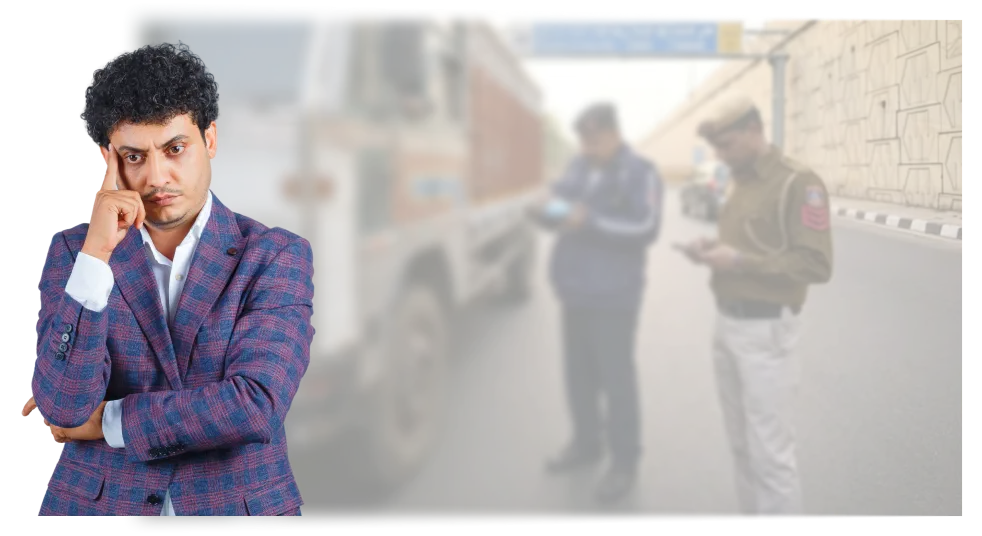
Why Choose DigiLawyer for Bulk Challan Settlement



Settle Your Fleet Challans in 3 Steps
Check By Industry
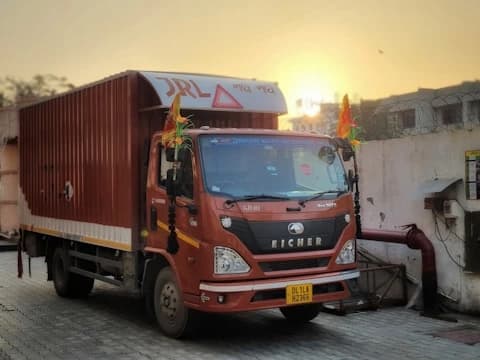
Logistics & Transport

Last-Mile Delivery & Aggregators
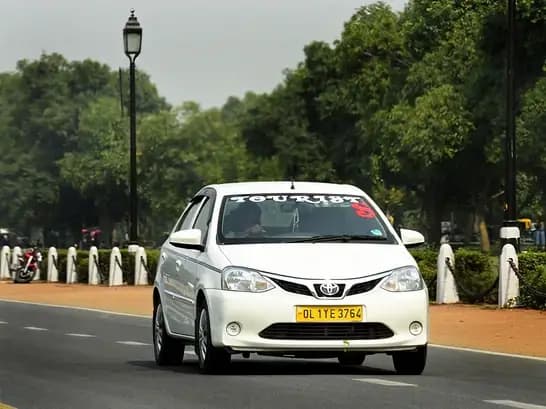
Mobility & Taxi Services

Corporate Fleets

Vehicle Dealers & Leasing
Traditional Way vs DigiLawyer Way

- Share vehicle list once. We pull all challans.
- Dedicated ops team reviews and filters for you
- Dedicated ops team reviews and filters for you
- Zero employee time lost. Fully remote.
- We appear and coordinate. No one from your team needed.
- Settlement in 30 days or less
- Pay less on compoundable challans. Rest at actual value.
- Monthly consolidated invoice. Easy to expense. Pay Less Today
- Visit traffic police office per vehicle to check status
- HR or operations team handles it manually
- Find and hire a lawyer for each challan (Rs. 3,000+)
- Staff take leaves for challan follow-ups and court visits
- Physically appear in court for each vehicle
- Wait weeks to months for court hearing dates
- Wait weeks to months for court hearing dates
- Scattered receipts, no clear accounting trail
Frequently Asked Questions
What happens if a driver gets a new challan mid-month?
If you are on a monthly plan, new challans are automatically added to your queue. You get notified and we review them as part of the next settlement cycle. Nothing falls through the cracks.
Can you handle challans from multiple states?
Yes. Our system pulls challan data from Parivahan and state-specific portals across India. We handle settlement across Delhi NCR, UP, Haryana, Rajasthan, Maharashtra, and Gujarat currently, with more states being added.
Can you give savings for all challans?
Only compoundable offences qualify. This typically covers speed violations, signal jumping, parking, and similar infractions. Serious offences like drunk driving or hit-and-run do not qualify. We tell you upfront what qualifies before you pay anything.
What documents does my company need to provide?
To start, just the vehicle registration numbers. For Lok Adalat filing, we may need the RC copy and driver's licence if the challan is contested. We guide you through this step by step.
Do we need to appear in court or send anyone?
No. Our legal team handles all appearances and filings. None of your employees need to visit a court or traffic police office at any point. Everything is remote.
How long does a full fleet settlement take?
For most fleets, the first batch of challans is reviewed within 2 to 3 business days. Settlement through Lok Adalat takes up to 30 days from filing. Court-contested challans may take longer depending on hearing dates.
Is this service only for large fleets?
No. If you have 2 vehicles or 200, we work with you. Even solo business owners with a company car benefit from DigiLawyer's bulk tracking and Lok Adalat filing. The more vehicles you have, the more you save per challan.






Disclaimer: DigiLawyer is not a law firm, a substitute for a lawyer or law firm, a chartered accountancy firm, or a company secretary firm. We act solely as an intermediary between users and registered professionals, and also offer AI-powered legal assistance, consultation, and document drafting tools to improve access to legal support. Use of our website, services, or AI tools is at the sole risk of the user and does not create any lawyer-client or professional relationship. All consultations and interactions facilitated through our platform are strictly between the user and independent professionals. DigiLawyer is not liable for any actions, decisions, or outcomes arising from the use of our platform, AI tools, or reliance on any advice, consultation, or content provided by us or third-party professionals.
Use of our products and services is subject to our Privacy Policy & Terms of Service

