


Is E-Stamp Legally Valid in India? Verification, Fraud Risks & How to Stay Safe
Verify Your E-Stamp Instantly
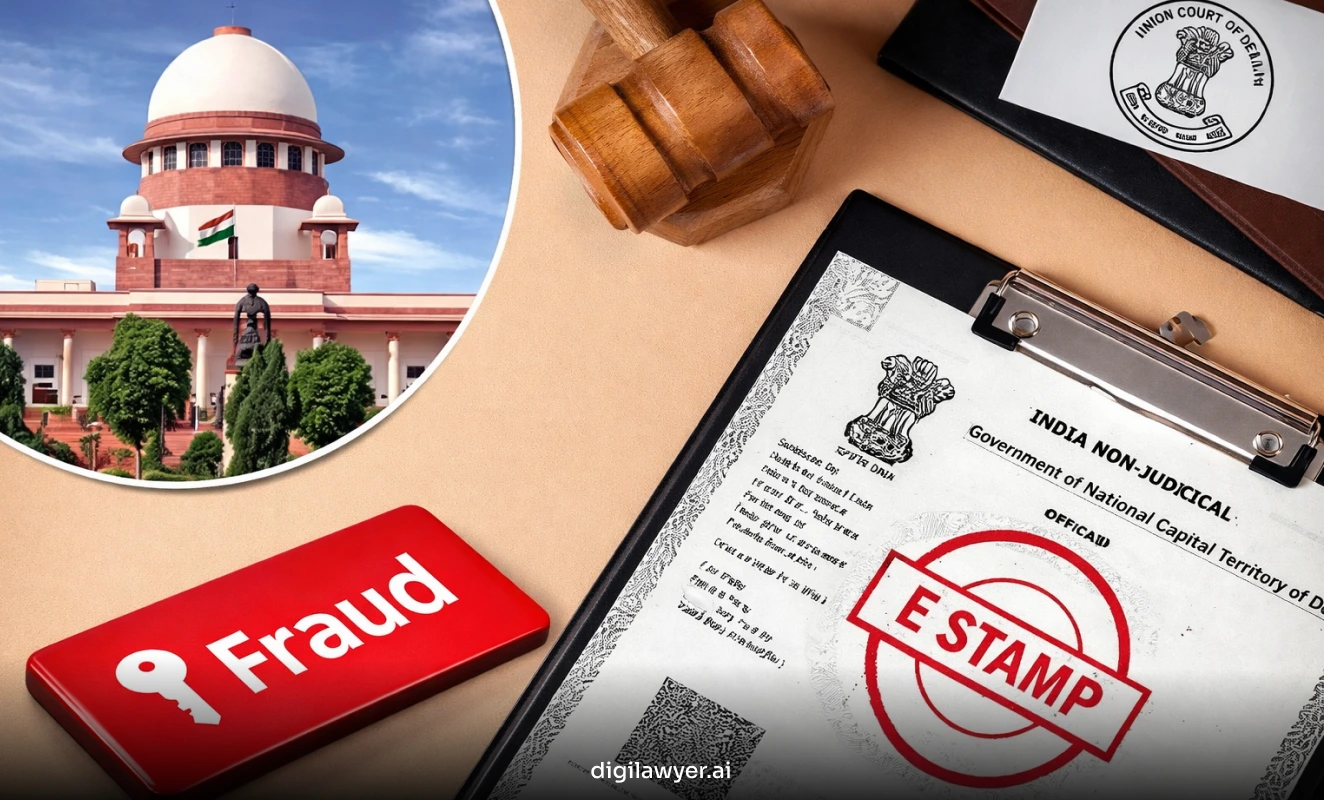
An e-stamp is 100% legal under the Indian Stamp Act, but a genuine certificate doesn't guarantee a safe contract. Most disputes arise because internal pages are swapped or edited after signing. To protect yourself, you must link every page to your unique UIN and eliminate blank spaces where hidden clauses could be added.
- Verified Security: Every e-stamp features a UIN and QR code for instant government-server verification.
- Tamper Protection: Prevent fraud by signing every page and mentioning the certificate number in the footer.
- Legal Standing: Accepted as primary evidence in Indian courts, far safer than traditional paper or franking.
In the early 2000s, India was shaken by the ₹200 billion stamp paper scam led by Abdul Karim Telgi, which exposed serious weaknesses in the country’s document verification system. Counterfeit stamp papers circulated through courts and banks for years before the fraud was uncovered.
To prevent such abuse, the Government of India introduced e-Stamping- a digital system for paying stamp duty and creating a verifiable government record for legal documents.
Today, e-Stamp paper is the approved standard for non-judicial stamping in most states. Each certificate carries a unique identification number and is legally valid when verified on official servers.
But here’s what most people don’t realise: while the e-Stamp itself is secure, the agreement attached to it may not be.
Every year, improperly handled e-Stamped documents are challenged in disputes due to tampering, replacement of pages, or poor execution.
As a legal tech platform, we receive thousands of questions such as
“Is a printed e-Stamp legally valid? Can it be fake? Can someone change my contract after signing?”
These concerns are legitimate.
This guide explains the legal validity of e-Stamping in India, highlights common fraud risks, and shows you how to protect your agreements so they remain enforceable in any court.
Is E-Stamp Legally Valid in India?
Yes. An e-Stamp is legally valid in India when it is issued through an authorised government system and used with the correct stamp duty value and state process. Its validity is backed by three major Indian laws
📜 The Indian Stamp Act, 1899 & State Amendments
This act enforces certain documents such as rent agreement, Affidavit must be stamped to be legally enforceable. The law does not mandate the use of physical stamp paper. It only requires that the prescribed stamp duty is paid to the government, which can be done through e-Stamping
💻 The Information Technology Act, 2000 (Section 4)
This Act gives legal recognition to electronic records. It states that if any law requires information to be in written or printed form, an electronic record (like an E-stamp certificate) satisfies that requirement.
The Information Technology Act gives legal recognition to electronic records.
It states that where a law requires information to be in writing or print, an electronic record satisfies that requirement.
An e-Stamp certificate is an electronic government record. Therefore, it is legally recognised
🏛️ Admissibility in Court (Indian Evidence Act, Section 65B)
Courts accept E-stamps as primary evidence. Why? Because, unlike old papers that could be forged in a basement, every E-stamp has a unique UIN (Unique Identification Number) that can be instantly verified on a government server. If a dispute arises, the judge can verify the stamp's authenticity online.
Summary: E-Stamp is legally valid because most states have amended the Indian Stamp Act, 1899 to recognise electronic records. In addition, Section 4 of the Information Technology Act gives legal recognition to electronic documents. When you print an e-Stamp certificate, it is treated as a valid and enforceable stamp certificate under law.
How States Differ: Where E-Stamping Works?
India does not have a single uniform rule.
📍 States with SHCIL E-Stamping (25+ states as of 2026): Andhra Pradesh, Assam, Bihar, Chhattisgarh, Delhi-NCR, Gujarat, Haryana, Himachal Pradesh, Jharkhand, Karnataka, Kerala, Madhya Pradesh, Odisha, Puducherry, Rajasthan, Tamil Nadu, Telangana, Tripura, Uttar Pradesh, Uttarakhand, West Bengal, plus union territories of Dadra & Nagar Haveli, Daman & Diu, Ladakh, Lakshadweep.
📍 Maharashtra's Different System: Maharashtra doesn't use SHCIL. It operates the Electronic Secured Bank Treasury Receipt (eSBTR) portal through the Inspector General of Registration (IGR).
Stamp duty is paid online, and you receive an eSBTR certificate with similar verification features. The process is functionally identical to SHCIL e-stamps.
📍 States with partial adoption: Some states accept e-stamps for certain instruments (rent agreements, affidavits) but still require physical stamps or franking for high-value property transactions.
This isn't officially documented; it's on-ground practice at the sub-registrar level. So always confirm locally.
How to Check If an E-Stamp Is Valid?
Do not trust blindly. Just because a document looks official does not mean it is valid. You must verify the UIN (Unique Identification Number) on the government database.
➡️ Find the UIN : Locate the Unique Identification Number (UIN) on the e-Stamp certificate. It is usually printed at the top and starts with “IN-” followed by numbers and letters.
➡️ Visit the Official Verification Portal : Go to the official e-Stamp verification website of your state or the central portal managed by Stock Holding Corporation of India Limited.
Each state follows its own verification system. Always use an authorised government website.
Option A: Website Verification (Manual Method)
- Visit the official SHCIL E-Stamp Website.
- Click on “Verify e-Stamp Certificate “ link on the homepage.
- Enter all five required details:
- State: (Select from Dropdown)
- Certificate Number (UIN): (The alphanumeric code starting with IN-...)
- Stamp Duty Type: (Select Description of Document from the list)
- Certificate Issue Date: (Exact date printed on the paper)
- Session ID: (The 6-character Captcha code shown on screen)
Option B: Mobile App Verification (Faster Method)
- Download the official e-Stamping app by StockHolding from the Play Store or App Store.
- Open the app and scan the QR code printed on the e-Stamp certificate.
- The app will instantly fetch the record from the central server.
➡️Verify the Result
- If the displayed details (issue date, stamp value, purchaser name, purpose, and issuing authority) match your certificate, the e-Stamp is valid.
- If the system shows “No Record Found,” the e-Stamp may be fake, cancelled, or incorrectly issued.
Common Reasons E-Stamps Become Invalid
Even genuine e-Stamps can become legally weak due to mistakes:
❌ Wrong State: Stamp duty is state-specific. An e-Stamp from one state cannot be used for property in another.
❌ Incorrect Value: Underpaid stamp duty can make the document inadmissible until penalty is paid.
❌ Wrong Purpose: If the e-Stamp says “Affidavit” but is used for a “Rent Agreement,” it may be rejected.
❌ Page Swapping or Tampering: The stamp is genuine, but the agreement pages are replaced later. This weakens enforceability.
❌ No Proper Signatures: Unsigned or improperly executed agreements lose legal strength.
Why Standard Stamping is Not Enough to Avoid E-Stamp Fraud
Buy an E-stamp from a street vendor and print the agreement yourself, you have zero digital proof of what the internal pages looked like at the time of signing. The stamp is valid, but the agreement can be compromised as these internal pages:
⚠️ Have no government verification
⚠️ Have no digital locking
⚠️ Have no central record
⚠️ Can be replaced or edited later
As a result, only the first page is protected. The rest of the agreement is not. This is a risk most vendors and agents do not disclose. However, our expert lawyers guide users on the correct safeguards and best practices. While the e-Stamp certificate (usually Page 1) is secure and verifiable, the remaining pages of the agreement are often unprotected.
How This Leads to Legal Problems?
Because internal pages are unsecured, common abuses include:
- Swapping pages after signing
- Adding new clauses later
- Changing penalty or rent terms
- Modifying lock-in periods
- Editing blank spaces above signatures
When disputes arise, courts can verify the stamp but proving which contract version is original becomes difficult.
1. The “First-Page Security” Illusion
E-Stamping creates a false sense of safety. People assume: “If the stamp is genuine, my contract is safe.”
In reality: Only the stamp duty payment is safe. The contract itself may not be.
This gap is where most legal disputes begin
2. How the First-Page Loophole Works
Earlier, entire contracts were written on stamped paper. Today, e-Stamping usually involves a single secure certificate. The actual terms- such as rent, lock-in period, penalties, and escalation clauses- are printed on plain A4 pages and attached behind the e-Stamp.
These internal pages usually have no security features.
Practical Example 1: Page Swapping in a Commercial Lease
You sign a 15-page commercial lease.
Six months later, a dispute arises over the lock-in period. The other party produces the agreement, but Page 4 is different. The original page containing the penalty clause has been removed and replaced with a new page that favours them.
Because the internal pages do not carry the UIN or certificate number, it becomes difficult to prove which version is original.
Practical Example 2: Rent Increase Added After Signing
You sign a residential rent agreement and sign at the bottom of each page.
However, extra blank space is left above your signature on one page. Later, the landlord adds a new clause in that space increasing the rent from 5% to 10% per year.
Since the clause appears above your signature, it looks legally valid, even though it was added after you signed.
Result
In both cases, the e-Stamp is genuine, but the agreement has been manipulated. Because the internal pages are not digitally locked, proving tampering becomes difficult.
This is known as page swapping and post-signing alteration, common but often overlooked forms of document fraud.
How to Protect Yourself from Page Swapping and Post-Signing Fraud?
To prevent document manipulation, follow these basic safeguards.
✍️ Write the Certificate Number on Every Page
Always write the e-Stamp certificate number (UIN) on the header or footer of every page of the agreement.
This links all pages to the original e-Stamp and makes replacement difficult.
🔍 Verify the E-Stamp Before Signing
Before signing, verify the e-Stamp online and confirm that the details match your document, including:
- Stamp value
- Purpose of the document
- Names of parties
- Date of issue
- Issuing authority
Do not rely only on printed copies.
🧾 Ensure Cause and Purpose Are Correct
Check that the “purpose” or “description of document” on the e-Stamp matches your agreement (for example: Rent Agreement, Lease Deed, Loan Agreement).
If the purpose is wrong, the document can be challenged later.
🚫 Strike Off All Blank Spaces Before Signing
Never sign a document with empty spaces.
Before signing:
- Draw a line through unused spaces
- Mark “Not Applicable” where needed
- Ensure nothing can be added later
This prevents clauses from being inserted after execution.
🖊️ Sign Across Pages and Attachments
Where possible, sign across the margin or at the bottom of each page so that removal or replacement becomes evident.
Summary
Most e-Stamp fraud does not involve fake stamps. It involves weak handling.
To stay protected:
- Link every page to the certificate number
- Verify details online
- Match purpose and value
- Eliminate blank spaces
- Sign carefully
These simple steps significantly reduce the risk of document tampering.
How to Protect Your Document: 3 Ways to Prevent Fraud
You do not need legal expertise to secure your agreements. Following these three basic practices can significantly reduce the risk of tampering.
✍️ Wet-Ink Safeguards (Physical Signing)
If you are signing a document physically, every page must be linked to the e-Stamp and to the parties.
- Sign Every Page: All parties should initial or sign the bottom of each page. Do not sign only the last page.
- Write the UIN on Every Page: On each page, write: “Part of Certificate No. IN-XXXX…”This connects the plain pages to the e-Stamp.
- Page X of Y: Number your pages as Page 1 of 15, Page 2 of 15. Missing pages become immediately noticeable.
- Strike Off Blank Spaces: Draw a line through any unused space to prevent additional clauses from being added later.
If you are signing physically, you must create a clear and continuous connection between every page of the document.
💾 Create a Digital Record
- After signing, scan the complete document (e-Stamp and all pages) into a single PDF.
- Email this file to all parties immediately and get acknowledgement for the same.
- This creates a time-stamped digital record. If any page is changed later, you can produce this email as proof of the original state.
🔐 Digital Signing (Most Secure)
After merging the e-Stamp with your agreement in PDF format, use Aadhaar e-Sign or a Digital Signature Certificate (DSC).
- How it works: This places a digital seal on the file.
- The Benefit: If anyone tries to change even a single letter, number, or page in the PDF, the digital signature is marked as tampered and appears as invalid. Page swapping and post-signing edits become impossible.
The digital certificate can be viewed and verified in Adobe PDF Reader. DigiLawyer’s e-Stamped documents can always be checked through Adobe for signature authenticity
Summary
To prevent fraud:
- Link every page to the e-Stamp
- Create a verified digital copy
- Use digital signatures when possible
These steps make your agreement difficult to manipulate and legally stronger.
Why DigiLawyer is Safer Than Your Local Vendor?
We don't just sell you a piece of paper. We will provide you with an E-stamped document that cannot be used against you in any way.
Local vendors just hand you the stamp. You are left to format the text and staple it yourself.
End-to-End Drafting and Execution: Digilawyer offer End-to-End Drafting and execution. We draft your agreement and digitally merge it with the e-Stamp before printing.
This ensures proper formatting and makes page insertion or replacement difficult
Digital Locking & E-Sign Integration: We are one of the few platforms that allow you to eSign your document immediately after stamping. This creates a tamper-proof digital seal that prevents Page Swapping.
Verified UIN & Government Compliance: We source only from authorised government collection centres. Every stamp delivered to your doorstep comes with a QR code you can instantly verify on the government portal.
FAQs
Is a black-and-white printout of the E-Stamp certificate legally valid?
Yes. Unlike traditional pink or green stamp papers, an E-Stamp is generated digitally. A clear black-and-white printout is legally valid as long as:
- The QR code is readable
- The Unique Identification Number (UIN) is visible
The legal value comes from the government’s digital record, not from the colour of the paper or ink.
Do I sign on the E-Stamp paper or the attached white sheets?
You should sign on both.
- On the E-Stamp Sheet: Sign at the bottom (if space permits) or on the back, as per state practice.
- On the Attached Pages: Both parties and witnesses must sign every page of the agreement.
This prevents tampering or page replacement later.
How do I know the E-Stamp provided isn’t fake?
Every E-Stamp has a unique UIN.
You can verify it on:
- The official SHCIL website, or
- The respective State Treasury portal
We provide the verification link along with your document so you can confirm authenticity yourself.
I heard E-stamps expire in 6 months. Is that true?
No, but with one exception. This is the most common myth. According to the Supreme Court of India (Thiruvengada Pillai vs. Navaneethammal), a stamp paper does not have an expiry date for use. You can use them even after a year of purchasing it.
- Exception: In Maharashtra, the local law requires stamp paper to be used within 6 months of purchase.
- Confusion: The 6-month rule usually refers to the Refund window. If you want to return an unused stamp to the government, you must do it within 6 months.
I made a spelling mistake in the First Party name. Can I use a whitener or a pen to correct it?
Do not do this. It ruins the legal validity. Any alteration, overwriting, or use of a whitener on a stamp certificate makes it suspicious and often inadmissible in court. You must purchase new stamp paper.
This is why we don't just print and ship. Our team shares a draft for your approval before we apply the final stamp, so you don't waste money on typos.
Can I buy an E-stamp with a 'back date' (past date)?
Absolutely not. It is illegal. E-stamps are generated in real-time from a central government server. Every certificate has a specific Date and Time of Issue printed on it. You cannot buy a stamp today that says it was bought last week.
If a local agent promises you a backdated E-stamp, they are likely giving you a fake or photoshopped document. Using this can land you in jail for fraud.
The E-stamp you sent is just a black-and-white printout. Is this really original?
Yes, it is 100% original. Unlike the old pink/green physical papers, E-stamps are designed to be printed on plain secure paper. The validity doesn't come from the colour; it comes from the QR Code and the Unique Identification Number (UIN) at the top. You can instantly verify this UIN online to confirm it’s not a photocopy.
Why is DigiLawyer charging more than the stamp value? Can't I just get it from a vendor?
You are paying for Security, Speed, and Delivery.
- Local Vendor: You have to travel, stand in line, pay cash, and often face server downtime or out-of-stock excuses. They just hand you a blank piece of paper.
- DigiLawyer: We handle the drafting, verify the legal clauses, print it on high-quality paper, and courier it to your doorstep. We also offer data privacy; we don't store your sensitive property details on a public cyber cafe computer.
I bought an E-stamp in Delhi, but I want to use it for a Rent Agreement in Noida. Is it valid?
No. Stamp duty is a State Subject. Revenue goes to the specific state government.
- A Delhi stamp is valid only for use within the Delhi jurisdiction.
- A UP stamp (for Noida) is valid only in UP.
If you use the wrong state's stamp, your agreement is legally void. DigiLawyer selects the correct state vendor based on your property address, so you never make this mistake.
If I don't use the E-stamp, can I get a refund?
Technically, yes, but practically it is very difficult. To get a refund, you must physically visit the Collector of Stamps office, fill out a form, attach the original certificate, and wait for weeks. The government also deducts 10% of the value.
Our Advice: Sometimes the travel cost and hassle are usually more than the refund value. It is better to get the draft right the first time using DigiLawyer.
Is E-Stamping safer than 'Franking'?
Yes, much safer.
- Franking: A machine prints a red mark on your paper. These machines are older, often run out of ink/credit, and are harder to verify online.
- E-Stamping: It creates a digital entry in the government's central record. It is tamper-proof and verified globally. Many banks now refuse franked documents and insist on E-stamps.
What happens if the government server is down?
We monitor it for you. Government servers (SHCIL/GRAS) do face downtime. If you go to a local vendor, you might be told to "come back tomorrow."
DigiLawyer Advantage: We have a dedicated team that queues your request and processes it as soon as the server comes back online. You don't need to keep checking; we notify you when it's done.
How do I know the E-stamp isn't a photocopy? I've heard of scams.
Trust the QR Code, not the paper.
Scammers often Photoshop old E-stamps.
How to Check:
- Download the "e-Stamping" App (by StockHolding).
- Scan the QR code on the paper we deliver.
- If the app shows the details on your screen, it is genuine. If it says "No Record Found," it is fake. We source only from authorised centres. We encourage every customer to scan and verify their stamp upon delivery.
What quality of paper and printing do you use?
We use:
- High-quality secure paper
- Clear laser printing
- Smudge-proof ink
- Proper formatting and margins
This ensures your document looks professional and remains readable for years.
When Is an E-Stamp Legally Valid?
An e-Stamp is valid if all of the following conditions are met:
- It is issued through an authorised government portal or centre. Infact, DigiLawyer simplifies this by offering a single platform to obtain stamp paper from authorised vendors across states
- The stamp duty amount is correct
- It is issued for the correct state
- The purpose of the document is correctly mentioned
- The UIN is verifiable on official records
- It is properly attached to the agreement and signed
If any of these are wrong, the document can be challenged in court.


- Is E-Stamp Legally Valid in India?
- 📜 The Indian Stamp Act, 1899 & State Amendments
- 💻 The Information Technology Act, 2000 (Section 4)
- 🏛️ Admissibility in Court (Indian Evidence Act, Section 65B)
- How States Differ: Where E-Stamping Works?
- How to Check If an E-Stamp Is Valid?
- Common Reasons E-Stamps Become Invalid
- Why Standard Stamping is Not Enough to Avoid E-Stamp Fraud
- How This Leads to Legal Problems?
- 1. The “First-Page Security” Illusion
- 2. How the First-Page Loophole Works
- Practical Example 1: Page Swapping in a Commercial Lease
- Practical Example 2: Rent Increase Added After Signing
- How to Protect Yourself from Page Swapping and Post-Signing Fraud?
- ✍️ Write the Certificate Number on Every Page
- 🔍 Verify the E-Stamp Before Signing
- 🧾 Ensure Cause and Purpose Are Correct
- 🚫 Strike Off All Blank Spaces Before Signing
- 🖊️ Sign Across Pages and Attachments
- How to Protect Your Document: 3 Ways to Prevent Fraud
- ✍️ Wet-Ink Safeguards (Physical Signing)
- 💾 Create a Digital Record
- 🔐 Digital Signing (Most Secure)
- Summary
- Why DigiLawyer is Safer Than Your Local Vendor?
- FAQs

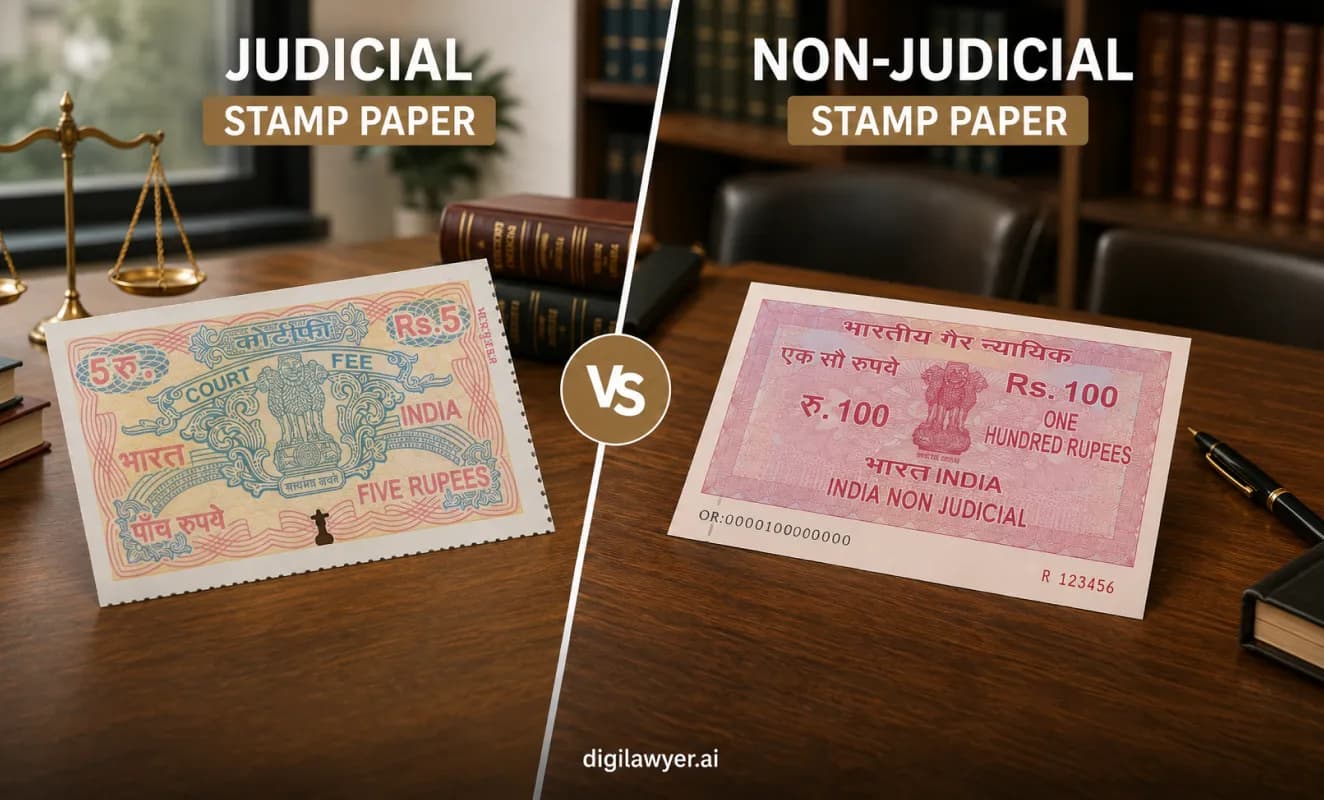
Judicial vs Non-Judicial Stamp Paper: What's the Difference?
Learn the difference between judicial and non-judicial stamp paper in India, their uses, legal validity, denominations, and how to choose the right one.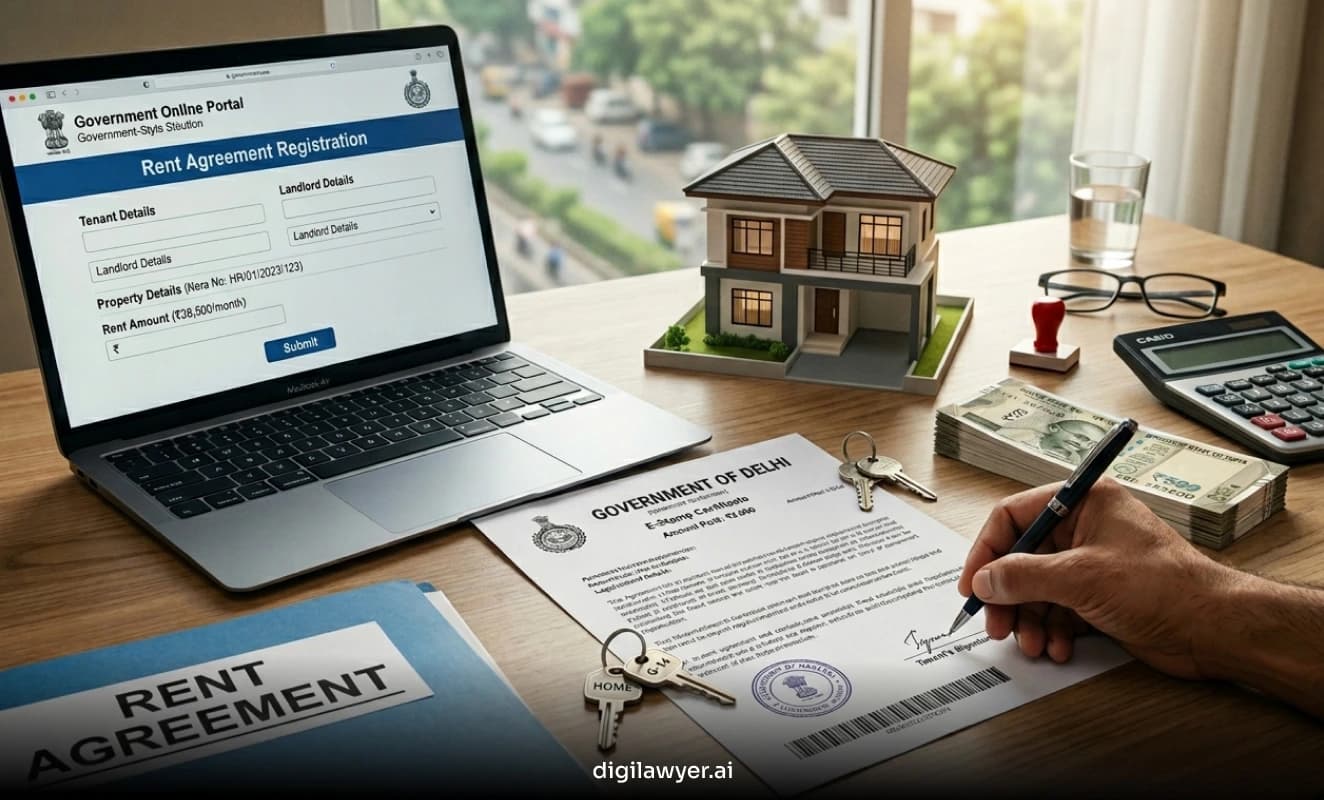
Stamp Duty and Registration Charges for Rent Agreement in Delhi
Not sure how much stamp duty you need for a rental agreement in Delhi? Here’s a simple guide covering charges, calculation, and registration rules to help you avoid mistakes.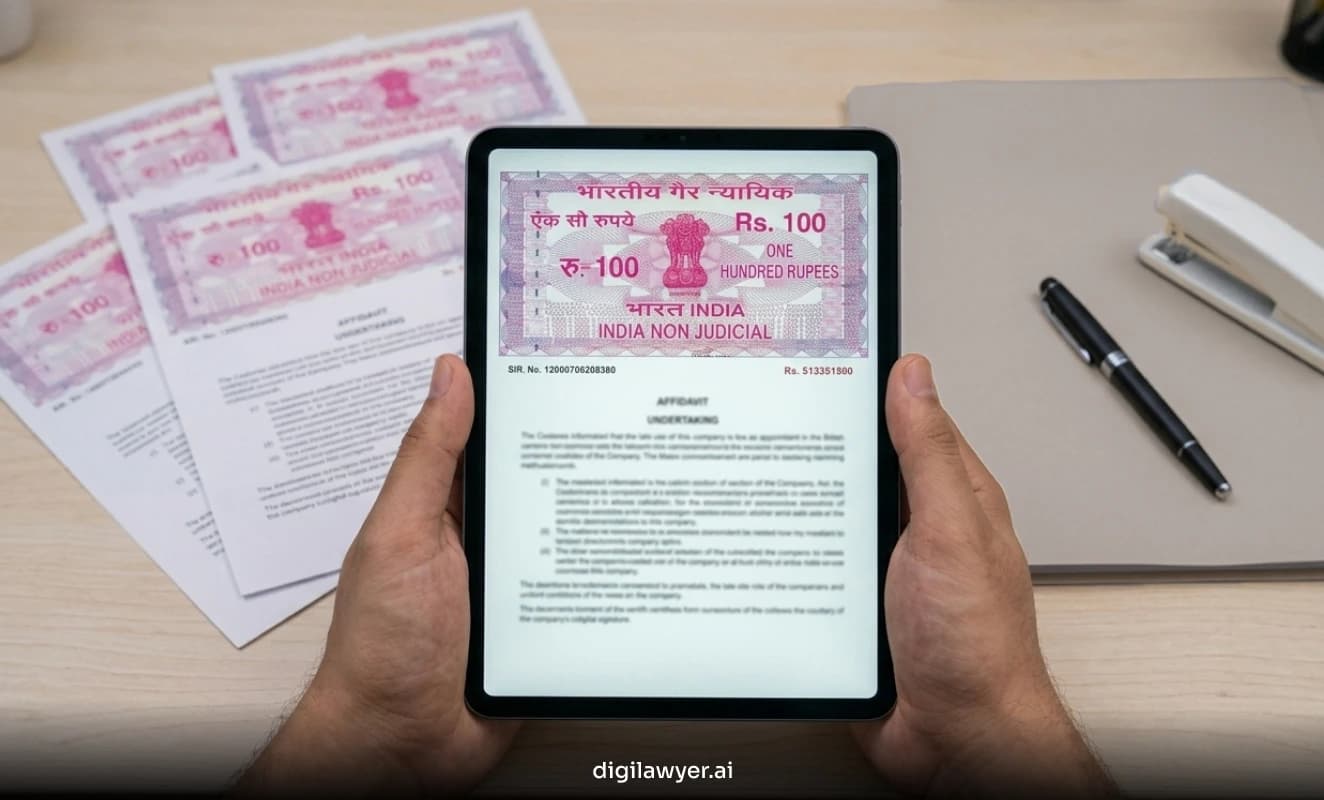
How to Buy 100 Rs Stamp Paper Online in India?
Need a 100 Rupees stamp paper for a rent agreement or affidavit? Get a legally valid e-stamp paper online within 24 hours. Skip the queues order now with DigiLawyer.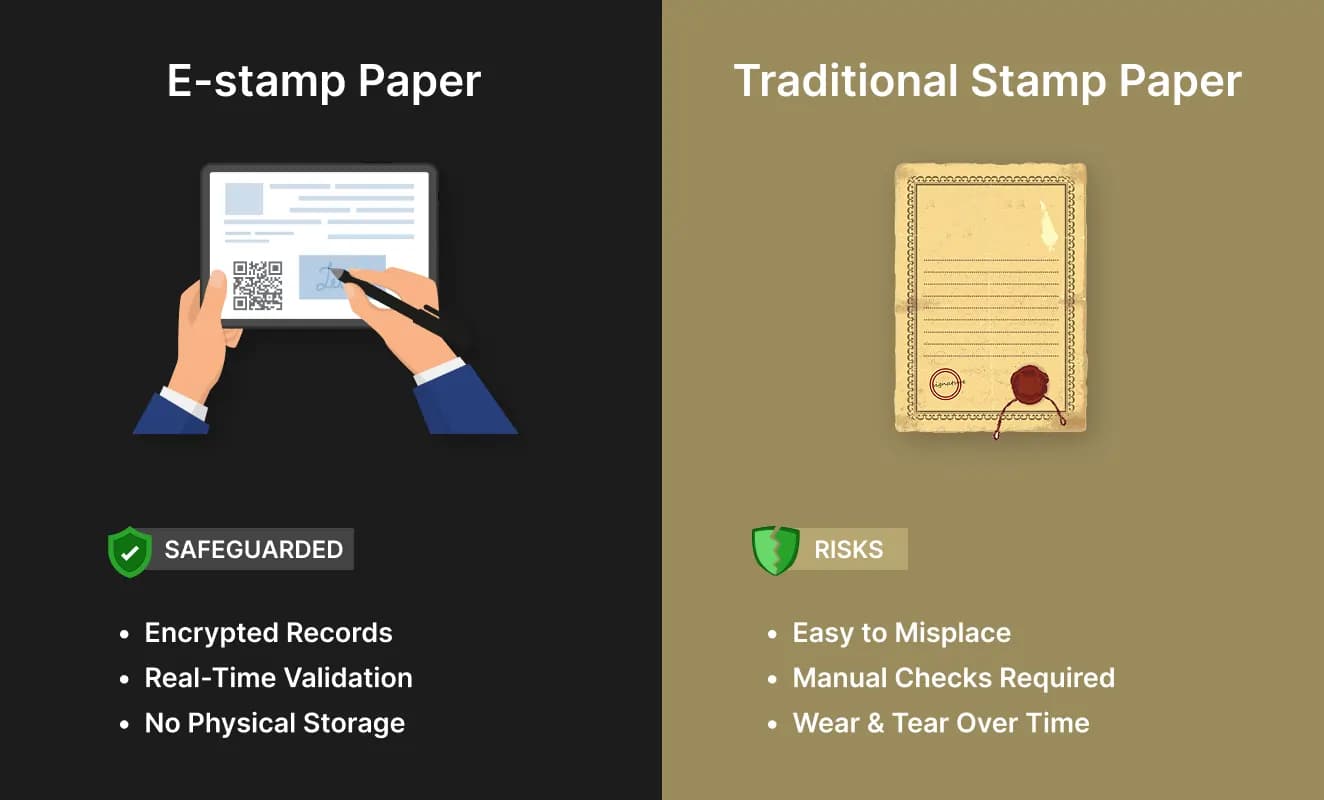
E-Stamp Paper vs Traditional Stamp Paper: The Practical 2026 Guide
Understand the difference between traditional stamp and e-Stamp paper in India. Learn risks, legal validity, and why e-Stamping is safer in 2026.
DigiLawyer, A 80, A Block, Sector 2, Noida, Uttar Pradesh 201301
Phone: +918178704343
justice@digilawyer.ai





Disclaimer: DigiLawyer is not a law firm, a substitute for a lawyer or law firm, a chartered accountancy firm, or a company secretary firm. We act solely as an intermediary between users and registered professionals, and also offer AI-powered legal assistance, consultation, and document drafting tools to improve access to legal support. Use of our website, services, or AI tools is at the sole risk of the user and does not create any lawyer-client or professional relationship. All consultations and interactions facilitated through our platform are strictly between the user and independent professionals. DigiLawyer is not liable for any actions, decisions, or outcomes arising from the use of our platform, AI tools, or reliance on any advice, consultation, or content provided by us or third-party professionals.
Use of our products and services is subject to our Privacy Policy & Terms of Service

