


Judicial vs Non-Judicial Stamp Paper: What's the Difference?
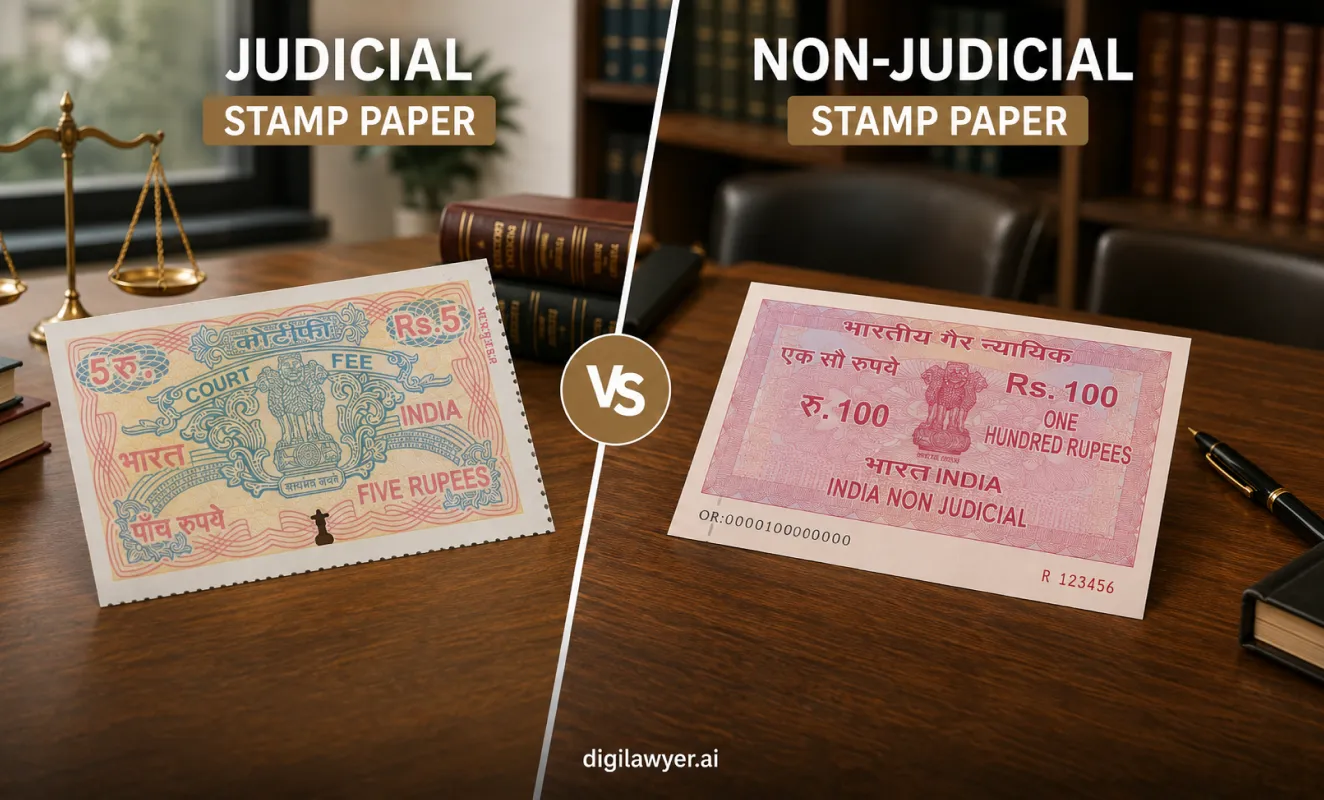
60-Second Summary
Judicial Stamp Paper or Court Fee:
- Used for paying fees on court filings such as civil suits, appeals and certain applications.
- Depending on the court, payment may be made using a court-fee stamp, an online payment portal or an e-challan.
Non-Judicial Stamp Paper:
Used for paying stamp duty on documents such as rent agreements, sale deeds, powers of attorney and business agreements when the applicable state law requires it.
The simple rule
- Filing something in court → Check the applicable court fee.
- Signing an agreement or completing a transaction → Check the applicable non-judicial stamp duty.
- Preparing an affidavit → Check where it will be submitted before choosing the stamp type.
The stamp paper amount does not depend only on the document’s name. Your state, transaction value, agreement period and document purpose can all affect the duty.
If you use the wrong stamp paper type or pay less than required, the document may be returned, held for correction or delayed. In most situations, the problem can be corrected by paying the proper amount and any applicable charges.
If you have been asked to “get stamp paper for document/agreement”, your first question should be: Which type?
Judicial and non-judicial stamps serve different purposes. One is used for paying fees connected with court proceedings. The other is used for paying stamp duty on agreements, deeds and other documents.
This blog explains the difference between Judicial and Non-judicial stamp paper, who should use each type and how to avoid buying the wrong stamp paper.
Judicial vs Non-Judicial Stamp Paper: At A Glance
Though judicial and non-judicial stamp papers are government-issued stamp papers, they differ in their purpose, usage and value.
Basis of Comparison | Judicial Stamp Paper | Non-Judicial Stamp Paper |
1.Meaning | Payment connected with a court filing or court service | Duty paid on a chargeable agreement, deed or other document |
2.What is being paid? | Court Fee | Stamp Duty |
3. When is it used? | When filing a suit, appeal, petition, application or another chargeable court document | When executing a chargeable document such as a lease, conveyance, POA or partnership deed |
4. Typical user | Litigant, appellant, applicant or advocate filing on their behalf | Landlord, tenant, property buyer, seller, business, employer, lender or individual |
5. Governing rules | Applicable court-fee law, state amendments and court rules | Applicable Stamp Act, state amendments, state stamp law and schedule |
6. Amount | May be fixed or based on the value of the claim or relief | May be fixed or based on transaction value, rent, duration, consideration or property value |
7. Payment method | Court-fee stamp, label, online payment or e-challan | E-stamp, physical stamp paper, franking, challan or another approved method |
8. Where obtained | Court-related vendors, counters, treasury or online court portal | Authorised collection centre, licensed vendor, bank, treasury, state portal or facilitator |
9. Does it expire? | No single national answer for every type; current court and state rules should be checked | No general 10- or 20-year expiry rule, but refund and use procedures apply. |
10. If payment is short | The filing may be marked defective or returned until the fee is corrected. | The document may be impounded or not accepted until duty and applicable charges are paid |
11. Common examples | Civil suit, appeal, court application, certified copy or process fee | Rent agreement, sale deed, gift deed, POA, partnership deed or chargeable affidavit |
The key point is that "judicial stamp paper" describes a court-fee payment, while "non-judicial stamp paper" describes duty on a legal document. If a document later becomes part of a court case, any applicable court fee is separate from the stamp duty paid on the document.
It's also worth knowing that non-judicial stamp duty isn't always a one-time, fixed cost, some states allow refunds on spoiled stamp paper or additional duty later if compensation is enhanced, but the same document should not be stamped twice for the same transaction.
What is a Judicial Stamp Paper (Court Fee Stamp Paper)?
Judicial stamp paper is a government-issued stamp paper which is used to pay a fee connected with filing petitions, affidavit and other court-related proceedings under the Court Fees Act, 1870.
For example, a person filing a civil suit may need to pay court fees based on the amount being claimed. An appeal, petition or application may also carry a prescribed court fee.
Without this stamp paper, the court can’t accept your petition, appeals, affidavits or initiate legal proceedings.
In simple words, the main purpose of judicial stamp paper is to show that the govt fees have been paid to the court, eliminating the need for cash transactions. These stamp papers are available in different denominations such as Rs 2, Rs 5 and Rs 10.
Note: A document does not require judicial stamp paper merely because it is connected with a legal matter. The filing court’s rules determine whether a fee is payable and how it should be paid.
Quick Answer: Do I need a specific stamp value for every court filing?
People often ask for a ₹2, ₹5 or ₹10 judicial stamp without first checking the court requirement.
There is no single denomination that works for every court filing.
For example, the basic court-fee for a Vakalatnama was sometimes as low as ₹2 or ₹5 under older fee schedules. However, the amount can vary by state or court, and additional charges such as an advocate welfare stamp may also apply. For example, a state may require a ₹10 or ₹25 welfare stamp on the Vakalatnama.
Before buying anything, confirm:
- Which court the matter is being filed in
- What kind of case or application is involved
- The amount of court fee payable
- Whether the court accepts a physical stamp, online payment or e-challan
Validity of Judicial Stamp Paper
An unused judicial stamp does not usually expire with time. It remains a legally valid document. However, its use and refund depend on the applicable state rules and the requirements of the court where it will be filed.
A court may also change its filing process and move from physical court-fee stamps to online payments.
Therefore, if you have an old judicial stamp, check with the concerned court registry or your advocate before using it for a new filing.
Where to Buy Judicial Stamp Paper?
Depending on your state and court, judicial court fees may be obtained or paid through:
- Licensed stamp vendors near court premises
- Court-fee counters or government treasuries
- The eCourts ePay portal
- A High Court or District Court payment portal
- A state GRAS, e-GRAS or treasury portal
Not every court supports every payment method. Make sure to confirm the accepted option before paying.
Real-Life Scenarios That Require Judicial Stamp Paper
Let’s say a business is owed ₹5 lakh for goods it supplied. After reminders and a legal notice, it decides to file a money-recovery case.
Before filing the case, the business owner needs to pay the applicable court fee. The amount generally depends on the claim value and the court-fee rules in that state.
The fee can be paid through the method accepted by the court, such as online payment, e-challan, or a judicial court-fee stamp. The payment proof is then submitted with the case.
In this situation, the judicial payment is not used for the original supply agreement. It is used to pay the fee for filing the court case.
Legal professionals often find that individuals purchase judicial stamp paper for private agreements, believing all stamp papers serve the same purpose. In practice, judicial stamp paper is primarily used to pay court fees for litigation and court proceedings, whereas agreements executed outside the court generally require non-judicial stamp paper. Choosing the wrong type can delay proceedings and require re-execution of documents.
What is a Non-Judicial Stamp Paper?
The word “non-judicial” does not mean that the document has no legal importance. A non-judicial stamp paper is a type of stamp paper used for legal documents such as agreements, deeds, and affidavits that are not related to court proceedings. These documents may require stamp duty, which is a tax paid to the government.
In simple words, non-judicial stamp paper is the paper or electronic form used to pay or show that this stamp duty has been paid.
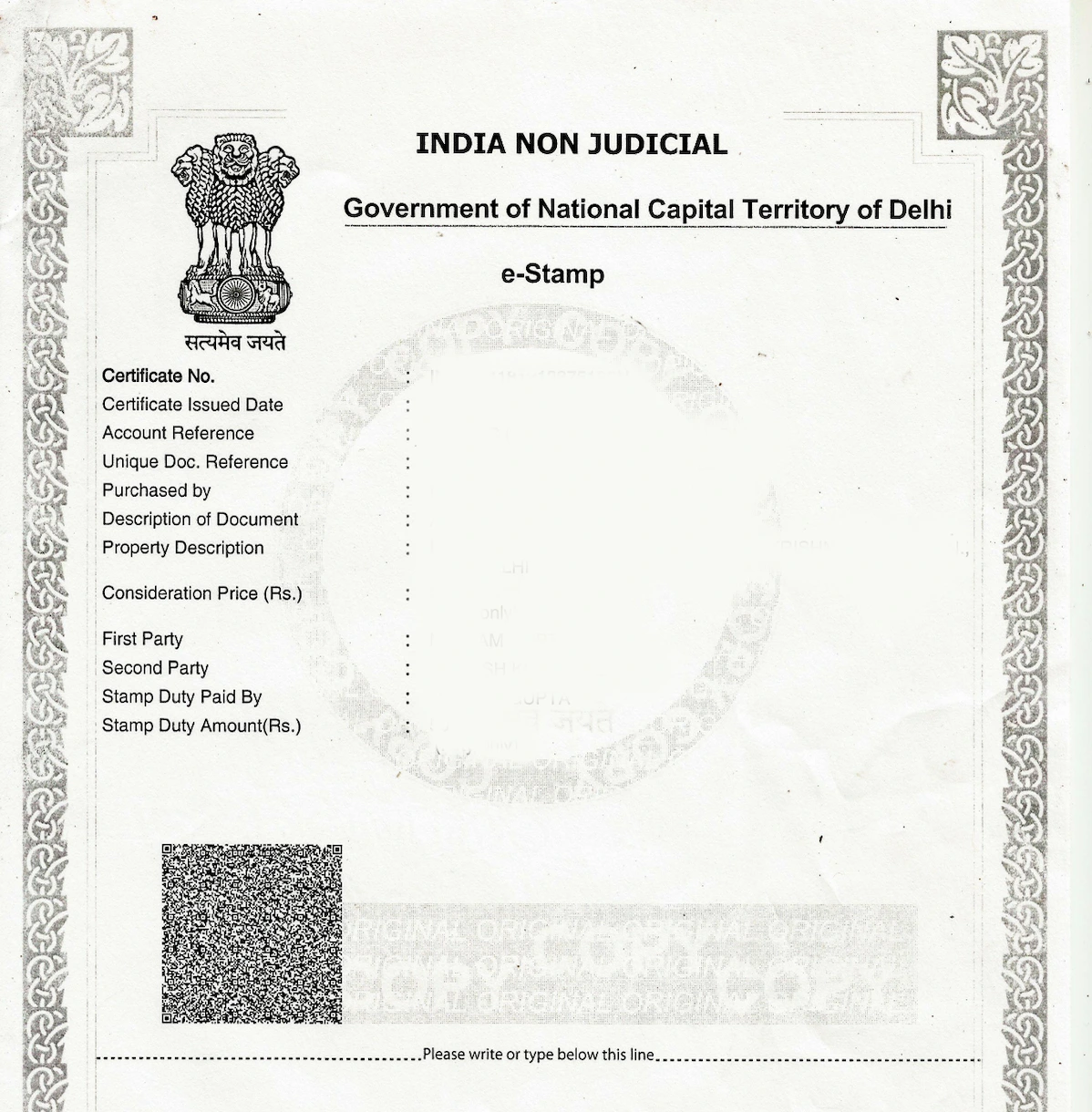
Some common non-judicial stamp paper cases include:
- Rent and lease agreements
- Sale and conveyance deeds
- Gift deeds
- Power of attorney
- Partnership deeds
- Loan and security documents
- Indemnity bonds
- Certain affidavits and declarations
- Commercial agreements
The Indian Stamp Act, 1899, along with state amendments and separate state stamp laws, determines which documents attract stamp duty.
Not every private document requires stamp paper. Some documents may be exempt, while others may attract a fixed duty or a duty calculated from the transaction value.
Quick Answer: How do I know how much stamp duty I need to pay for my agreement?
Suppose a landlord and tenant are preparing a rent agreement.
They need to check the stamp-duty rule applicable in the state where the property is located. The amount may depend on the rent, security deposit, agreement period and other terms.
Once the correct stamp duty is identified, it's paid through the method accepted in that state (e-stamping, franking, or physical stamp paper).
Note: Paying it correctly satisfies the state's revenue requirement but the agreement still needs to be properly drafted, signed by all parties, and registered if the law requires registration for that document type.
Validity of Non-Judicial Stamp Paper
There is no general rule under the Indian Stamp Act saying that non-judicial stamp paper expires after 10 or 20 years.
In fact, the 6 month period people often refer to under Section 54 of the Indian Stamp Act, 1899, is about claiming a refund for unused stamp paper. If you have a stamp paper that you no longer need, Section 54 allows you to surrender it and seek a refund, subject to the conditions in the section, including that it was purchased within the preceding six months.
6 month period under Section 54 of the Indian Stamp Act, 1899 is not a shelf life for the physical paper.
You can always verify your e-stamp validity online.
Every e-Stamp certificate has details that can be verified online. Enter the e-stamp certificate details on the official SHCIL verification page to confirm its issue/generation date and other certificate details.
If the details are wrong, contact the issuing authority or service provider before signing the document.
Also, if you are using an old stamp paper, make sure to check:
- Whether it was purchased for the correct purpose
- Whether the purchaser and party details are correct
- Whether the required stamp duty has changed
- Whether the state now requires another payment method
- Whether the document must be stamped before or at the time of signing
Where to Buy Non-Judicial Stamp Paper?
If you want to buy a non-judicial stamp paper or pay stamp duty, here are some of the channels you must try:
- Official E-Stamp or State Portal: Some states provide e-stamping through SHCIL, while others use their own registration, treasury or payment system.
- Licensed Stamp Vendor or Authorised Collection Centre: You can reach out to licensed vendors or authorised collection centres for physical stamp papers and e-stamp certificate.
- A Private Facilitator such as DigiLawyer: DigiLawyer helps customers buy non-judicial e-stamp certificates across supported states. The certificate is issued through the applicable authorised stamping system.
Real Life Example Showing When Non-Judicial Stamp Paper is Required
A Redditor shared his experience completing the property registration in Uttar Pradesh before leaving India.
Following his advocate’s advice, he purchased a non-judicial stamp worth nearly Rs 2 lakh to execute the sales deed and complete the registration formalities.
A few days later, he called his advocate to check on the paperwork. Instead of confirming the registration date, he asks him: “Do you have an e-stamp certificate?”
His stamp paper was misplaced by the advocate. Now he was stuck without any proof of payment of stamp duty. This highlights how important the stamp paper is.
The buyer was worried because the stamp duty had already been paid, and the property registration deadline was coming.
In the worst case, losing this certificate can create delays.
Our Take On This:
Lost your e-stamp certificate? Don’t pay the stamp duty again immediately.
If the certificate is lost, first verify the original e-stamp using its certificate number/QR code and collect your payment records. Then speak to the authorised provider or concerned Sub-Registrar about the procedure to use the existing stamp payment for your registration. UP’s registration department specifically provides online e-stamp verification.
For high-value property transactions, always keep:
- E-stamp certificate number
- Original payment receipt
- Digital/PDF copy of the certificate
- Payment/transaction reference
- A copy shared with your advocate
Property transactions, commercial contracts, rent agreements, and powers of attorney frequently fail registration due to incorrect stamp duty or the use of the wrong denomination. Verifying the applicable state stamp duty before purchasing stamp paper helps avoid unnecessary delays and penalties.
Which Stamp Paper Should You Use?
Use a judicial court-fee payment when the court requires a fee for the document you are filing.
Use non-judicial stamp duty when the applicable state law charges duty on the agreement, deed or document you are executing.
Use the following table as a starting point:
If you need to… | What you should check |
File a civil suit | Judicial court fee applicable to the claim |
File an appeal | Court fee prescribed for that appeal |
Submit a petition or court application | Filing rules and court-fee schedule of that court |
Submit an affidavit in court | The court’s affidavit, oath and fee requirements |
Submit an affidavit to a bank, university or government office | The receiving authority’s format and applicable state stamp rule |
Create a rent or lease agreement | Non-judicial stamp duty applicable in the property’s state |
Execute a property sale deed | Non-judicial stamp duty and registration charges |
Execute a power of attorney | Non-judicial duty based on the purpose and state |
Create a partnership deed | Non-judicial duty applicable to partnership instruments |
Sign a loan or security document | Non-judicial duty applicable to that document |
Create a business agreement | Check whether the agreement is chargeable in the applicable state |
Create an employment agreement | Check the state schedule; stamp duty is not automatically required in every case |
File a vakalatnama | Court-fee and advocate-welfare-stamp rules of the concerned court |
This table is a guide, not a rate chart. The final amount must be checked for the state and document involved.
Essential Checklist Before Buying Stamp Paper
Before purchasing a stamp paper, go through this checklist to avoid document rejection, delays, or additional stamp duty. Remember, do not begin by choosing a denomination. Begin by understanding the document.
What Happens If You Buy the Wrong Stamp Paper?
A wrong stamp does not automatically destroy the entire transaction. However, it can cause delay, additional payment and extra visits to the court or registration office.
1. Wrong stamp paper type
Judicial court fee and non-judicial stamp duty cannot normally replace each other.
A judicial court-fee payment does not pay the stamp duty on a rent agreement. Similarly, a non-judicial e-stamp cannot automatically be used as the court fee for filing a civil suit.
If you discover the mistake before using the stamp, stop and check whether a refund or correction is available.
2. Using the Wrong Stamp Denomination
If the amount paid is lower than the duty required, the document may be treated as insufficiently stamped.
The authority may ask for:
- The unpaid portion of the duty
- An applicable penalty or charge
- Submission of the document for adjudication or correction
An insufficiently stamped agreement is not automatically void. The Supreme Court has recognised that non-stamping or inadequate stamping is generally a curable defect, although the document may not be admitted or acted upon until the defect is corrected. Read the Supreme Court judgment.
If you paid more duty than required, a refund is not automatic. The available remedy depends on whether the stamp is unused, spoiled, incorrectly issued or already used, along with the applicable state procedure.
3. Unused Stamp Paper
An unused stamp may qualify for a refund or allowance.
Under the central Indian Stamp Act, the six-month period commonly mentioned in this context relates to applications involving certain unused stamps. State procedures, deductions and document requirements may differ.
Apply promptly rather than keeping an incorrect stamp paper for later use.
4. Registration Delays
The Sub-Registrar may delay or refuse registration until the correct duty is paid.
A mistake can also affect:
- A scheduled property-registration appointment
- Loan disbursement
- Possession or handover
- Business onboarding
- Court filing
- Internal compliance records
Checking the duty before signing is usually easier than correcting it afterwards.
Get Your Non-Judicial Stamp Paper Online with DigiLawyer
Now that you understand the difference between judicial and non-judicial stamp paper, the next step is getting the right one from a trusted source.
At DigiLawyer, you can order a government-authorized e-Stamp online without visiting a stamp vendor or government office. Simply choose your state and document type. We’ll help you get the right e-stamp paper delivered digitally or to your doorstep.
FAQs
What are the different types of stamp paper in India?
In India, there are 2 types of stamp papers available in India -
- Non-Judicial Stamp Paper
- Judicial Stamp Paper
Can I use a Judicial stamp paper for a property sales deed?
No, a property sales deed is executed on non-judicial stamp paper as it’s a private legal transaction.
Is judicial stamp paper required for affidavits?
Yes, you need stamp paper for affidavits, but the type of stamp paper depends on where the affidavit is submitted. If it’s submitted for court proceedings, then you must use a judicial stamp paper.
For affidavits submitted to banks, universities or passport offices, use a non-judicial stamp paper.
What happens if I use the wrong type of stamp paper?
If you use the wrong type of stamp paper, then it creates legal issues. This means your document will not be accepted for the intended purpose, and hence you’re required to pay the correct stamp duty.
Also, using the wrong type of stamp paper means you lose the stamp duty already paid, as the paper can’t fulfill the legal requirements for the transaction you intended to complete.
In short, a wrong stamp paper can delay your entire legal process. You might face document rejection, registration delays and incur additional penalties.
Where can I buy judicial and non-judicial stamp paper?
You can buy physical stamp paper from licensed stamp vendors and govt treasuries. In many states, you can purchase the e-stamp paper online through the state's official e-stamping portal.
While DigiLawyer don’t provide judicial stamp paper, we provide non-judicial stamp paper and e-stamping services across multiple states in India, including Delhi, Haryana, UP, Punjab, Madhya Pradesh, Rajasthan, Tamil Nadu, Telangana, etc.
Can I use old, unused stamp paper?
As per the Indian Stamp Act, you can still use an unused stamp paper for 10 years or 20 years after the purchase.
Which is better: physical stamp paper or an e-stamp?
While both stamp papers are legally valid, but e stamp is generally the most preferred option because it’s easy to verify online, more secure, and can be available instantly through portals like DigiLawyer.
What details are required to buy stamp paper?
When you purchase e-stamp paper from a licensed vendor, the following information is typically required: the purchaser’s name, the date of purchase, and the purpose of purchase.
Is non-judicial stamp paper required for a rent agreement?
Yes, you need a non-judicial stamp paper for a rent agreement.
Do I need non-judicial stamp paper for every document?
No, you don’t need non-judicial stamp paper for every document. Still, this type of stamp paper is generally required for private legal and commercial transactions such as property sales, power of attorney, partnership deeds, affidavits and business agreements.
Can I get both e stamp and physical paper through DigiLawyer?
Yes, you can get both e stamp and physical paper through DigiLawyer.
How much does stamp paper cost?
The cost of stamp paper (known as stamp duty) varies from state to state, depending on the state laws and the specific type of document you want to generate.
Generally, affidavits require Rs 50 stamp paper, a power of attorney costs Rs 100, and partnership deeds require a Rs 2000 stamp paper.
How quickly can DigiLawyer deliver e stamp and a physical stamp paper?
We deliver e-stamp certificates digitally on WhatsApp, email, or you can download them through our portal within 2-4 hrs. At the same time, a physical stamp is usually delivered within 5-6 working days depending on your location of delivery.
Can I track my stamp paper order?
Yes, once your order is processed, we will update you about the status and delivery progress.
Why would I choose DigiLawyer over a local stamp vendor?
Instead of visiting a stamp vendor, you can purchase government-authorized e-Stamp papers online through DigiLawyer from the comfort of your home or office.
Our experts also help you choose the correct stamp paper, denomination, and stamp duty based on your document and state laws, with digital or doorstep delivery where available.
Is there an additional charge DigiLawyer will take from me?
Yes, if you order a physical stamp paper, then courier charges will be applied separately from the stamp paper price and can differ depending on the delivery location and courier service.
Don’t worry, we’ll communicate the applicable courier fee before processing the order.
Ask AI: What's on your mind?
Have a question about stamp paper, how to buy for your state, or legal procedures? Ask our AI assistant.


- Judicial vs Non-Judicial Stamp Paper: At A Glance
- What is a Judicial Stamp Paper (Court Fee Stamp Paper)?
- Validity of Judicial Stamp Paper
- Where to Buy Judicial Stamp Paper?
- Real-Life Scenarios That Require Judicial Stamp Paper
- What is a Non-Judicial Stamp Paper?
- Validity of Non-Judicial Stamp Paper
- Where to Buy Non-Judicial Stamp Paper?
- Real Life Example Showing When Non-Judicial Stamp Paper is Required
- Which Stamp Paper Should You Use?
- Essential Checklist Before Buying Stamp Paper
- What Happens If You Buy the Wrong Stamp Paper?
- 1. Wrong stamp paper type
- 2. Using the Wrong Stamp Denomination
- 3. Unused Stamp Paper
- 4. Registration Delays
- Get Your Non-Judicial Stamp Paper Online with DigiLawyer
- FAQs
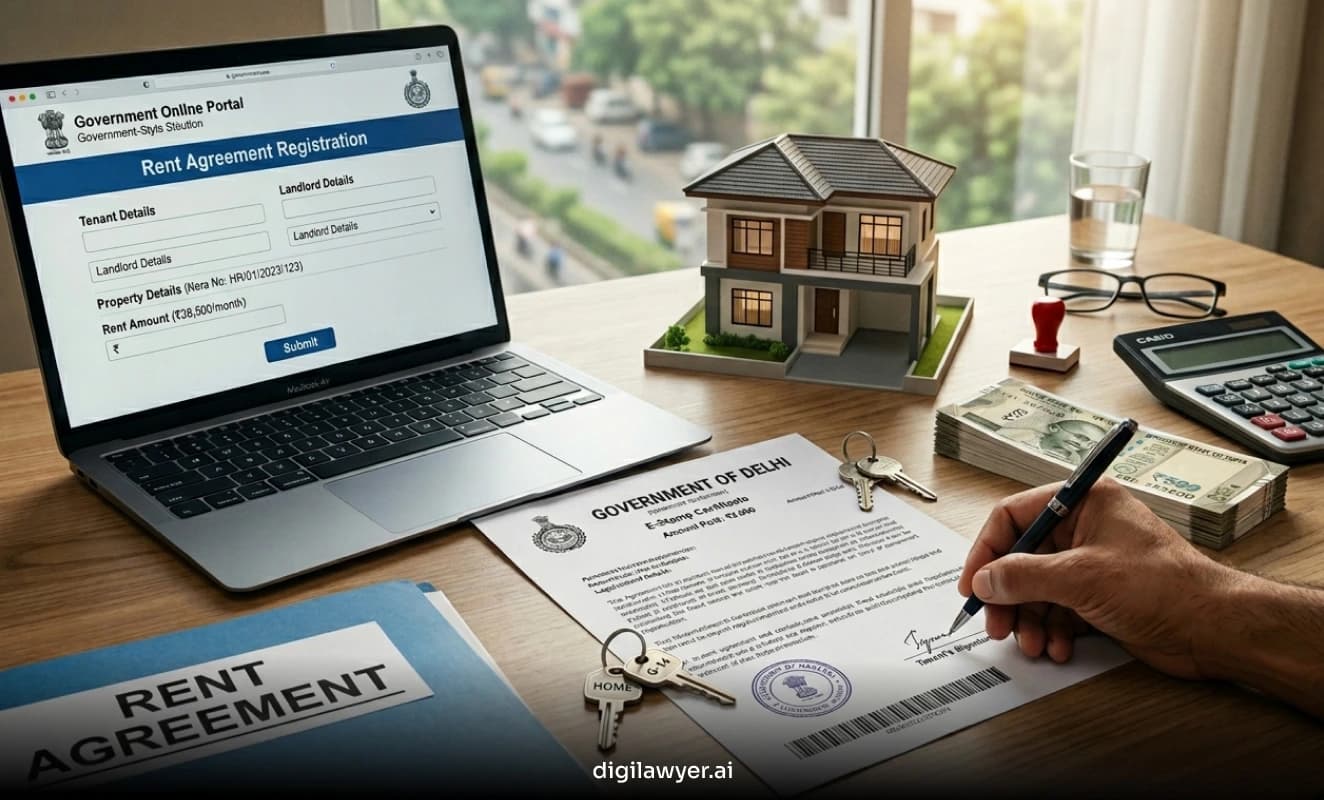
Stamp Duty and Registration Charges for Rent Agreement in Delhi
Not sure how much stamp duty you need for a rental agreement in Delhi? Here’s a simple guide covering charges, calculation, and registration rules to help you avoid mistakes.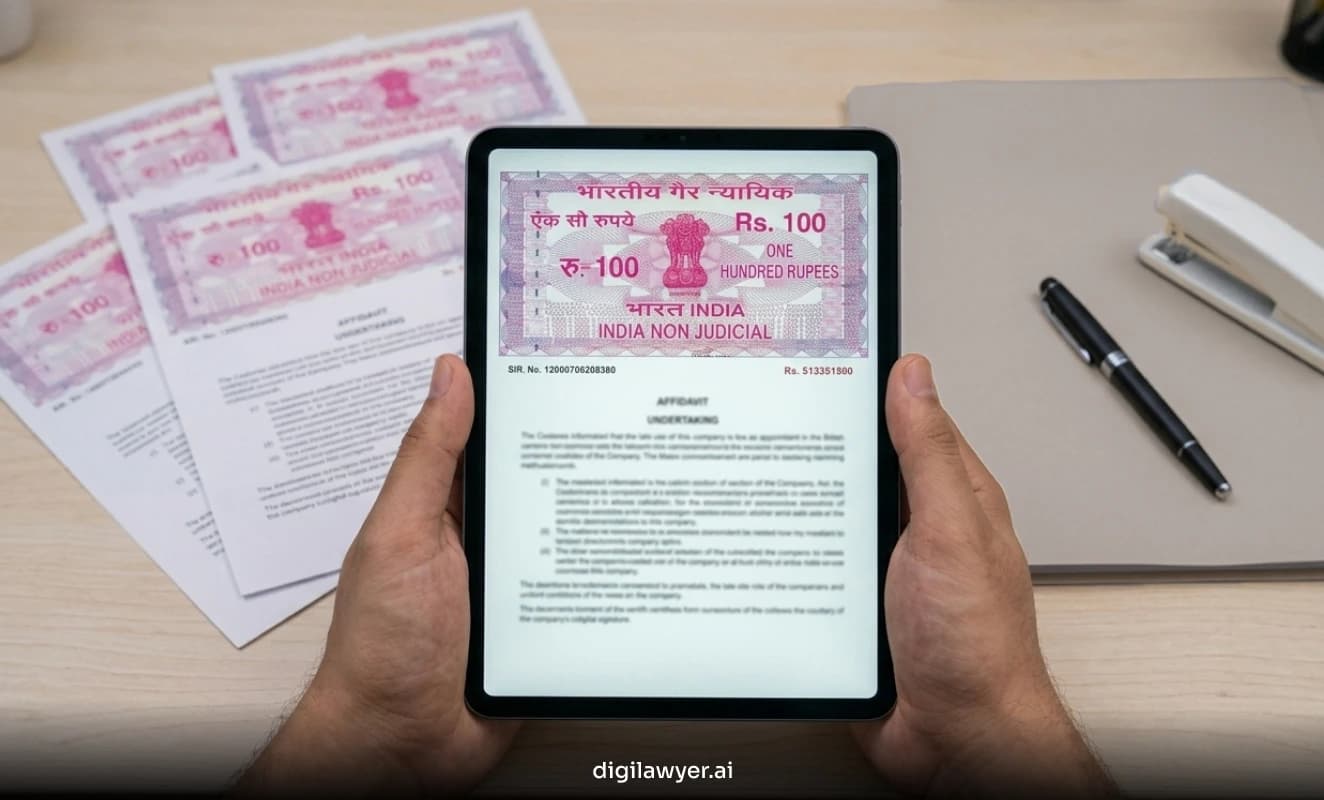
How to Buy 100 Rs Stamp Paper Online in India?
Need a 100 Rupees stamp paper for a rent agreement or affidavit? Get a legally valid e-stamp paper online within 24 hours. Skip the queues order now with DigiLawyer.
Is E-Stamp Legally Valid in India? Verification, Fraud Risks & How to Stay Safe
Learn how e-Stamps work in India, common fraud risks, and steps to keep your agreements safe and enforceable.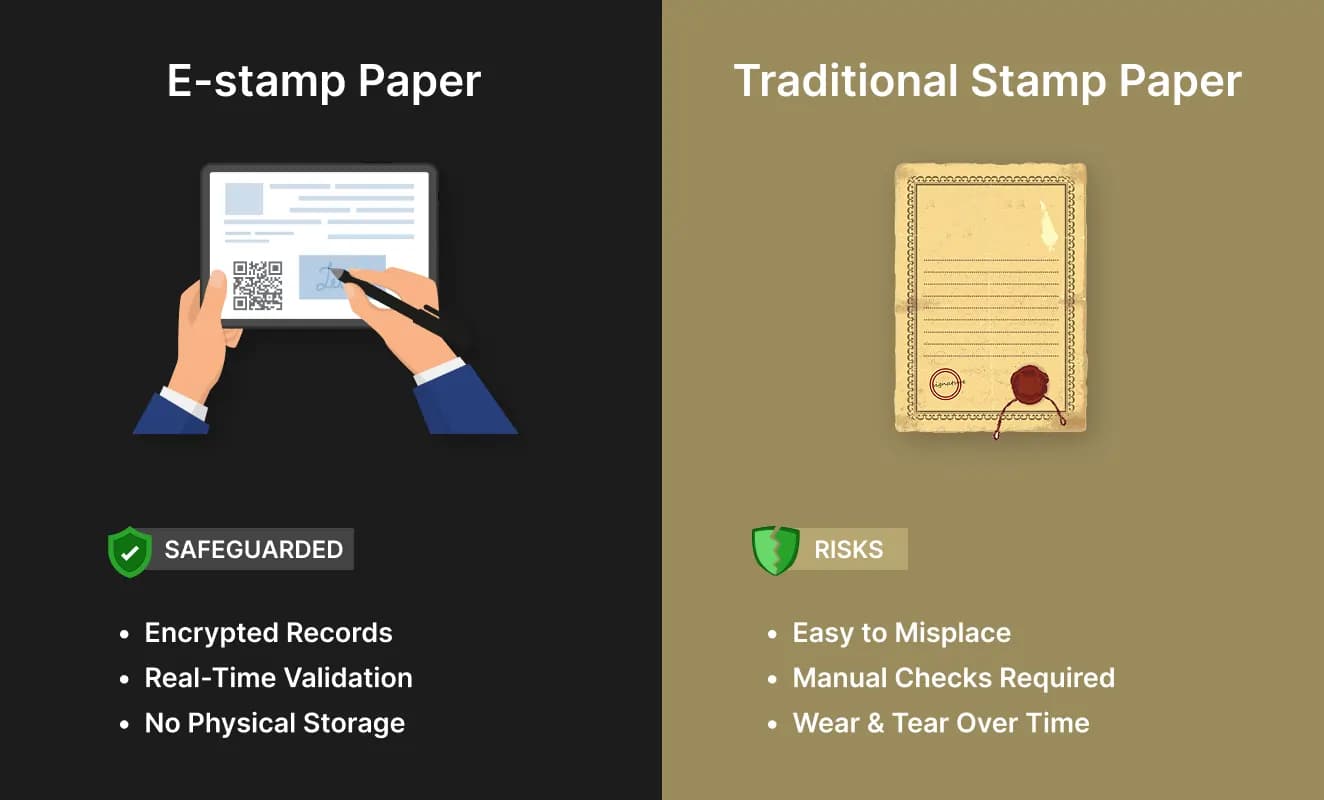
E-Stamp Paper vs Traditional Stamp Paper: The Practical 2026 Guide
Understand the difference between traditional stamp and e-Stamp paper in India. Learn risks, legal validity, and why e-Stamping is safer in 2026.
DigiLawyer, A 80, A Block, Sector 2, Noida, Uttar Pradesh 201301
Phone: +918178704343
justice@digilawyer.ai





Disclaimer: DigiLawyer is not a law firm, a substitute for a lawyer or law firm, a chartered accountancy firm, or a company secretary firm. We act solely as an intermediary between users and registered professionals, and also offer AI-powered legal assistance, consultation, and document drafting tools to improve access to legal support. Use of our website, services, or AI tools is at the sole risk of the user and does not create any lawyer-client or professional relationship. All consultations and interactions facilitated through our platform are strictly between the user and independent professionals. DigiLawyer is not liable for any actions, decisions, or outcomes arising from the use of our platform, AI tools, or reliance on any advice, consultation, or content provided by us or third-party professionals.
Use of our products and services is subject to our Privacy Policy & Terms of Service

