


Rent Agreement Vs Leave & License in India | Key Differences Explained

60-Second Summary
- Rent Agreements and Leave & License Agreements define very different legal rights for landlords and tenants in India.
- Rent Agreements create tenancy rights under State Rent Control Acts, offering tenants stronger protection and making eviction notice-based and time-consuming.
- Leave & License Agreements are permission-based under the Indian Easements Act, give landlords greater control, and allow easier termination after the agreed period.
- Rent Agreements suit long-term, stable occupancy, while Leave & License Agreements are ideal for short-term stays and owner-friendly property management.
- DigiLawyer simplifies drafting, e-stamping, e-signing, and registration of both agreements, ensuring legal compliance and hassle-free execution.
When renting property, knowing the difference between a rent agreement vs leave and license agreement is vital. One locks you into strict tenant laws where eviction is tough, while the other keeps control firmly in the landlord's hands. In this blog, we help you understand these distinctions, explain your rights, and show you how DigiLawyer can help you draft and register both effortlessly.
What is a Rent Agreement?
A rent agreement is a legally binding contract that outlines the terms and conditions for renting a property between a lessor (landlord) and a lessee (tenant). It is commonly referred to as a rental agreement or rental contract. It must be duly stamped, including through e-stamp paper, to be valid and enforceable under law.
These laws were originally designed to protect tenants from unfair eviction, which means removing a tenant, even one who has stopped paying, can be a long legal battle. If you are a landlord, being aware of the New Residential and Commercial Rent Agreement Rules 2026 is critical, as recent updates have changed how compliance and tenant rights are enforced.
- Best For: Long-term stability.
- The Risk: Eviction is notice-based and difficult.
Act: Rent agreements are governed by the respective State Rent Control Acts, which regulate the landlord–tenant relationship and are designed to protect the rights and interests of both parties.
What is a Leave and License Agreement?
A Leave and License Agreement is commonly used for renting or allowing the temporary use of a property. It is a legally binding contract between the licensor (the property owner) and the licensee (the person renting or using the property).
Act: A Leave and License agreement is governed by Section 52 of the Indian Easements Act, 1882. Under this law, ownership of the licensed premises always remains with the licensor, while the licensee is only granted permission to use the premises for a limited duration.
Leave & License Vs Rent Agreement: Key Differences
Understanding the key differences between a Rent and Leave and License Agreement is crucial for property owners and tenants. Take a look at the comparison table below to help you choose the best option for your needs:
Basis of Comparison | Leave and License Agreement | Rental Agreement |
Purpose |
|
|
Interest in Property | No legal interest. Ownership and possession remain with the licensor. | Tenant gets the right to occupy the property, while ownership stays with the landlord. |
Tenant rights | Limited | Strong and Protected |
Eviction | Easier after agreement expiry | Time-consuming and notice-based |
Registration | Usually Mandatory | Mandatory if duration is more than 11 months |
Revocability | Agreement can be revocable anytime by the owner | Agreement is generally irrevocable unless breach occurs |
Heritability | Not Heritable. It's a personal right and ends on the death of either party . | Heritable. As per the state rent control act, the tenancy will pass to the legal heir after the tenant's death |
Best Use Cases |
|
|
Usage/Term of Agreement | Generally used for short term stays (max up to 11 months) | It's not mandatory for monthly terms; it can be monthly or for long-term tenancy. |
Governing Law | Easement Act | Rent Control Act |
👉 Also Read: Difference Between Rent and Lease Agreement
Which Agreement Should You Choose?
1. Choose Leave & License if:
- You want flexibility and an easy exit option.
- You are renting to bachelors or short-term professionals.
- You are an NRI who wants to ensure the property is easily reclaimable.
- You are renting out a small office space, though larger setups may require a specific Commercial Rent Agreement to cover business liabilities.
2. Choose Rent Agreement if:
- You want a stable, long-term tenant (like a family).
- You are okay with strict notice periods.
You are entering a long-term corporate lease, in which case a formal Lease Deed might be the more appropriate legal instrument.
Duration of Rent Agreement vs. Leave & License Agreement
Get a clear understanding of the duration differences between Rent and Leave & License Agreements to help landlords and tenants make the right choice.
1. Rent Agreement
In India, the duration of a Rent agreement is generally:
- Minimum: There is no fixed legal minimum period. A rent agreement can start even for a few months, if both landlord and tenant agree.
- Maximum: Up to 11 months – usually executed as an agreement (often registered or notarised, depending on state rules). Read our detailed guide on 11-month rent agreements here.
- More than 11 months – it is generally treated as a lease agreement and must be registered under the Registration Act, 1908.
👉 Rent agreements can be short-term or long-term, but agreements exceeding 11 months require compulsory registration and create stronger tenant rights.
Note: Before executing a rent agreement especially for long-term arrangements, it’s advisable to verify the property ownership and documents to avoid future disputes.
2. Leave & License Agreement
In India, the duration of a Leave and License agreement is generally:
- Minimum: There is no fixed legal minimum period. It can be for a few months (even 1–3 months) if both parties agree.
- Maximum: Usually 11 months. This is done to avoid creating tenancy rights and to keep the agreement outside strict Rent Control laws.
👉 After 11 months, the agreement can be renewed or extended by signing a fresh Leave and License agreement.
Rules & Policies for Staying in the Property - as Per Rental Agreement Vs Leave and License
Rent Agreement | Leave & License Agreement | |
Responsibilities | Specifies what the tenant is expected to do and by when. | Specifies what the licensee is expected to do and by when. |
Duration of Stay | The duration for which the tenant can stay in the property. | The duration for which the licensee can occupy the premises, along with the monthly license fee payable. |
Monthly Payment | The monthly rent the tenant must pay. It also explains the mode of payment, maintenance responsibilities, and liability for damage to the property. | The mode of payment for the license fee, maintenance costs, and liability for property damage. |
Maintenance and Damages | Specifies who is responsible for property maintenance and any damage, and which charges are to be borne by the tenant or the landlord. | Specifies who is responsible for maintenance or property damage, and which charges are to be paid by the licensor or licensee. |
Yearly Rent Escalation | When the rent is likely to increase (Yearly Escalation). | When the license fee is subject to yearly escalation. |
Note: Rental agreements are safer for tenants, as landlords can’t force them to leave the property without giving at least 1 months' notice.
Generally, this agreement is made for a tenure of 11 months because, under the Registration Act, 1908, any property leased for more than a year attracts registration fees and stamp duty.
What Benefits Does a Rent Agreement Provide?
Security of Tenure for Tenants: If the agreement is in force, the terms are binding on both parties. Additionally, the landlord can’t evict a tenant without legal grounds and must issue a formal eviction notice at least one month before initiating proceedings.
Protection of Tenant Legal Rights: A well-documented and registered rental agreement gives tenants more rights, such as the landlord can’t enter the premises without giving prior notice to the tenant, like at least 24 hours before planning a visit.
Consulting a lawyer in landlord–tenant dispute, can help ensure the issue is handled legally and fairly.
Protection Under Rental Control Laws: According to the Rental Laws 2026, every tenant and landlord should be clear that there will be no more confusion about sudden rent hikes and security deposits. Rent will rise only in accordance with the guidelines and proper notice.
Plus, tenants can’t be asked to leave without warning. The new rental rule now benefits more tenants by defining a clear eviction policy, including when eviction is allowed and how much notice is required.
👉 You can also check our guide on how to create a legally valid rent agreement.
Benefits of Leave and License Agreement for Landlords
If you are a property owner, a Leave and License agreement is your safety net.
In scenarios where a tenant refuses to vacate, a Rent Agreement forces you into a long court battle. A Leave & License allows for swift action. We have seen many cases where owners who didn't have specific protective clauses had to fight hard to get back their property from illegal possession, a nightmare that the right agreement can prevent.
Here are a few benefits of why you, as an owner/licensor, need to replace your rent agreement with a leave and license agreement for the following reasons -
Flexibility: Leave and License Agreements are ideal for short-term occupancy (up to 11 months). The termination process is simple and quick, giving landlords full control if the licensee refuses to vacate, making it highly landlord-friendly.
No Transfer of Ownership (Permission-Based Agreement): This agreement grants permission to the licensee to use the property, it does not create any legal interest or ownership rights for the licensee. Additionally, the rights are non-transferable, protecting the landlord’s property
Clear Terms are Mentioned: All terms, including rent, security deposits, maintenance responsibilities, and property usage, are clearly mentioned. This reduces the risk of long-term disputes between landlords and licensees.
Hassle-free Termination Process: Unlike traditional rental agreements with strict rent control rules, landlords can terminate a Leave and License Agreement at any time by giving notice.
This means the agreement is created at will, and the parties are not locked in for a long period.
Eliminates the Risk of Illegal Possession: Unlike rent agreements where tenants can misuse Rent Control laws to occupy property illegally, Leave and License Agreements make it easier for landlords to regain possession in case of default, reducing legal risks.
Common Terms Used in Leave & License and Rent Agreements (with Descriptions)
Concept / Context | Leave & License Agreement (Correct Term) | Rent / Lease Agreement (Correct Term) | Often Used Interchangeably (Should Be Avoided) | Description / Explanation |
Owner | Licensor | Lessor / Landlord | Owner | The person who owns the property. The legal term changes based on the type of agreement. |
Occupant | Licensee | Lessee / Tenant | Occupant | The person allowed to use or occupy the premises under the agreement. |
Property reference | Licensed Premises | Demised Premises | Property / Premises | The correct legal term for the space being used or rented. |
Nature of right | Permission to use | Right to occupy | Possession | License gives permission only; rent transfers possession. |
Legal possession | Retained by Licensor | Transferred to Tenant | Possession | In Leave & License, legal possession stays with owner; in rent, it shifts to tenant. |
Ownership rights | Not transferred | Not transferred | Ownership | Neither agreement transfers ownership—only usage or occupancy rights. |
Tenancy rights | Not created | Created | Right to stay | Only rent/lease creates tenancy rights protected by law. |
Agreement name | Leave & License Agreement | Lease / Rent Agreement | Rental Contract | “Rental contract” is generic and legally imprecise. |
Governing law | Indian Easements Act, 1882 | Transfer of Property Act & State Rent Control Acts | Contract Act | Wrong law reference can weaken enforcement. |
Duration | Short-term, fixed (usually up to 11 months) | Usually long-term | Temporary | “Temporary” is vague; duration must be clearly defined. |
Eviction | Easier, contract-based | Court-driven | Termination | Eviction and termination are not the same legally. |
Transferability | Not transferable | Sometimes transferable (subject to law) | Subletting | Subletting without permission can invalidate the agreement. |
Termination | As per agreement terms | As per statute + agreement | Cancellation | Termination has legal process; cancellation is informal. |
Consideration | License Fee | Rent | Charges | Correct terminology matters for taxation and disputes. |
Security amount | Security Deposit | Security Deposit | Advance | “Advance” may be treated differently in disputes or taxation. |
Key Takeaway:
- Using the wrong terminology in property agreements can create legal risk, especially during eviction, disputes, or court proceedings.
- Always use agreement-specific terms-Licensee, Licensed Premises, License Fee for Leave & License, and Tenant, Demised Premises, Rent for Rent/Lease agreements
Why a Leave and License Agreement is Better for Property Owners Than a Rent Agreement?
As a property owner, your goal is to get your property back at the end of the rental period without legal complications and License Agreement is often the better choice. Below are the key reasons why it provides greater flexibility, control, and ease in property management.
Stronger Legal Control: Rent Agreements give tenants legal rights under Rent Control laws, which can make eviction or rent revision lengthy and complex.
Permission-Based Occupancy: A Leave and License Agreement grants temporary permission to occupy the property, usually up to 11 months. No tenancy or ownership rights are created, and Rent Control laws generally do not apply, making it easier to regain possession
Flexible Long-Term Options: Landlord can use renewable long-term Leave and License agreements (e.g., 5 years with periodic renewals) to allow tenants to stay longer while maintaining legal control.
Simplified Documentation: Leave and License Agreements reduce legal risk and simplify property management compared to traditional Rent Agreements
👉 In short, a Leave and License Agreement offers greater flexibility and control for property owners, while a Rent Agreement may be more suitable for those prioritizing long-term stability. The right choice depends on your specific property goals and preferences.
Table 1: When to Choose Which Agreement?
When to choose? | When you want more control and an easy exit as an owner | When you are comfortable with a longer commitment and stable occupancy |
Real-world scenarios |
|
|
Ownership & possession | Always remains with the licensor (owner) | Legal possession with tenant |
Why it works? | Flexible, owner-friendly, low risk | Stable income, long-term arrangement |
Table 2: Real-World Impact of Rent Agreement vs Leave & License
Situation | Rental Agreement | Leave and License Agreement |
Scenario 1 – Tenant refuses to Vacate | There’s a long court battle because the tenant has tenancy rights, and the eviction process can be longer and more complex. | The Licensee has no tenancy rights, so there will be a faster legal remedy. |
Scenario 2 – Non-Payment of Rent | A breach of contract will occur, and the landlord will initiate the eviction process in court. | As the licensee has no tenancy rights, and the agreement is landlord-friendly, the landlord can terminate it, as the termination process is quick. |
Scenario 3 -Illegal Possession Claim | If a tenant claims illegal possession, the landlord must prove lawful ownership and follow due legal process. Since the tenant has tenancy rights, resolving such disputes usually involves lengthy court proceedings. | In the event of a claim of illegal possession by a licensee, the occupier has no legal right to continue possession beyond the license period. The licensor can initiate swift legal action, thereby enabling faster recovery of possession. |
How DigiLawyer Helps Simplify Rental Documentation?
With DigiLawyer as your trusted partner, rental documentation becomes simple, secure, and hassle-free. Whether it’s a residential flat, commercial property, PG, or co-living space, you can draft and register legally compliant agreement online from the comfort of your home.
Here's how DigiLawyer helps property owners and landlords:
Customized Agreement Drafting - Drafts customized agreements for your property.
Legal Vetting - Create Legal vetted documents to ensure compliance with Indian laws, prevent illegal possession and reduce the risk of disputes.
Manages the complete process, including e-stamping, e-signing, and registration.
Tenant Verification & Compliance - Assists with tenant verification and legal compliance.
Expert Support - Provides assistance for legal or tenancy-related issues, if they arise.
Start creating your rental agreement today-digitally stamped and registered in minutes, without stepping out of your home.
FAQs:
What is the main difference between a Rent Agreement and a Leave & License Agreement?
A Rent Agreement creates tenancy rights in favour of the tenant, while a Leave & License agreement only grants temporary permission to use the premises without creating any tenancy rights.
Which agreement is safer for property owners in India?
A Leave & License agreement is generally safer for property owners because it does not create tenancy rights and allows easier recovery of possession after expiry.
Can a Leave & License agreement create tenancy rights?
No. A Leave & License agreement never creates tenancy rights. The licensee only gets permission to use the licensed premises for a fixed period.
Can a tenant or licensee refuse to vacate the property?
- Under a Rent Agreement, tenants may resist vacating, often leading to long court proceedings due to tenant protection laws.
- Under a Leave & License agreement, the licensee must vacate after expiry. If not, the owner can take faster legal action.
Is registration compulsory for Rent and Leave & License agreements?
Yes. As per the Indian Registration Act, 1908, registration is mandatory for agreements exceeding 11 months. In many states, Leave & License agreements are compulsorily registered even for shorter durations.
Why are Leave & License agreements usually limited to 11 months?
Limiting the duration to 11 months helps avoid the creation of tenancy rights and keeps the agreement outside strict Rent Control laws. The agreement can be renewed if both parties agree.
Which agreement is better for NRIs?
For NRIs, a Leave & License agreement is usually better as it provides flexibility, easier eviction, and avoids long-term tenancy complications.
Can rent or license fees be increased during the agreement period?
Yes, but only if a rent or license fee escalation clause is clearly mentioned in the agreement. Otherwise, fees cannot be increased arbitrarily.
What happens if the tenant or licensee stops paying rent or license fees?
- Under a Rent Agreement, eviction generally requires a court process.
- Under a Leave & License agreement, termination is quicker due to the absence of tenancy rights.
Are Leave & License agreements inheritable?
No. Leave & License rights are personal and end on the death of either party. Tenancy rights under a Rent Agreement may pass to legal heirs under Rent Control laws.
Can NRIs create rental agreements without being physically present in India?
Yes. NRIs can draft, sign, stamp, and register agreements online using e-signing and e-stamping through platforms like DigiLawyer.
How does DigiLawyer help in creating rental agreements?
DigiLawyer helps by:
- Drafting customized Rent or Leave & License agreements
- Legal vetting to reduce disputes and illegal possession risks
- Managing e-stamping and registration remotely
- Assisting with tenant verification and compliance
- Providing documentation support for disputes
What are the core clauses included in Rent or Leave & License agreements?
Common clauses include:
- Personal details of both parties
- Property or licensed premises description
- Agreement term and duration
- Rent or license fee and payment mode
- Security deposit and maintenance charges
- Utility responsibilities (electricity, water, etc.)
- Lock-in period and notice period
- Rights and obligations of both parties
- Termination, renewal, and penalty clauses
- Governing law and dispute resolution
- Signatures of parties and two witnesses
What is the difference between “property” and “licensed premises”?
“Property” is a general term. “Licensed premises” is the correct legal term used in Leave & License agreements, indicating permission to use, not possession.
Which properties are eligible to be given on Leave & License?
Residential flats, PGs, co-living spaces, shared offices, and certain commercial properties can be licensed, subject to local laws.
My landlord wants me to sign a Leave & License agreement. Is that normal?
Yes. Many landlords prefer Leave & License agreements because they offer flexibility and reduce legal risk.
I live in a PG. My landlord wants me to sign a Rent Agreement. Which is better?
For PGs and shared accommodations, a Leave & License agreement is generally more appropriate as it reflects short-term and shared usage.
Can an agreement be terminated before expiry?
Yes. Both agreements can be terminated early as per the termination clause. Leave & License agreements usually allow quicker termination compared to Rent Agreements.


- What is a Rent Agreement?
- What is a Leave and License Agreement?
- Leave & License Vs Rent Agreement: Key Differences
- Which Agreement Should You Choose?
- 1. Choose Leave & License if:
- 2. Choose Rent Agreement if:
- Duration of Rent Agreement vs. Leave & License Agreement
- 1. Rent Agreement
- 2. Leave & License Agreement
- Rules & Policies for Staying in the Property - as Per Rental Agreement Vs Leave and License
- What Benefits Does a Rent Agreement Provide?
- Benefits of Leave and License Agreement for Landlords
- Common Terms Used in Leave & License and Rent Agreements (with Descriptions)
- Key Takeaway:
- Why a Leave and License Agreement is Better for Property Owners Than a Rent Agreement?
- Table 1: When to Choose Which Agreement?
- Table 2: Real-World Impact of Rent Agreement vs Leave & License
- How DigiLawyer Helps Simplify Rental Documentation?
- FAQs:

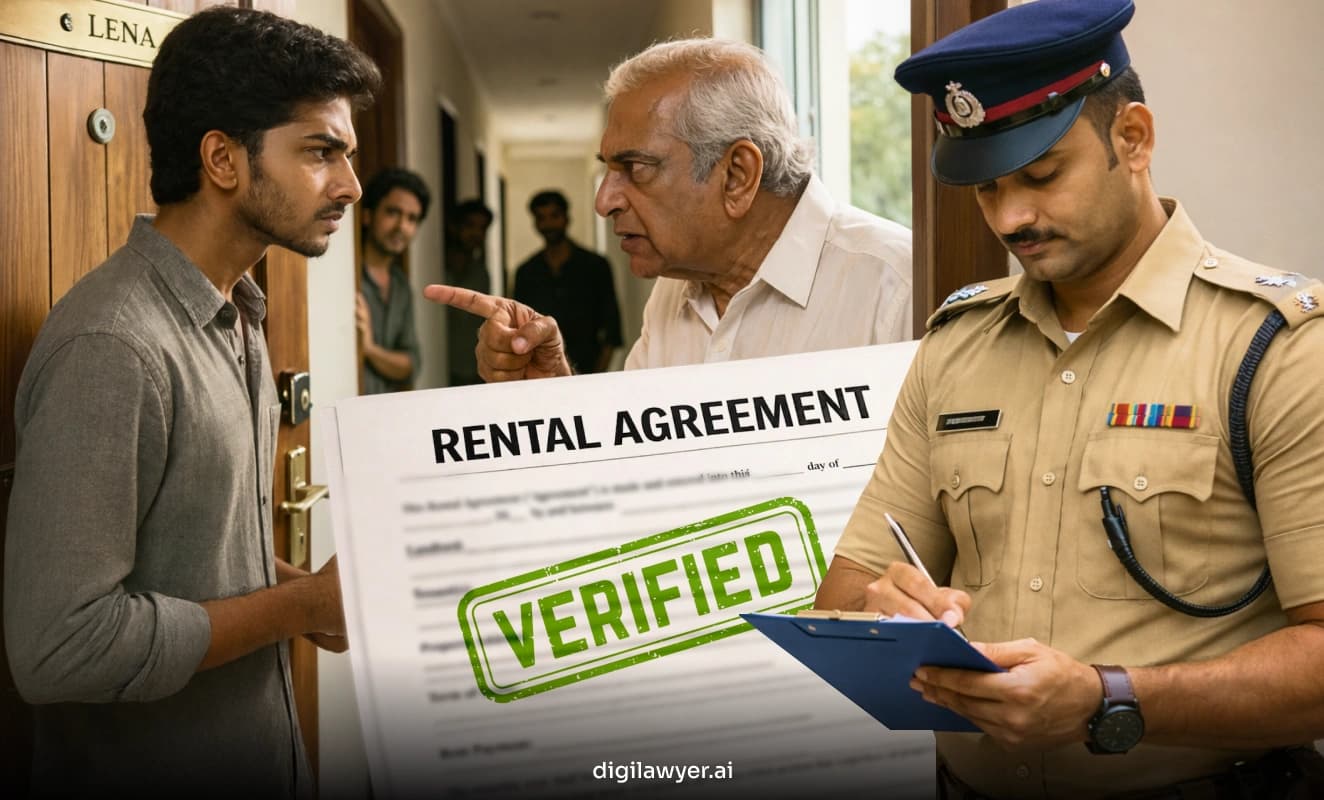
Why Police Verification Is Required for Rent Agreement: Why Landlords Should Do It?
Police verification for tenants helps landlords confirm tenant identity, prevent fraud, and reduce legal risks. This guide explains the process, required documents, applicable legal rules, and how to complete tenant verification easily in India.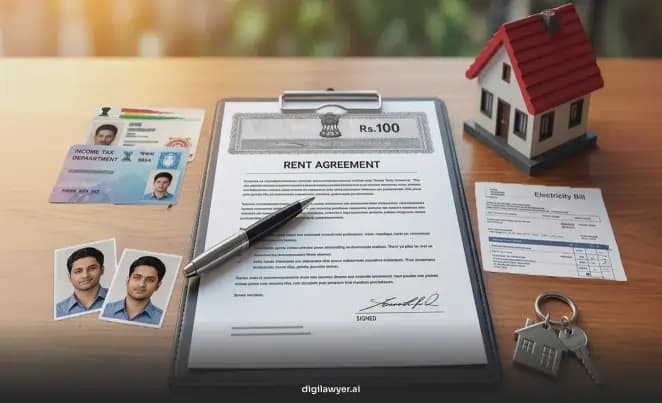
What are the Documents Required for Residential and Commercial Rent Agreement
Discover rent agreement documents required in India. Complete checklist for residential & commercial tenants and landlords with legal guidance and document tips.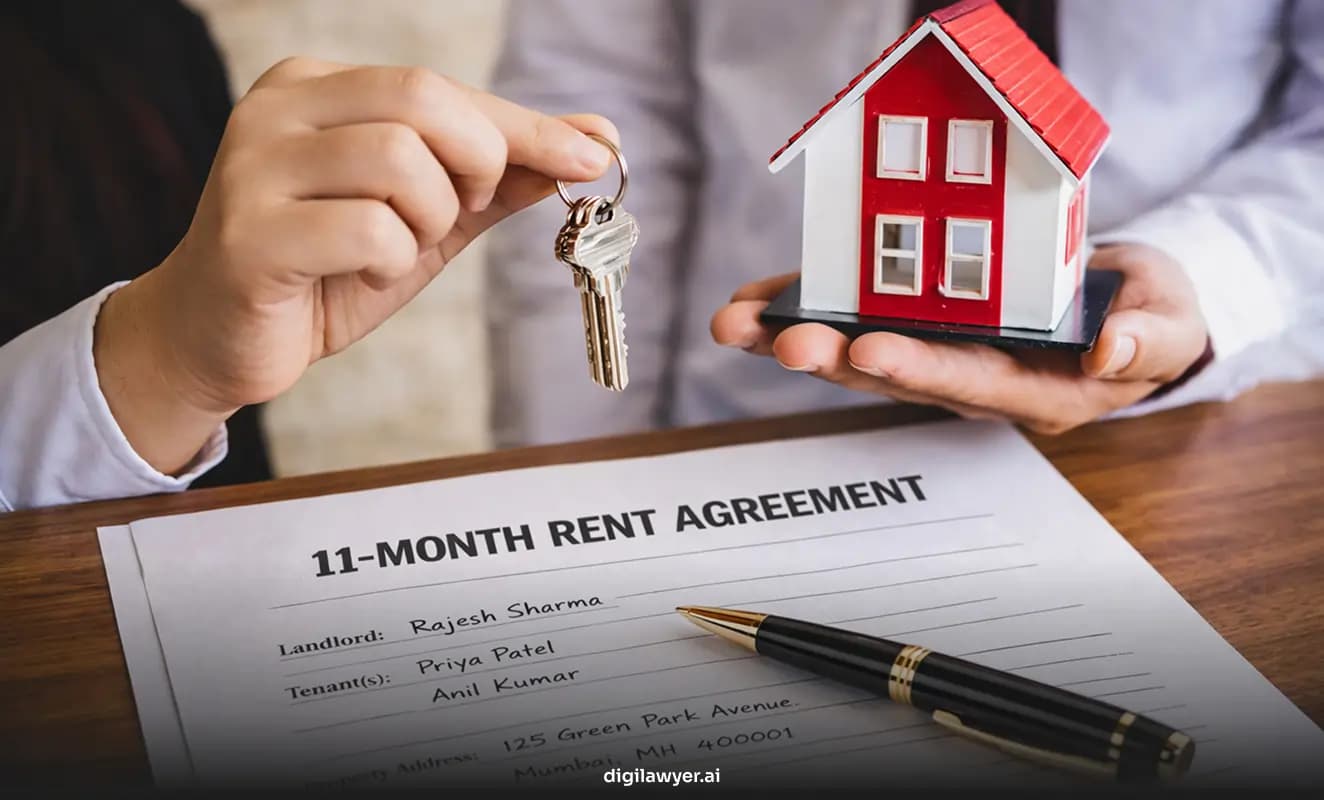
Why 11-Month Rent Agreements Are Common in India?
Signing a rent agreement? Understand 11-month agreements in India with legal rules, registration, stamp duty, key clauses, validity & tips to avoid disputes.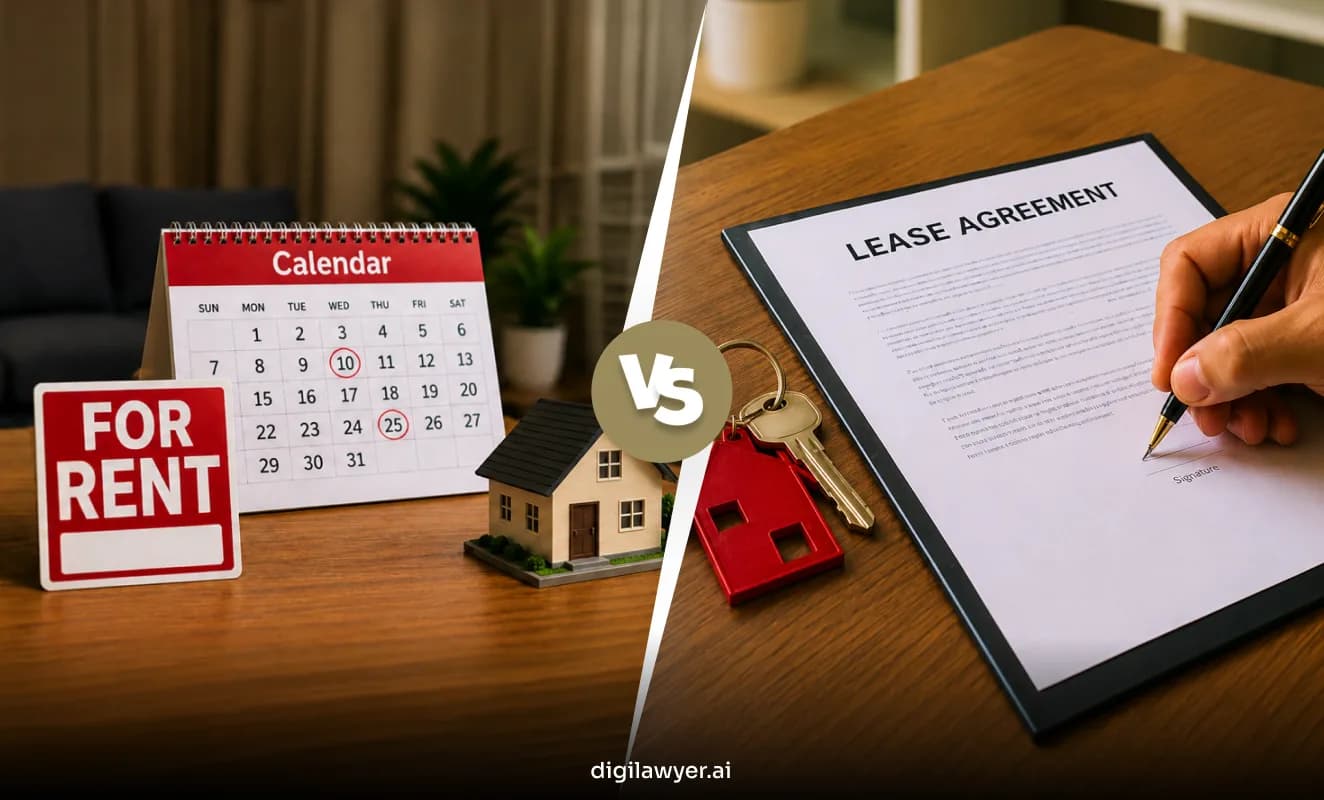
Rent vs Lease Agreement in India: Key Legal Differences Explained
Understand the legal difference between rent and lease agreements in India. Compare duration, flexibility, stamp duty, tenant rights, and registration rules to choose the right property agreement.
How to Create a Rent Agreement Online in India
Create a legally valid rental agreement in India for tenants and owners. Learn stamp duty, registration rules, key clauses, documents, & avoid common mistakes.
All You Need to Know About Society Conveyance Deed
Secure your housing society's legal ownership with a Society Conveyance Deed. Learn its importance, process, and required documents in this essential guide!
DigiLawyer, A 80, A Block, Sector 2, Noida, Uttar Pradesh 201301
Phone: +918178704343
justice@digilawyer.ai





Disclaimer: DigiLawyer is not a law firm, a substitute for a lawyer or law firm, a chartered accountancy firm, or a company secretary firm. We act solely as an intermediary between users and registered professionals, and also offer AI-powered legal assistance, consultation, and document drafting tools to improve access to legal support. Use of our website, services, or AI tools is at the sole risk of the user and does not create any lawyer-client or professional relationship. All consultations and interactions facilitated through our platform are strictly between the user and independent professionals. DigiLawyer is not liable for any actions, decisions, or outcomes arising from the use of our platform, AI tools, or reliance on any advice, consultation, or content provided by us or third-party professionals.
Use of our products and services is subject to our Privacy Policy & Terms of Service

