


What to Do After Receiving a Legal Notice - How to Reply Properly
60-Second Summary
- A legal notice is the first step before filing a case in court to resolve disputes like contract breaches, unpaid debt, defamation, property, or family issues.
- Common types include cheque bounce, money recovery, defamation, property, and family disputes.
- If you receive one, don’t ignore it. Read it carefully, verify it, check deadlines, consult a lawyer, and prepare a reply.
- You usually have 15-30 days to respond, and 15 days for cheque bounce cases.
- Ignoring it can lead to legal action and weaken your position.
- DigiLawyer helps you draft and send professional replies quickly online.
Received a legal notice and not sure how to move forward? Don’t panic. Many people assume it means a court case has already been filed or that they are in serious legal trouble. But that's not true.
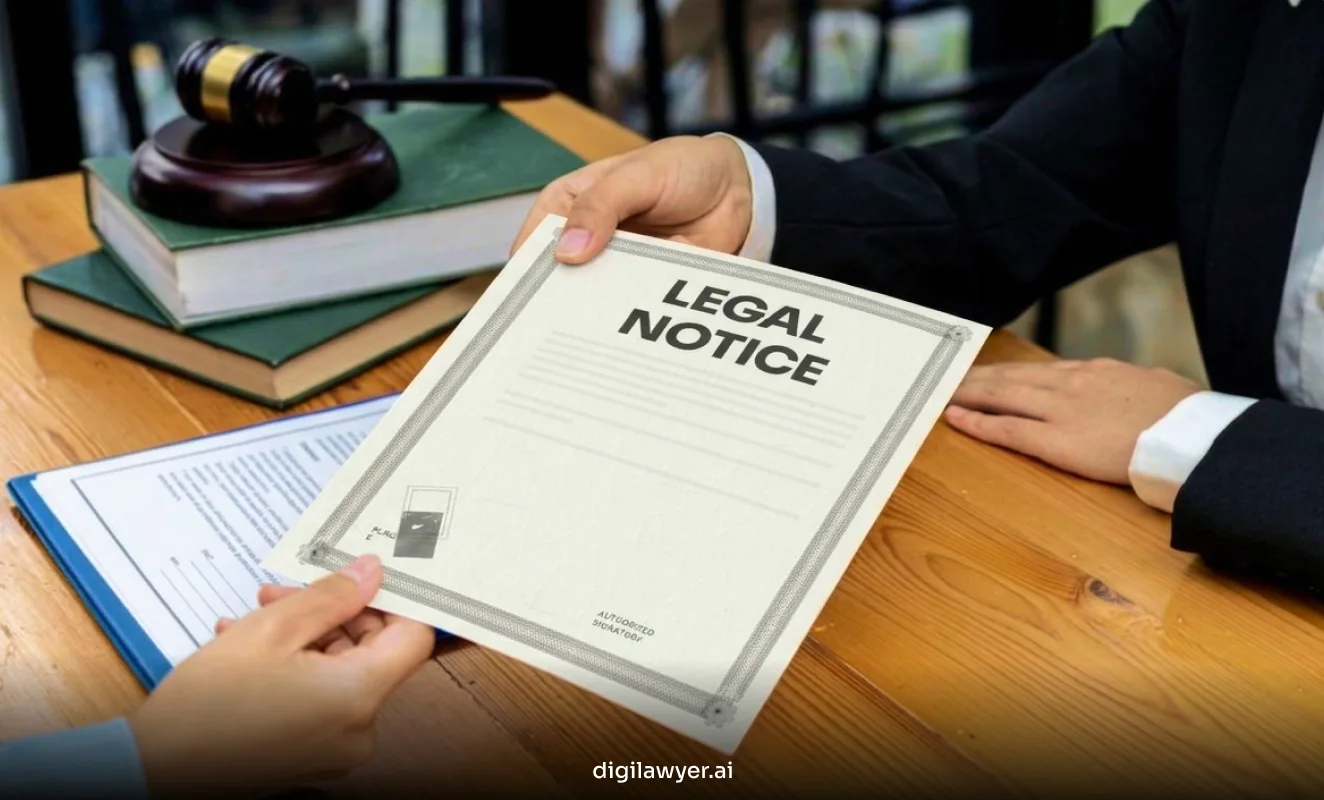
A legal notice is a formal written communication, sent by one party to another to highlight a grievance, such as a breach of contract, unpaid dues, or any violation of rights. It's usually a first step taken before initiating legal proceedings and is often meant to resolve disputes before they reach court. Responding on time is important, and knowing the right steps can help you avoid further legal trouble.
Before replying, it's important to know what kind of notice you have received. You can explore our detailed guide on types of legal notices. In this blog, we explain what steps you should take after receiving one, and provide guidance on how DigiLawyer can help you draft a reply effectively.
Steps to Take After Getting a Legal Notice
1. Do Not Panic or Ignore the Notice
The biggest mistake people make is ignoring a legal notice. If you fail to respond within the specified time, the sender may proceed with legal proceedings in court, which could weaken your position. Even if the allegations seem false, a proper response is essential.
2. Read the Legal Notice Carefully
Review the notice thoroughly and identify:
- The sender’s details and lawyer’s information.
- The claims or allegations made by the sender
- The timeline mentioned for response
- The legal provisions cited
- The relief or compensation demanded
3.Verify the Authenticity of the Notice
Not every legal notice is legitimate. Check:
- Whether it is issued on a lawyer’s letterhead
- If the lawyer is registered with the official Bar Council of India, you can verify their credentials through the website.
- Open the “Find a Lawyer” / Advocate Search section
- Enter the lawyer’s name or enrollment number
- Verify details like state bar council, enrollment date, and status
Quick tip: If the lawyer isn’t listed or details don’t match, treat it as a red flag and verify with the respective State Bar Council.
4. Consult an Experienced Lawyer
The next step is to seek professional legal advice. A qualified lawyer can:
- Interpret the legal claims
- Evaluate the strength of the case
- Draft an appropriate reply
- Suggest whether settlement, negotiation, or litigation is better
Hiring a civil lawyer, property lawyer, or corporate lawyer depending on the case can help protect your rights. Visit here to consult with a lawyer
5. Gather All Relevant Documents and Evidence
Collect all documents related to the dispute, these documents will help your lawyer prepare a strong legal reply.
- Contracts or agreements
- Payment receipts or invoices
- Emails or communication records
- Property documents
- Bank statements
6. Send a Proper Legal Notice Reply
Responding to legal notice is critical. You must check for the following criteria while sending a notice reply
- Address each allegation clearly
- Provide supporting facts and evidence
- State your legal position
- Reject false claims if necessary
- Offer settlement options if appropriate
Timeline to Respond to a Legal Notice
The timeline to respond varies depending on the type of dispute.
- Cheque bounce legal notice: 15 days to make payment after receiving the notice.
- General civil matters: Usually 15,30 days to respond.
- Contractual disputes: Depends on the terms mentioned in the notice.
Note: Failing to respond within the given time can allow the sender to initiate legal proceedings.
What Happens If You Don’t Reply to a Legal Notice?
Replying to a legal notice is not legally mandatory in every situation. However, there may be consequences if you choose not to respond. If you don't respond to a legal notice:
- The person who sent it can assume that the claims against you are true and you may have to pay their legal fees as well.
- You may lose credibility due to lack of a valid defense.
👉 Also Read: How to Recover Money From a Friend
Common Mistakes to Avoid After Receiving a Legal Notice
Receiving a legal notice can be stressful, and many people make mistakes due to panic or confusion. Here are some common errors to avoid:
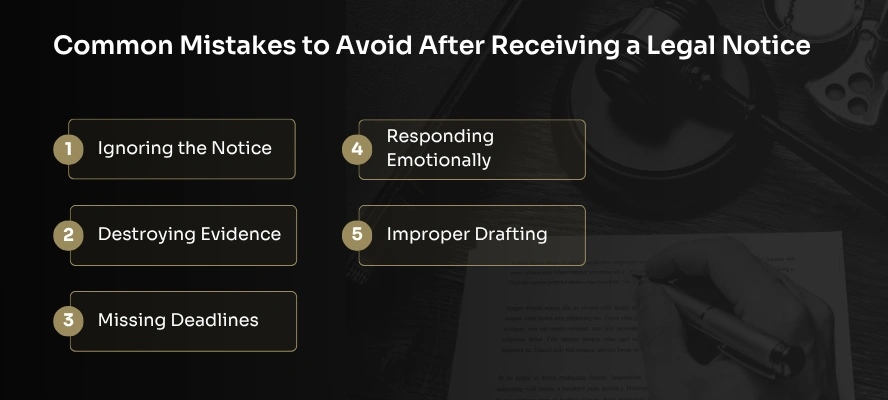
Ignoring the Notice: Failing to respond may weaken your legal position.
Responding Emotionally: Aggressive or emotional responses can create further complications.
Destroying Evidence: Always keep all documents, messages, and records related to the dispute.
Missing Deadlines: Legal notices usually come with a fixed time (often 15,30 days) to respond. If you miss this deadline, the other party may take legal action, and you may lose the chance to resolve the matter early.
Improper Drafting: It is important to draft your reply carefully and include all relevant details. You can also get your legal document reviewed to ensure it is accurate and legally sound.
How DigiLawyer Can Help If You Receive a Legal Notice
If you have received a legal notice and are unsure how to respond, getting professional help is important.
Physical and Digital Delivery: DigiLawyer ensures your legal notice reply is delivered to the opposite party through both physical and digital modes, including courier, email, and WhatsApp, ensuring timely and proper communication.
Expert Legal Guidance: Each legal notice is assessed individually. Instead of generic responses, DigiLawyer helps prepare a legally sound strategy based on the specific dispute, whether it involves money recovery, defamation, cheque bounce, or contractual issues.
Professional Reply Drafting: DigiLawyer assists in drafting a clear and structured reply to the legal notice. The response addresses the allegations point,by,point while protecting your legal rights and position.
Simple Online Process: You can submit the legal notice and relevant details online. We helps you generate a professionally drafted reply without the need for complicated legal procedures.
Transparent Pricing: We offer transparent and upfront pricing for legal notice services. Whether you need a review of your legal notice, a drafted reply, or full end to end assistance, there are no hidden costs.
Respond to a Legal Notice with 3 Simple Steps:
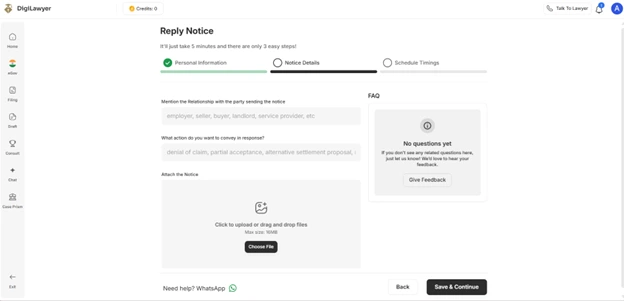
1. Fill in Your Personal Details
- Click 'Start Drafting' below and enter your Name, Email, and Contact Number
- Select your preferred language
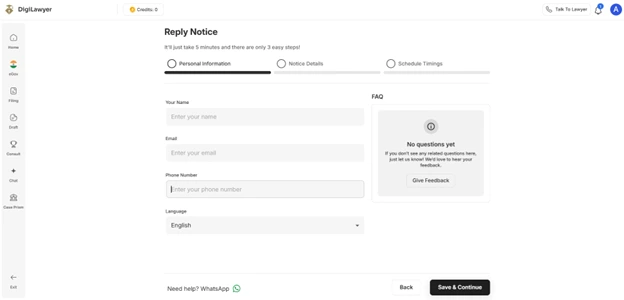
2. Provide Case Details
2. Provide Case Details
- Mention your relationship with the sender (e.g., buyer, seller, employer, tenant).
- Specify the action you want to convey in your response (e.g., denial of claim, partial settlement, alternative dispute resolution).
- Attach the legal notice you received
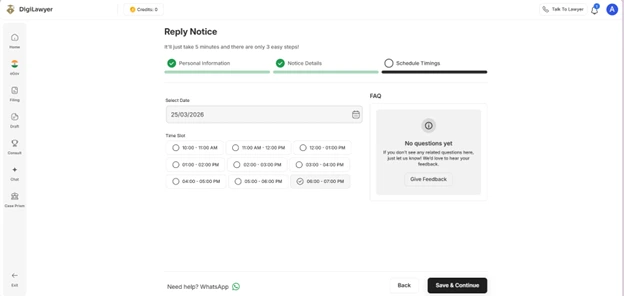
3. Schedule and Make Payment
- Select your preferred date and time for sending the reply
- Click on continue.
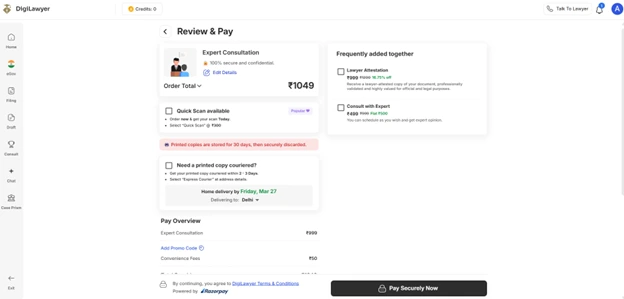
- You will be directed to the payment page where you can securely make your payment via various options available.
- Your request has been registered.
- Our legal team will connect with you at your selected date and time.
- They will review your legal notice, discuss your case in detail, and guide you with the most suitable defense strategy.
👉 Also Read: Income Tax Notices to Salaried Employees
Format of Reply to Legal Notice
Below is a standard format of replying to a legal notice that can help you understand how a proper response is structured.
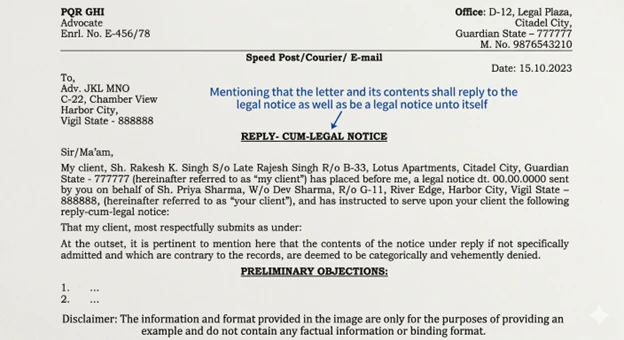
NOTICE REPLY EMAIL
Subject: Reply to Legal Notice dated [mention date of notice]
Sir/Madam,
Under instructions from and on behalf of my client [Your Name], residing at [Address], I hereby submit the following reply to the legal notice dated [Date] sent by you on behalf of your client [Name of Sender]:
- That the contents of the legal notice sent by your client are incorrect, misleading, and denied unless specifically admitted herein.
- That my client states that the allegations made in your notice are baseless and without any legal merit. The true facts of the matter are as follows: [Provide a clear explanation of your version of events.]
- That my client denies the claims made by your client regarding [mention allegation] and submits that the same are false and unsupported by evidence.
- That my client reserves the right to initiate appropriate legal action against your client for making false allegations and causing unnecessary harassment.
In light of the above, you are requested to withdraw the said notice and refrain from making such baseless allegations against my client. This reply is issued without prejudice to all rights and remedies available to my client under the law. [Advocate Name] [Advocate Signature] On Behalf of [Name] [Date] [Place]
FAQ's
Can I reply to legal notice without lawyer?
Yes, a person can send a notice themselves, but notices drafted by lawyers are usually more effective and legally sound.
What is the typical legal notice format in India?
A legal notice usually includes the sender’s details, facts of the case, legal grounds, demands, and a deadline for compliance.
How much time do I have to respond to a legal notice?
The response time usually ranges between 15 to 30 days, depending on the nature of the case. For cheque bounce cases, the timeline is typically 15 days.
How long does the legal notice process in India take?
The notice itself is immediate, but the dispute resolution timeline depends on the response and whether the matter proceeds to court.
How to draft a reply to a legal notice?
You can easily draft a your legal notice reply through Digilawyer. Visit Draft Reply option, input the details of the notice you received, and follow our guided prompts to generate a secure, professional document.
Once completed, you can download, sign, and send your reply immediately to meet your legal deadline.
What is the cost of drafting a response to a legal notice?
Professional Legal Notice Replies are prepared and sent within 48 Hours. Prices start at ₹1,999.
How much time do I have to respond to legal notice?
Responding to a legal notice depends on the type of notice and the jurisdiction. However, most notices will state a timeframe, such as 15, 21, or 30 days from the date of receipt.
What happens if you don't reply to legal notice? Can they take legal action immediately?
If you don't respond to a legal notice it can be assumed that allegations against you were true and you maybe liable to pay the legal fees of the person who sent the notice. Moreover you may lose credibility due to lack of valid defense.
Do I have to reply to legal notice?
If you don't reply, the court may assume you have no defense against the allegations. A reply is often the last chance to settle a dispute through negotiation.


- Steps to Take After Getting a Legal Notice
- 1. Do Not Panic or Ignore the Notice
- 2. Read the Legal Notice Carefully
- 3.Verify the Authenticity of the Notice
- 4. Consult an Experienced Lawyer
- 5. Gather All Relevant Documents and Evidence
- 6. Send a Proper Legal Notice Reply
- Timeline to Respond to a Legal Notice
- What Happens If You Don’t Reply to a Legal Notice?
- Common Mistakes to Avoid After Receiving a Legal Notice
- How DigiLawyer Can Help If You Receive a Legal Notice
- Respond to a Legal Notice with 3 Simple Steps:
- 1. Fill in Your Personal Details
- 2. Provide Case Details
- 2. Provide Case Details
- 3. Schedule and Make Payment
- Format of Reply to Legal Notice
- FAQ's

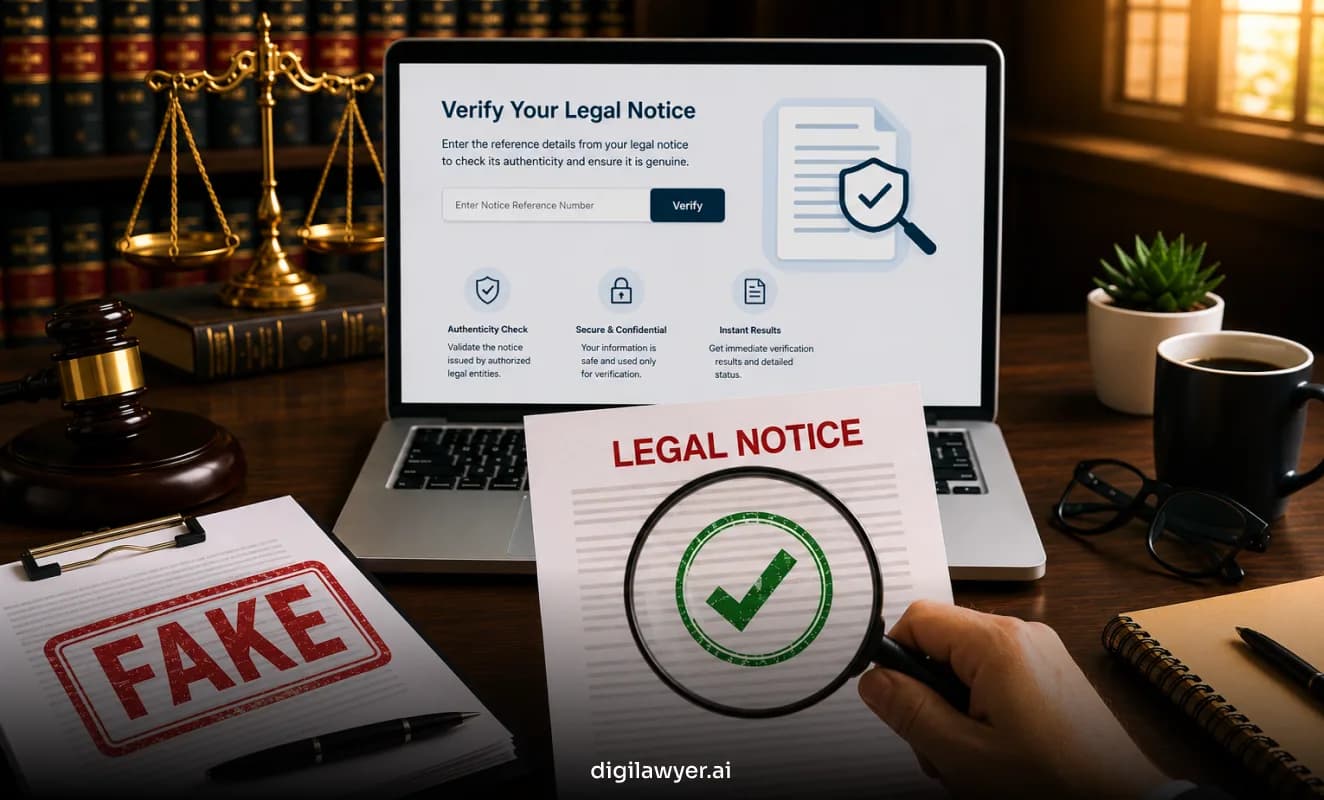
How to Check if a Legal Notice Is Original or Fake
Learn how to identify fake legal notices, warning signs, scams & verification steps to protect yourself from fraud, extortion and fake court threats.
When and How to File a Suit for Recovery of Money: A Complete Legal Guide
A simple guide to filing a money recovery suit in India, covering when to take legal action, required documents, and the step-by-step process to recover your money.
Types of Legal Notices and How to Choose the Right One
Learn the different types of legal notices in India, when to send them, and how they help resolve disputes without going to court. Simple guide with examples and tips.
Ways to Recover Money from a Friend or Someone Else
Explore how to get your money back from friends practically and legally, with clear steps, requirements, and practical approaches
DigiLawyer, A 80, A Block, Sector 2, Noida, Uttar Pradesh 201301
Phone: +918178704343
justice@digilawyer.ai





Disclaimer: DigiLawyer is not a law firm, a substitute for a lawyer or law firm, a chartered accountancy firm, or a company secretary firm. We act solely as an intermediary between users and registered professionals, and also offer AI-powered legal assistance, consultation, and document drafting tools to improve access to legal support. Use of our website, services, or AI tools is at the sole risk of the user and does not create any lawyer-client or professional relationship. All consultations and interactions facilitated through our platform are strictly between the user and independent professionals. DigiLawyer is not liable for any actions, decisions, or outcomes arising from the use of our platform, AI tools, or reliance on any advice, consultation, or content provided by us or third-party professionals.
Use of our products and services is subject to our Privacy Policy & Terms of Service

