


How to Check if a Legal Notice Is Original or Fake
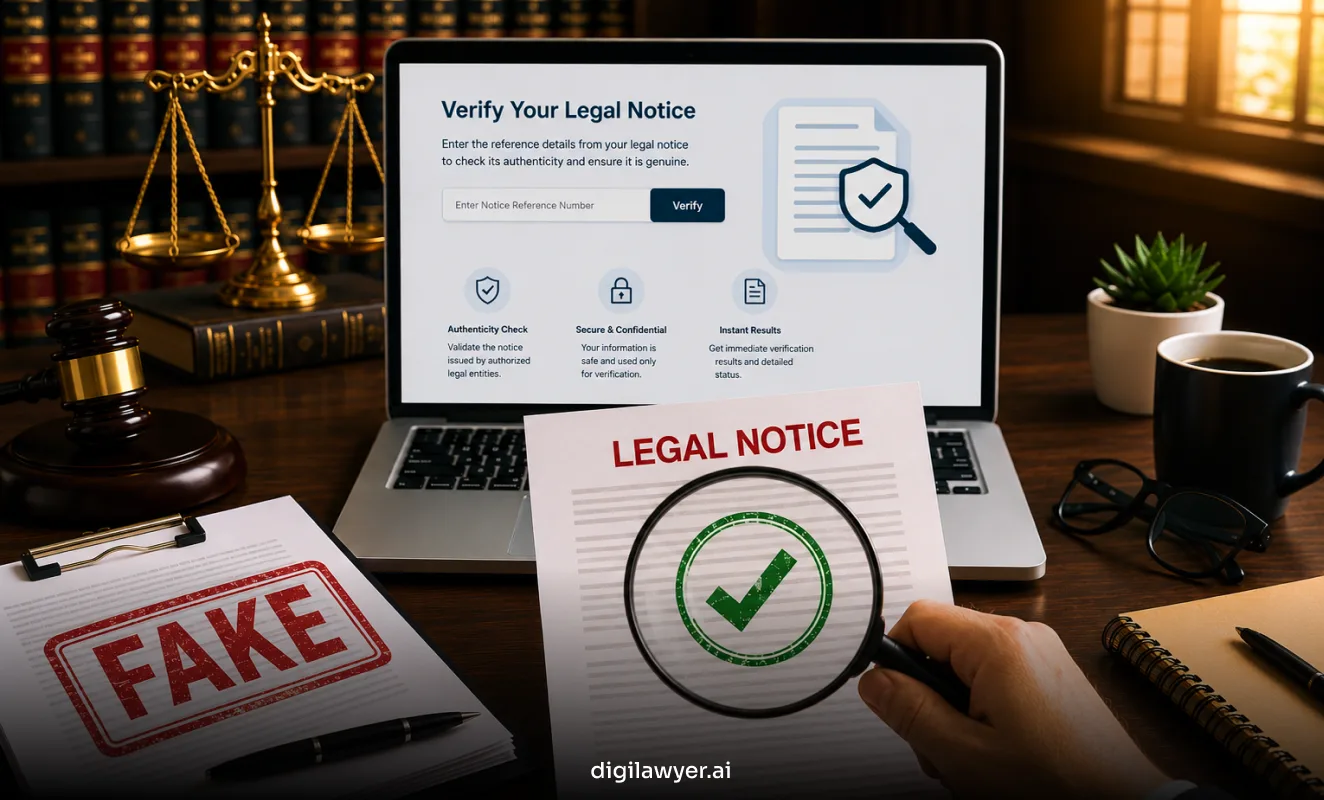
60-Seconds Summary
- Fake legal notices are commonly used for financial fraud, harassment, impersonation, and extortion.
- Genuine legal notices usually include verified lawyer details, official contact information, legal references, and proper delivery methods.
- Warning signs of fake notices include urgent threats, poor grammar, vague allegations, suspicious email IDs, and fake logos or signatures.
- Always verify the sender, check legal provisions, and confirm whether the claim is genuine before responding.
- Avoid opening suspicious attachments or making immediate payments.
- Consult a legal professional if you are unsure about the authenticity of the notice.
- DigiLawyer helps users review legal notices online, verify authenticity, and connect with experienced lawyers securely and confidentially.
Receiving legal notice can feel stressful, especially when you cannot tell whether it is genuine or fake. Today, scammers frequently send fraudulent legal notices to intimidate people, demand money, steal personal information, or create panic. These notices often look professional, making them difficult to identify at first glance.
To protect yourself from fraud and unnecessary legal trouble, you must verify the authenticity of any legal notice you receive. Check the sender’s details, legal references, delivery method, and other warning signs carefully to confirm whether the notice is legitimate. Understanding the difference between a real and fake legal notice helps you respond correctly and avoid falling victim to scams. In this blog we have shared a detailed
Common Reasons to Send Fake Legal Notice
Firstly, before knowing about how to spot a fake legal notice, we need to understand what the reasons are someone receive a fraudulent notice-
Financial Fraud- Usually for financial frauds, people receive fake notice of any debts or fees they may have, or some are even fake. Fraudsters think people may pay them out of fear, and some even do.
- Harassment and intimidation- Business competitors may send bogus cease- and – desist letters or fake copyright infringement claims to discourage their competitors.
- Impersonation- Scammers may pretend to be someone from government authorities and send fake legal documents like cybercrime notice to collect personal data for fraudulent purposes.
- Extortion- Scammers may impose threats with fake cases or arrests, unless the target pays money or provides something of value.
How to Check if a Legal Notice Is Real
Understanding how to identify whether legal notice is real or not is crucial, examine both the content and the source. We have mentioned some key details by checking these you can easily identify that
➤ Verify the sender’s details: Search the lawyer, and the firm or agency which have sent the notice. Cross-check the name, address, bar ID and contact info. And, most legitimate law offices use a professional domain, not free services like Gmail or yahoo.
➤ Examine the content for vague wording: Fake notices often contain vague language, spelling mistakes, or any irregularities in proper formatting. genuine legal notice is typically professional and clear.
➤ Check the delivery method: Legal notice is usually sent through registered mail or courier. If the notice is sent casually via personal mail ID without any pre-context or official documentation, it may be suspicious.
➤ Confirm the legal basis: A real legal notice should mention specific legal provisions or sections of relevant laws. Fake notices often lack these, and the wording of the content may be vague. It’s important to read the notice carefully before taking action.
➤ Look out for any pressure tactics: Fake notices commonly say things like “pay within 24 hours”, “final warning before arrest”, or “confidential- do not consult anyone”. Real notices usually give a timeline to respond to or resolve within 15-30 days and usually provide more formal ways of dealing with the issue.
➤ Be careful with attachments: Any suspicious attachments sent in the mail like PDFs, ZIP files, or any other link that looks suspicious may contain malware. Do not open them before verifying the sender.
➤ Confirm whether you actually owe anything: If the notice claims there is any unpaid debt, copyright violation, or any tax issue. Ask, for written evidence, copies of agreements, official fillings, or proof of debt.
➤ Consult a Legal Professional: If still you have any doubts, it’s best to consult an advocate as they can help you verify the authenticity of the notice. They can also guide you if the claim is valid and how to respond best.
Note- If after inspection you find the legal notice to be genuine, ensure to properly respond on time and with an advocate’s help.
Key Features of a Genuine Legal Notice
Fake or fraudulent legal notices often miss important details that genuine legal notices include. Here are some common signs to help you identify whether a legal notice is real or fake:
1. Check the Law Firm Details
A genuine legal notice usually comes from a registered and credible law firm. The notice should clearly mention:
- Law firm name
- Office address
- Contact number
- Official email address
If any of these details are missing or look suspicious, the notice could be fake.
2. Verify the Lawyer’s Signature and Stamp
Real legal notices are signed by the lawyer handling the case. They may also include an official legal stamp or seal.
Make sure to:
- Check if the signature looks authentic
- Verify the lawyer’s name through official legal directories
- Confirm the stamp or seal appears genuine
3. Look for a Case Reference or Docket Number
Most genuine legal notices include a case reference number or docket number. This number helps track the legal matter and verify whether the case actually exists. If there is no reference number, it may be a warning sign.
4. Review the Language Used
Authentic legal notices use professional and clear legal language. While legal terms can sound formal, genuine notices usually. Explain the issue clearly mentioning legal facts, avoiding threatening or abusive language; fake notices often use fear of tactics, urgent threats, or aggressive wording to pressure people.
5. Check How the Notice Was Delivered
Official legal notices are commonly sent through:
- Certified mail
- Registered post
- Courier with tracking
- Court-appointed officers
These delivery methods provide proof that the notice was sent and received. Be cautious if you receive legal notice through suspicious emails, random messages, or unofficial channels.
If you are unsure whether legal notice is genuine, DigiLawyer can help you verify and review it for you.
Scams Related to Fake Legal Notice
Most Common scams happening in Indian market related to fraudulent notice
Data Entry Scam Jobs | Scammers will share bogus jobs schemes telling you to complete within a specific time. After you share the work, they will claim the work was not up to mark and send a fake notice demanding payment or file a sham suit. |
Fake Debt recovery notice | Scammers claim you have unpaid loans or credit card debt, often sending fake “arbitration notice” |
Fake Court Summons | People will receive an urgent mail, notice or call claiming you must appear in court for some fraudulent case, aiming to steal personal information or demand “fines” to stop the hearing. |
Government Official Impersonation | Scammers will claim to be someone official and will declare you have violated some cyber laws, and a “fine” is due for pending cases. |
Copyright Scams | Fraudsters will pose as law official, claiming your business or website is infringing on copyright or has a trademark issue, requesting a fee to settle out of court. |
Warning Signs of a Fake Legal Notice or Warrant
These are some of the several warnings signs that can help people identify fake legal notices. Knowing these red flags can protect you from fraud.
Here are some common signs of a fake legal notice or fake warrant:
⚠️Threats of immediate arrest: Scammers often send notices claiming that you will be arrested within 24 hours if you do not pay money or respond immediately. Real law enforcement agencies follow proper legal procedures and do not make sudden threats.
⚠️Confusing legal language: Fake notices use difficult and confusing legal terms to scare people. Genuine legal notices are written in clear and easy to understand language.
⚠️Unprofessional logos and stamps: Official legal notice has proper logos and stamps. If the logo looks blurry, or poorly designed or stamped, it may be a fake notice.
⚠️Unclear or fake signatures: Genuine notices contain authorized signatures from officials. Blank spaces, random scribbles, or unclear signatures are major warning signs of a fraudulent legal document.
⚠️Missing contact details: Real legal notices always provide valid contact information, such as an official phone number, office address, or email ID. Fake notices often hide or omit these details.
⚠️Threats of public humiliation: Government agencies and courts do not threaten to publicly shame people on social media or in public. Scammers commonly use such threats to create fear and pressure victims.
What To Do When You Receive a Fake Legal Notice
Receiving a fake legal notice or scam court notice can feel stressful, but taking the right steps can protect you from fraud and financial loss. Here are some important things you should do if you suspect a legal notice is fake.
Stay calm and avoid quick action: Do not panic or respond immediately. Scammers often use fear, pressure, and urgent threats to make people act without thinking.
Verify the legal notice carefully: Check the sender’s name, contact details, official email address, and document format. Fake legal notices often contain spelling mistakes, fake logos, or suspicious phone numbers.
Consult a legal expert or lawyer: Speak with a trusted lawyer or legal professional who can verify whether the notice is genuine and guide you on the next steps.
Contact the organization through official channels: If the notice claims to be from a court, bank, government department, or company, contact the organization directly using its official website or verified contact details.
Keep copies of all documents and messages: Save the fake notice, emails, messages, screenshots, and any related communication. These records may help during a police complaint or cybercrime investigation.
Report the fake notice to authorities: If you confirm that the notice is fraudulent, report it to the police, cybercrime portal, consumer protection authorities, or the concerned government department. Reporting scams can help protect others from becoming victims.
Unsure what to do if the notice is genuine? Read our complete guide on what to do after receiving a legal notice and learn the correct steps to respond safely and on time.
How DigiLawyer Reviews Documents and Provides Online Consultation
Connect with experienced lawyers: Get access to qualified legal professionals who can review your legal notice and help determine whether it is genuine, or fake.
Expert legal consultation: Receive professional guidance on the next legal steps, and your rights
Complete online process: Send your legal notice online from anywhere and get legal assistance without visiting a law office.
Secure and confidential review: Your legal documents are reviewed through a secure online process with complete privacy and regular updates.
FAQs
What are the common reasons scammers send fake legal notices?
Fake legal notices are often sent for financial fraud, harassment, intimidation, extortion, or impersonation of government authorities to scare people into paying money or sharing personal information.
How can I verify the sender of a legal notice?
You should check the lawyer’s name, law firm details, address, contact number, official email ID, and bar registration. Genuine law firms usually use professional domains instead of free email services.
What kind of language is commonly used in fake legal notices?
Fake legal notices often contain vague wording, spelling mistakes, threatening language, or confusing legal jargon. Genuine notices are usually professionally written and clearly explain the issue.
How are genuine legal notices usually delivered?
Real legal notices are commonly sent through registered post, certified mail, courier services, or official legal channels that provide proof of delivery.
Why is checking the legal basis mentioned in the notice important?
A genuine legal notice usually refers to specific laws, legal sections, or case details. Fake notices often avoid mentioning proper legal provisions or provide unclear references.
What are the key features of a genuine legal notice?
A genuine legal notice generally includes:
- Registered law firm details
- Lawyer’s signature and stamp
- Case or reference number
- Professional legal language
- Valid contact information
- Proper delivery method
What should I do if I receive fake legal notice?
You should stay calm, avoid making payments, verify the notice carefully, save all documents and messages, and consult a lawyer before taking any action.
Why should suspicious email attachments in legal notices be avoided?
Attachments like ZIP files, unknown PDFs, or suspicious links may contain malware or phishing software designed to steal personal or financial information.
How can DigiLawyer help if I receive a suspicious legal notice?
DigiLawyer helps users connect with experienced lawyers who can review legal notices online, verify authenticity, and provide legal consultation securely and confidentially.


- Common Reasons to Send Fake Legal Notice
- How to Check if a Legal Notice Is Real
- Key Features of a Genuine Legal Notice
- 1. Check the Law Firm Details
- 2. Verify the Lawyer’s Signature and Stamp
- 3. Look for a Case Reference or Docket Number
- 4. Review the Language Used
- 5. Check How the Notice Was Delivered
- Scams Related to Fake Legal Notice
- Warning Signs of a Fake Legal Notice or Warrant
- What To Do When You Receive a Fake Legal Notice
- How DigiLawyer Reviews Documents and Provides Online Consultation
- FAQs

When and How to File a Suit for Recovery of Money: A Complete Legal Guide
A simple guide to filing a money recovery suit in India, covering when to take legal action, required documents, and the step-by-step process to recover your money.
What to Do After Receiving a Legal Notice - How to Reply Properly
A practical guide on what to do after receiving a legal notice, including steps to respond, common mistakes to avoid, and how to protect your legal position.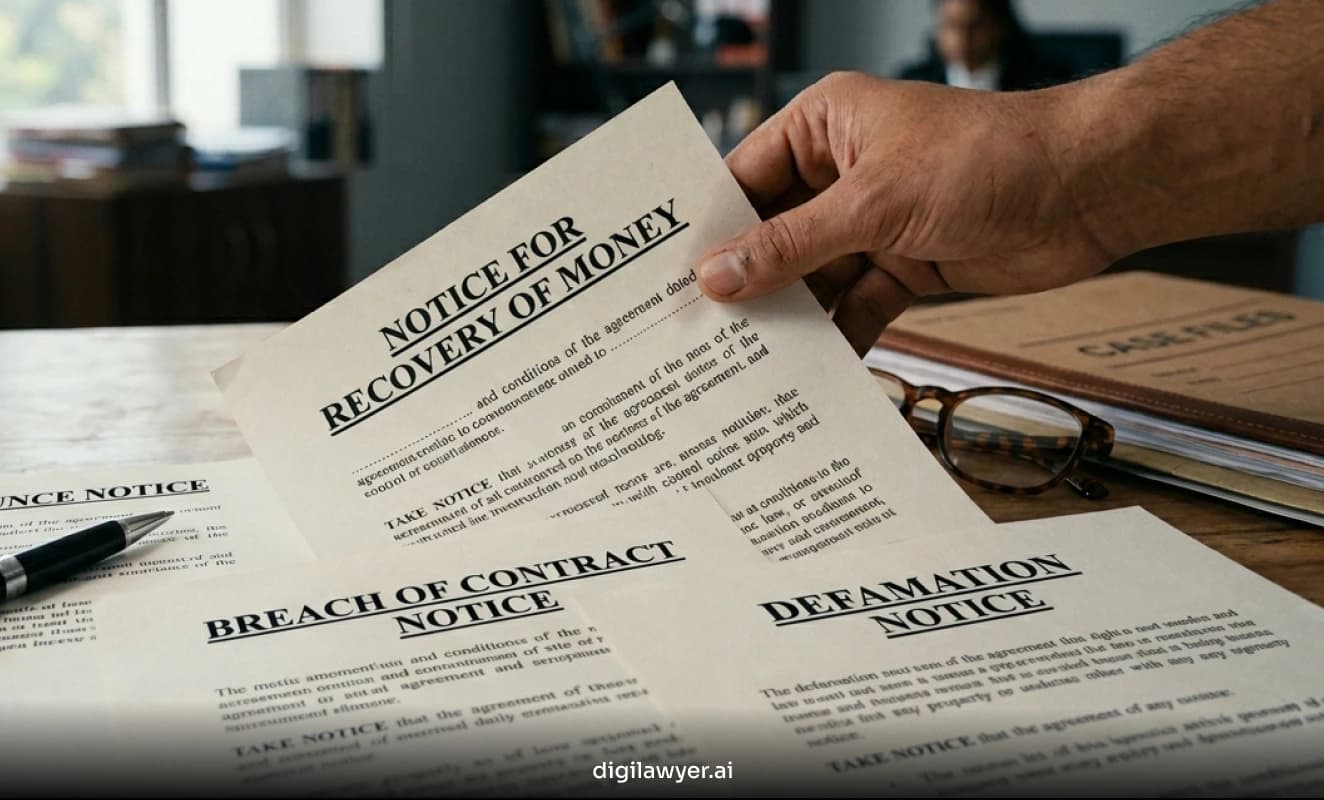
Types of Legal Notices and How to Choose the Right One
Learn the different types of legal notices in India, when to send them, and how they help resolve disputes without going to court. Simple guide with examples and tips.
Ways to Recover Money from a Friend or Someone Else
Explore how to get your money back from friends practically and legally, with clear steps, requirements, and practical approaches
DigiLawyer, A 80, A Block, Sector 2, Noida, Uttar Pradesh 201301
Phone: +918178704343
justice@digilawyer.ai





Disclaimer: DigiLawyer is not a law firm, a substitute for a lawyer or law firm, a chartered accountancy firm, or a company secretary firm. We act solely as an intermediary between users and registered professionals, and also offer AI-powered legal assistance, consultation, and document drafting tools to improve access to legal support. Use of our website, services, or AI tools is at the sole risk of the user and does not create any lawyer-client or professional relationship. All consultations and interactions facilitated through our platform are strictly between the user and independent professionals. DigiLawyer is not liable for any actions, decisions, or outcomes arising from the use of our platform, AI tools, or reliance on any advice, consultation, or content provided by us or third-party professionals.
Use of our products and services is subject to our Privacy Policy & Terms of Service

