


Types of Legal Notices and How to Choose the Right One
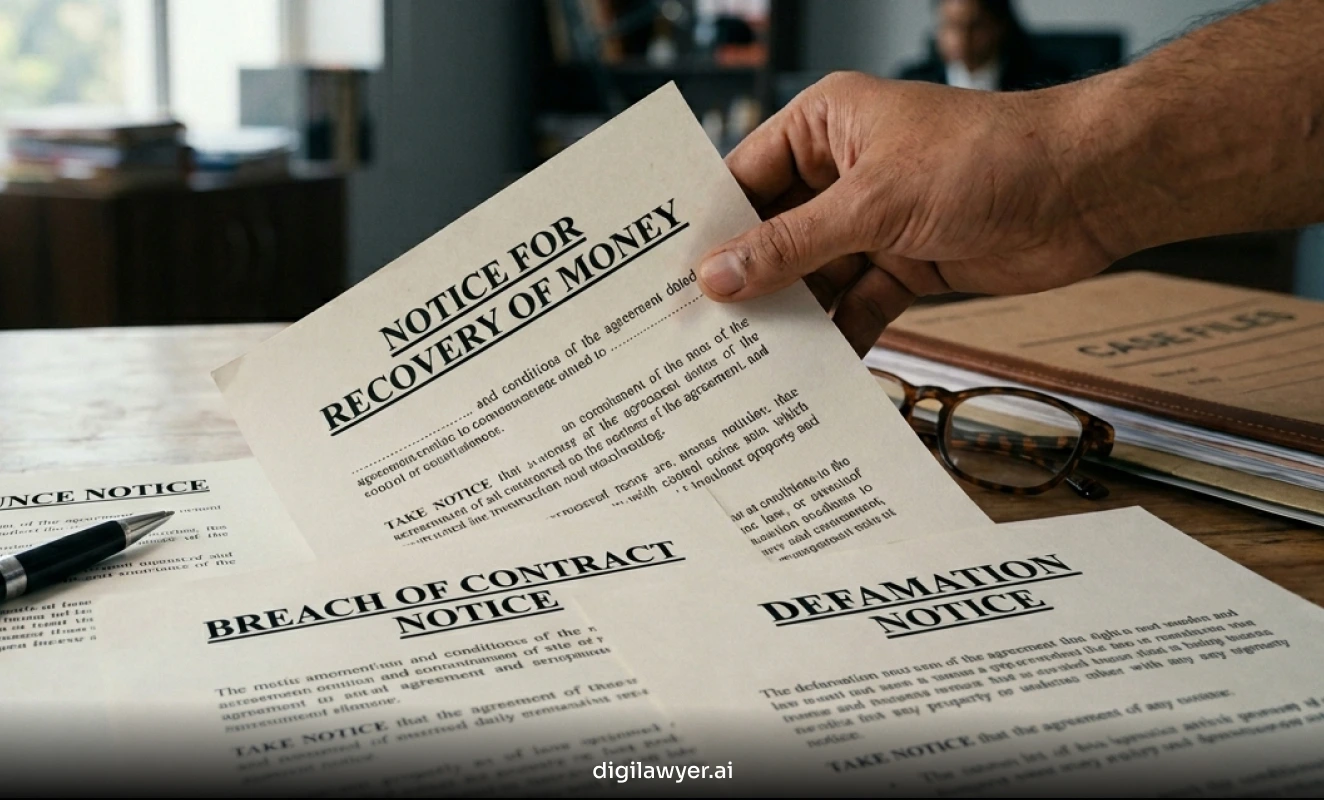
60-Second Summary
- A legal notice is a formal communication sent before starting legal action to inform the other party about a dispute.
- Before rushing to court, sending the right legal notice gives the other party a chance to settle and strengthen your position if they don't.
- Match your problem to your notice: 1. Unpaid loan or salary → Money Recovery Notice 2. Bounced cheque → Cheque Bounce Notice 3. False allegations against you → Reply Notice 4. Property division conflict → Partition Notice 5. Defective product/refund denied → Consumer Notice 6. Divorce intent → Divorce Notice
- To pick the right one: Identify your dispute, collect evidence, set a 15–30-day deadline, and always send via registered post.
What if a friend you lent money, stop answering your calls? Or dealing with a tenant who refuses to pay rent despite multiple reminders? In such situations, going straight to court isn’t the first step.
That’s where sending a legal notice acts as a warning, which gives both parties an opportunity to resolve the dispute before legal proceedings begin.
But different disputes require sending different types of notices. Knowing which notice to send and when to send it can save time, reduce costs, and strengthen your legal position even if the matter reaches the court.
This guide covers exactly that.
What is a Legal Notice?
A legal notice is a formal communication where one party warns another to stop an illegal act, fulfill their legal obligations, or pay damages. If the other party fails to comply, either party may approach the court whether the matter involves a property dispute, defamation, or a matrimonial issue.
What are the Different Types of Legal Notices in India?
The most common types of legal notices that we draft on behalf of our clients include cheque bounce notices, money recovery notices, demand notices, divorce notices, reply notices, and more.
1. Cheque Bounce Notice
A cheque bounce notice is a legal document that is sent to the issuer of the bounced cheque. It falls under section 138 of the Negotiable Instruments Act, 1881. It’s sent when the cheque bounces because of insufficient funds in the issuer’s account, mismatch of the figures and words of amount, a signature mismatch, etc.
Consider this as if you’ve deposited a cheque in the bank, and the bank returns it to you as unpaid because of a signature mismatch or wrong date. You can send the legal notice to the drawer to make the payment, or else legal action can be taken.
When to send cheque bounce notice?
- Insufficient funds in the account.
- Clear the financial liability, such as payment for goods, repayment of loans, etc.
- The cheque was deposited within 3 months of the date written on it.
Real Life Example
- One of the common cases that landed on our desk involves a cheque bounce notice. A client lent Rs 10,000 and later Rs 20,000 to a friend who kept delaying repayment with empty promises.
- After repeated follow-ups, his friend issued a cheque that bounced due to insufficient funds, and we drafted and sent a customized cheque bounce notice demanding payment within the specified deadline.
2. Money Recovery Notice
A legal notice for money recovery is formal written communication drafted by a lawyer on your behalf, sent to the person or business who owes you money. It clearly states the amount owed, the reason behind it, and gives the recipient a deadline of typically 15–30 days to make the payment.
When Do You Need Legal Notice To Recover Money?
- The payment deadline has expired, and the client has not paid.
- The client refuses to make the payment after sending reminders or follow-ups.
- Your landlord refused to return the security deposit.
- Your employer has not paid the salary, bonus, or full and final settlement.
Case Study
A few weeks ago, a client came to us after lending nearly Rs 2 lakh in parts to a borrower, recovering only Rs 66,000 despite months of follow-ups that brought nothing but new excuses and broken promises.
He had call recordings and chat messages as proof where the borrower had promised full repayment. We helped him draft and send a legal notice demanding the outstanding amount of Rs 1.34 lakh.
”👉 Also Read: How to Recover Money From a Friend or Someone Else
3. Reply Notice
Reply notice is the formal response sent by the recipient and clarifies your stance. We’re not saying that not giving a reply doesn’t mean you will lose the case, but it can have a negative impact on your position.
While sending a reply notice isn’t mandatory in India, it’s always better to defend your case if you’re right before legal proceedings are initiated or any such false allegations are imposed on you.
What Situations Require Sending a Reply Notice?
- Deny false claims made by the opposing party.
- Shows your willingness to resolve the case before a lawsuit is filed.
- In some cases, sending a reply notice within 15 days is a MUST, especially when the cheque has bounced.
Real Life Example
One of the most common situations we came across involves a client whose security cheque during a business transaction turned into a cheque bounce dispute, claiming it was never meant for debt repayment. Instead of ignoring the notice, we helped him draft a reply notice explaining his side of the story.
In case the matter reaches court, the reply notice can act as a formal record indicating he disputed the claim from the very beginning.
”4. Demand Notice
A demand notice is a formal written document that a creditor sends to a debtor when a borrower misses multiple EMIs or repayment deadlines. It clearly states the exact amount owed, the reason for the debt, and the consequences if the recipient fails to comply.
When Should You Send A Demand Notice?
- After informal follow-ups or unpaid invoices, loan EMIs are still unpaid.
- When demanding the return of property.
- When a party fails to fulfill the obligations mentioned in the agreement.
Real Life Example
We assisted the family who found themselves in a difficult situation after purchasing a property worth Rs 1.15 crore in 2017 but never filing income tax returns that year. Then, in 2024, they received a couple of notices in the month of November 2025, and they didn’t reply; then a demand notice was issued in December 2025.
The family consulted our lawyers, asks them what to reply in the reply notice, along with legal remedies to take (if any).
”👉 Need help with a landlord-tenant dispute? Get legal consultation on eviction and tenancy issues before taking action.
5. Divorce Notice
Legal notice for divorce becomes the starting point when one party wants to end their marriage. This is done by sending a divorce notice stating their intent to end their legal relationship.
Common Scenarios Requiring Divorce Notice
- If one spouse has left the marital home and refuses to return, then the other party can send a divorce notice.
- Before filing a divorce petition in court, you can send a notice to your wife/husband.
Real Life Example
We dealt with a case where the husband and wife have been living separately for over a year. His wife has stopped responding to calls, texts, emails, and even blocked him across all social media platforms. The husband contacted us to seek legal guidance regarding separation and divorce.
We drafted and sent legal notice to his wife.
”6. Show Cause Notice
A show cause notice is a formal document sent by an employer, government authority, or regulatory body, asking the recipient to justify their actions before a final decision is made.
When a Show Cause Notice Becomes Necessary?
- Notice is issued when a company violates statutory rules, like failure to pay annual returns.
- Before terminating or suspending the employee.
- When the employee fails to meet documented performance targets.
Real Life Example
One of the most common situations we’ve seen to date is when the new hire joined the organization, faced mental health issues, and told the hiring manager verbally about resigning weeks later, with no formal resignation on file. In that case, HR sent a show-cause notice to the employee for unnecessary absence.
7. Termination Notice
A termination notice is an official document that the employer sends to the employee for ending the contract or job. It mentions clear reasons as to why employees are terminated by giving 30 to 90 days' notice in advance before termination.
Situations That Call For Termination Notice
- Staff reduction caused by budget cuts.
- End of the probationary period because the candidate wasn’t a good fit.
- Unacceptable behavior of employees such as physical violence in the workplace, theft, fraud, etc.
Real Life Example
This is the exact kind of situation we help our clients deal with an employee who had been working at a company for 9 months and was suddenly terminated for contacting a client without authorization.
The company withheld his salary of Rs 1 lakh, recorded the separation as 'termination due to misconduct,' but had no evidence like emails or audit trails to support the claim. He consulted our lawyers asking whether he could contest the termination or not.
”8. Revocation Notice
A revocation notice is a written document used to formally cancel or withdraw a previous offer, making the original offer dead. An offer can be revoked at any time before it’s formally accepted.
When is a Revocation Notice Required?
- Cancelling the power of attorney.
- Restoring the cancelled GST registration.
- Misuse or breach of original rights.
- Cancelling an offer before the person accepts it.
- Withdrawing an offer that has a deadline.
- Taking away someone’s authority to act on your behalf.
Real Life Example
This is one of the popular cases we came across where our client received a job offer letter, joining date, and even the laptop delivery details. A few weeks before joining the company, the company revoked the offer because of some internal reasons.
”
9. Property Partition Notice
A legal notice for property partition is a formal document that is sent to the co-owners or family members for the division of property. This notice acts like a final warning before filing a court case and gives a final chance to co-owners to resolve this matter peacefully.
When to Send a Property Partition Notice?
- When co-owners do not agree on partition.
- If one person wants their share and other persons refuse.
- When the co-owner wrongfully enjoys the full income.
- If another co-owner attempts to sell the whole or part of the property without taking written consent from the other parties.
- When your rights are denied or your fair share of property.
Real Life Example
This is one of the toughest situations we've come across. After his father's death, a client wanted to sell his share of the property to fund his child's education, but his siblings refused to discuss partition. He consulted our lawyers, got the notice drafted by our experts, and sent a property partition notice to the other co-owners.
”10.Infringement Notice
An infringement notice is a notice sent to an individual or an organization for the unauthorized use of intellectual property. These include copyright violations, trademarks, logo theft, or patents. This notice is sent to warn the person or the organization to stop using our property.
When should you send a Property Partition Notice?
- When another party uses, sells, or advertises your protected work, brand, or logo.
- A competitor of yours is using an identical name.
- Someone is using your branding or creative work in a way that damages your reputation.
Real Life Example
We’ve worked on a case where Priya runs a travel blog and publishes original articles on her website. While researching online, she found that another website owner had copied some of her website articles without taking her permission.
We sent a copyright infringement notice to the website owner, identifying the copied content and requesting the content removal within 15 days. The notice clearly mentioned that unauthorized use of content could result in legal proceedings.
”11. Consumer Notice
If you’ve got a defective product, saw a misleading advertisement, or the seller refused to pay the refund. You can draft and send a consumer notice to the seller, manufacturer, or the service provider, raising the concern and demanding a remedy like a refund or replacement of products within a specified timeframe (typically 15-30 days).
When Do You Need To Send a Legal Notice for Consumer Complaints?
- Received defective or damaged goods.
- Poor or delayed service from providers like telecom companies or airlines.
- Being lured by misleading claims or advertisements.
- Using unfair trade practices like refusal of valid refunds.
Real Life Example
Did you hear about the customer (Ankit Toor of Model Town, Ludhiana) who ordered a premium imported perfume online but received a different product? Even after lodging multiple complaints, he sent a legal notice asking for refunds and compensation. When the company still didn’t refund, he filed a consumer complaint and won the case.
If you’re also dealing with a similar case, we’d advise you to send a consumer notice if no action was taken and a refund was issued. Take help from our lawyer to draft a custom notice for you and send it on your behalf.
”12. Settlement Notice
A settlement notice is a legal document sent when someone wants to resolve a legal or financial dispute through mutual agreement instead of litigation. It gives the other party a final opportunity to settle the matter peacefully before legal proceedings begin.
When is the Right time To Send a Settlement Notice?
- If the former employee delays sending the full and final settlement amount, salary, and gratuity beyond the payout period. In such a case, employees can refer to full and final settlement rules under labor law to understand their legal rights.
- When the other party fails to deliver goods, services, or payments.
- If a business has sold a defective product.
- When the bank returns the cheque as dishonored (cheque bounce case).
Real Life Example
A business owner owed money to the supplier and received legal notices after the security cheque bounced. While he was willing to pay, he needed more time because his customer payments were also delayed.
In such cases, we’d recommend parties draft a settlement notice to negotiate the repayment schedule and solve their dispute peacefully.
”Key Things to Consider While Drafting/Sending a Legal Notice
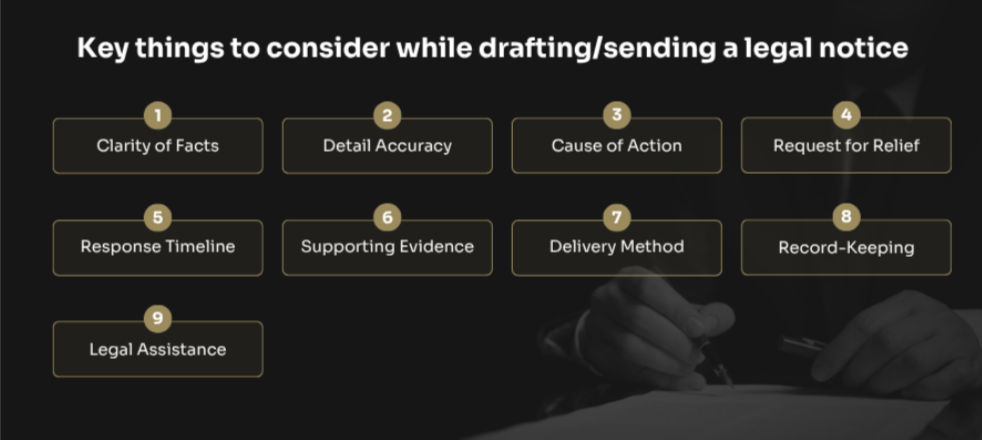
A well-drafted legal notice can help resolve disputes quickly without going to court. Paying attention to key elements ensures your notice is clear, effective, and legally strong.
1. Clarity of Facts: Mention only important facts in a simple and logical way. to ensure that the person getting the notice can understand without any confusion. Eliminate any extra information and concentrate on important events only. A narrative that is well- organized will strengthen your case and minimize any kind of misinterpretation.
2. Detail Accuracy: You have to make sure that names, dates, and amounts should be 100% correct. Minor inaccuracies can undermine your case or be employed against you in the future. Double-checking information is essential for preserving legal validity and credibility.
3. Cause of Action: Explain briefly why you are sending the notice. This could be because of non-payment, harassment, or breaking a contract. This shows that your demand is legally justified and helps the recipient understand the seriousness of the matter.
4. Request for Relief: Clearly state what you want the recipient to do. For example, pay an amount, stop certain actions, or fulfill a contract. Being specific makes your request easy to understand and enforce and sets clear expectations.
5. Legal Assistance: While you can send a legal notice yourself, having a lawyer draft or review it makes it stronger. A lawyer ensures the right laws, correct legal language, and proper format are used, increasing the effectiveness of your notice.
6. Response Timeline: Give a clear time frame, usually 15 to 30 days, for the recipient to respond or act. This creates urgency and shows that you are giving a fair chance before taking further legal steps.
7. Supporting Evidence: Mention any documents like contracts, receipts, or messages that support your claim. This strengthens your notice and provides proof if legal action becomes necessary.
8. Delivery Method: Send notice using reliable methods such as registered mail, courier, or official email. Keep proof of delivery, like receipts or tracking reports, to show that the notice reached the recipient.
8. Record-Keeping: Keep all important papers, including the notice and delivery proof. These documents are useful if the matter goes to court or requires further legal action.
Common Mistakes to Avoid While Drafting a Legal Notice
Many legal notices fail to achieve their purpose due to simple but avoidable mistakes. Being aware of these common errors can help you draft a more effective and legally sound notice.
Incorrect legal provisions- Mentioning the wrong legal sections or laws can seriously weaken your legal notice. It may confuse the recipient and reduce the credibility of your claim. Always ensure that the provisions you refer to are relevant to your case and correctly applied.
Drafting without legal guidance- Preparing a legal notice without proper legal knowledge can lead to errors in structure, language, or legal reasoning. This may reduce its effectiveness or even make it invalid in certain cases. Taking guidance from legal experts helps ensure the notice is accurate, strong, and enforceable.
Missing Key details- Leaving out important information, such as dates, amounts, agreements, or parties involved, can create gaps in your case. Incomplete details make the notice less convincing and harder to act upon. Always include all necessary facts to present a clear and complete picture.
Unprofessional tone- Using aggressive, emotional, or threatening language can harm your legal position. A legal notice should remain formal, respectful, and fact-based to maintain its seriousness. A professional tone increases the chances of a positive response and reflects legal credibility.
Hiring unqualified or unlicensed “lawyers”- Many people unknowingly approach individuals who are not registered advocates or lack proper experience. This can lead to poorly drafted notices, wrong legal advice, and even serious problems if the matter goes to court.
At Digilawyer, we have only licensed and qualified lawyers with years of experience who will properly draft your notice.
Many legal notices fail to achieve their purpose due to simple but avoidable mistakes. Being aware of these common errors can help you draft a more effective and legally sound notice.
👉 If you have received one, DigiLawyer helps you reply to a legal notice correctly and protect your legal rights.
Need Help with Drafting Notices? Connect With Our Legal Experts
If you feel lost in legal matters and want to turn your headache into a warning for someone, DigiLawyer can help you draft and send a legal notice on your behalf and guide you through the next steps if required.
The time required for drafting notice depends on the complexity of the case and the number of documents involved generally 2-3 working days, and for simple cases with little documentation, it may be completed within 1 working day.
If the matter escalates further, we also assist with filing consumer cases in court, initiating legal proceedings, and representing your matter before the court.
FAQs
What is the first step before sending a legal notice?
First, identify the exact issue, gather supporting documents, and choose the correct type of notice based on the dispute, such as money recovery, cheque bounce, eviction, consumer complaint, or harassment
What are the chances that a legal notice will work in my case?
In our experience, DigiLawyer’s legal notice often creates immediate seriousness and gets the other party to respond quickly. In many cases, it helps resolve the matter without going to court, especially when the facts are clear and the notice is sent in the right format.
Is a legal notice mandatory?
A legal notice is not always mandatory, but it is strongly recommended as it gives the other party a chance to resolve the issue before going to court.
Can a legal notice be sent online?
Yes, a legal notice can be sent through email or WhatsApp, but it is safer to also send it via registered post for proper proof.
What should I do if my employer doesn’t pay a salary?
You can send a legal notice for non-payment of salary, as salary is a contractual employment obligation that employer needs to pay.
For details, read our guide on what to do if your employer is not paying salary.
What can I do if someone is trying to defame me or share false information?
In this situation, defamation notice should be sent, as they are trying to harass you or share false information.
Can I withdraw a legal notice, if my case is resolved?
Yes, you can withdraw a legal notice at any time before initiating legal proceedings if the matter is settled.
What to do after receiving one?
After receiving a legal notice, you should read it carefully, understand the claims, and respond within the given time, preferably with legal advice.
Is it mandatory to reply to a legal notice?
Yes, you can and should reply to a legal notice to present your side of the case and avoid further legal complications.
Does it guarantee settlement?
A legal notice does not guarantee settlement, but it increases the chances of resolving the dispute without court involvement.
How much time is given to reply to legal notice?
Usually, a legal notice provides a response time of 15 to 30 days, depending on the nature of the case.
How to know the right type of legal notice to send?
Our expert lawyer can help you navigate what type of notice to send and the right use of language and tone so that only sending the notice will resolve the issue. Consult a lawyer today to get the right legal guidance.
Can you send a single notice if there are multiple situations?
Yes, you can send either a single notice or multiple notices, depending on your circumstances. Our lawyer will review your case and advise on the most appropriate approach.
What can I do if someone is trying to defame me or share false information?
In this situation, defamation notice should be sent, as they are trying to harass you or share false information.


- What is a Legal Notice?
- What are the Different Types of Legal Notices in India?
- 1. Cheque Bounce Notice
- When to send cheque bounce notice?
- 2. Money Recovery Notice
- When Do You Need Legal Notice To Recover Money?
- 3. Reply Notice
- What Situations Require Sending a Reply Notice?
- 4. Demand Notice
- When Should You Send A Demand Notice?
- 5. Divorce Notice
- Common Scenarios Requiring Divorce Notice
- 6. Show Cause Notice
- When a Show Cause Notice Becomes Necessary?
- 7. Termination Notice
- Situations That Call For Termination Notice
- 8. Revocation Notice
- When is a Revocation Notice Required?
- 9. Property Partition Notice
- When to Send a Property Partition Notice?
- 10.Infringement Notice
- When should you send a Property Partition Notice?
- 11. Consumer Notice
- When Do You Need To Send a Legal Notice for Consumer Complaints?
- 12. Settlement Notice
- When is the Right time To Send a Settlement Notice?
- Key Things to Consider While Drafting/Sending a Legal Notice
- Common Mistakes to Avoid While Drafting a Legal Notice
- Need Help with Drafting Notices? Connect With Our Legal Experts
- FAQs

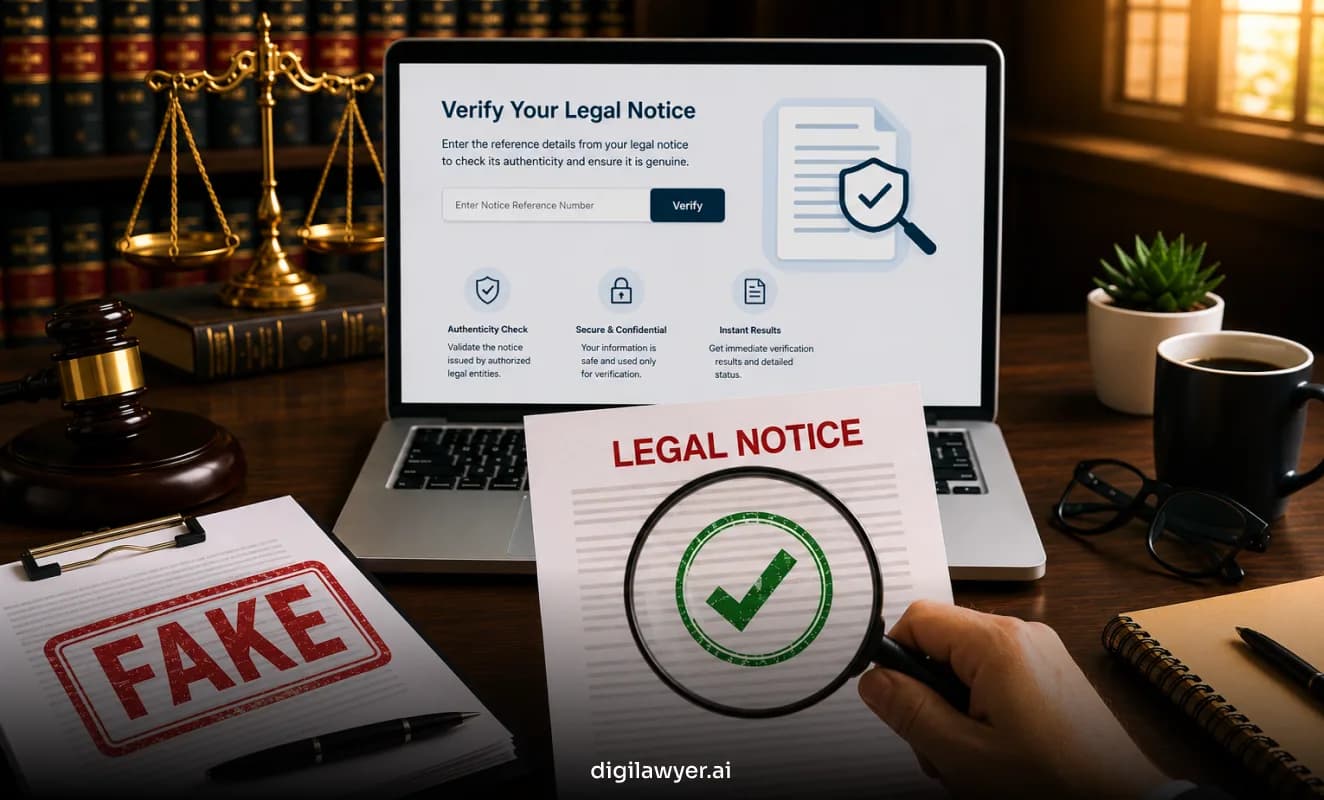
How to Check if a Legal Notice Is Original or Fake
Learn how to identify fake legal notices, warning signs, scams & verification steps to protect yourself from fraud, extortion and fake court threats.
When and How to File a Suit for Recovery of Money: A Complete Legal Guide
A simple guide to filing a money recovery suit in India, covering when to take legal action, required documents, and the step-by-step process to recover your money.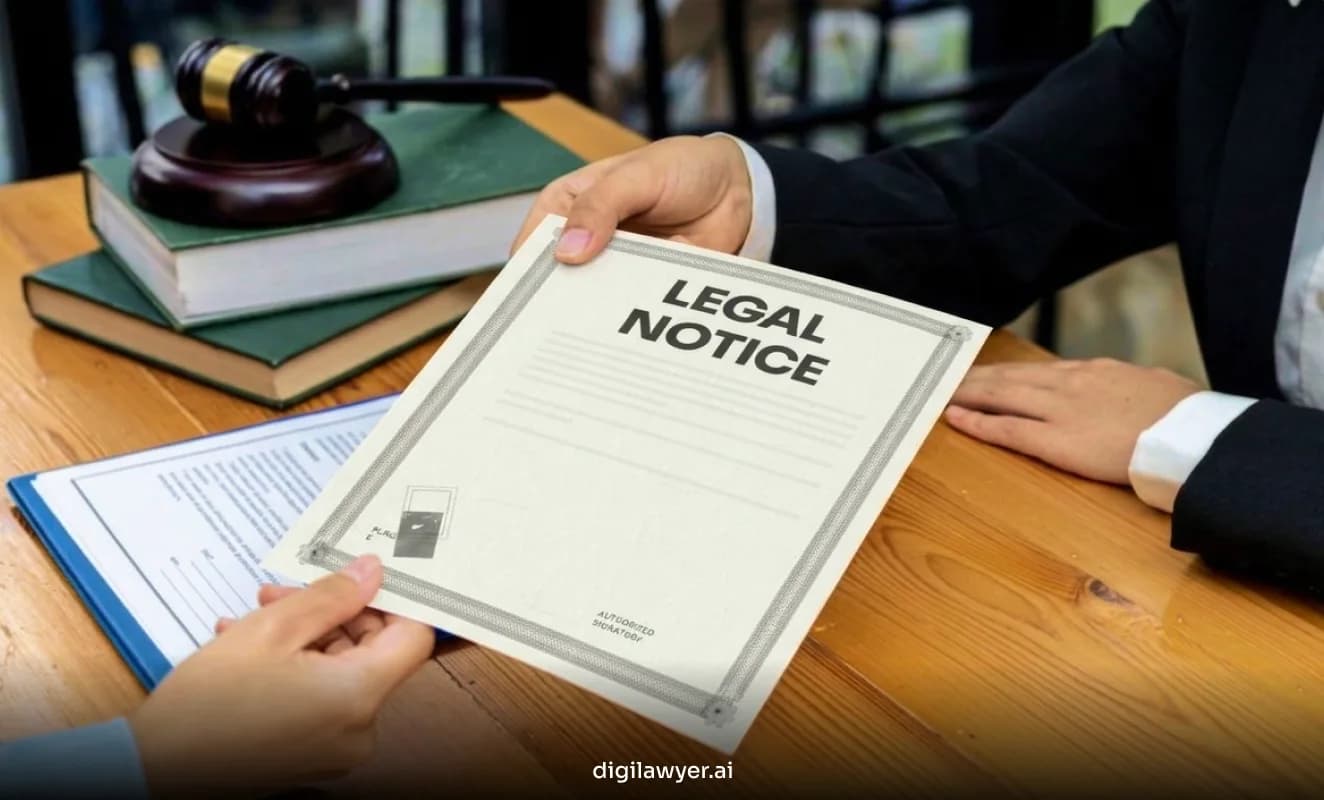
What to Do After Receiving a Legal Notice - How to Reply Properly
A practical guide on what to do after receiving a legal notice, including steps to respond, common mistakes to avoid, and how to protect your legal position.
Ways to Recover Money from a Friend or Someone Else
Explore how to get your money back from friends practically and legally, with clear steps, requirements, and practical approaches
DigiLawyer, A 80, A Block, Sector 2, Noida, Uttar Pradesh 201301
Phone: +918178704343
justice@digilawyer.ai





Disclaimer: DigiLawyer is not a law firm, a substitute for a lawyer or law firm, a chartered accountancy firm, or a company secretary firm. We act solely as an intermediary between users and registered professionals, and also offer AI-powered legal assistance, consultation, and document drafting tools to improve access to legal support. Use of our website, services, or AI tools is at the sole risk of the user and does not create any lawyer-client or professional relationship. All consultations and interactions facilitated through our platform are strictly between the user and independent professionals. DigiLawyer is not liable for any actions, decisions, or outcomes arising from the use of our platform, AI tools, or reliance on any advice, consultation, or content provided by us or third-party professionals.
Use of our products and services is subject to our Privacy Policy & Terms of Service

